A Natural Solution for California's Herds: African Catfish Peptides

California's cattle producers and agricultural communities are all too familiar with the rising challenge of antibiotic resistance, making common bacterial infections harder to treat in livestock. But imagine a future where we could tackle these infections with a natural, powerful alternative. Our research points to just that: antimicrobial peptides (AMPs) found in African catfish.

We're really excited about these peptides because African catfish thrive in pathogen-rich freshwater, naturally producing these robust immune compounds in their skin mucus as a defense. This natural origin makes them highly appealing alternatives to synthetic drugs.

Predicted Safety and Potent Action

One of the most compelling aspects of these AMPs is their predicted safety for mammals. Our initial computer analyses suggest that various catfish AMPs are generally recognized as safe (GRAS). We predict they'll be absorbed in the human intestine without causing liver, brain, or heart toxicity. Furthermore, lab tests on a promising peptide, NACAP-II, confirmed it was non-hemolytic, meaning it didn't damage rabbit red blood cells—a strong indicator of its potential safety for mammalian cells.

Beyond safety, these peptides demonstrate effectiveness against problematic bacteria. One study revealed NACAP-II's strong activity against Extended-Spectrum Beta-Lactamase (ESBL)-producing Escherichia coli—a critical concern for both animal and human health due to its resistance to many common antibiotics. Another peptide, ACAP-IV, also showed antibacterial activity against E. coli and Staphylococcus aureus. We believe these AMPs work by directly disrupting bacterial cell membranes, a mechanism that makes it harder for bacteria to develop resistance compared to how they resist traditional antibiotics.

Primary Image
Mama spider snares two in one web. (Photo by Kathy Keatley Garvey)

Two for One

August 25, 2011
By Kathy Keatley Garvey
Mama said there'd be days like this, There'd be days like this, Mama said... When Van Morrison wrote the lyrics to "Days Like This," a song popularized by The Shirelles, he probably wasn't thinking of a mama garden spider or her prey.
View Article
Conservation Agriculture: Article

Tony Turkovich featured in UC research video

August 25, 2011
By Jeannette Warnert
The 2007 recipient of the Conservation Tillage Innovator of the Year Award, Tony Turkovich, was featured in a recent research video by the UC Office of the President.
View Article
Primary Image
Backlit honey bee on a purple hopseed bush. (Photo by Kathy Keatley Garvey)

Beauty of a Bee

August 24, 2011
By Kathy Keatley Garvey
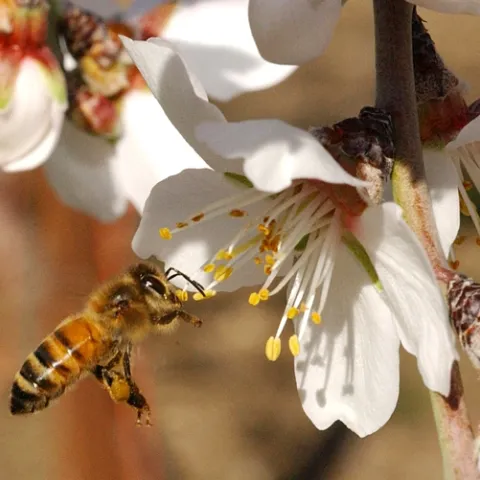
Sometimes the beauty of a bee simply takes your breath away. Especially when the late afternoon sun backlights it. Yes! All's right with the world. For just a moment in time, there are no pests, parasites or pesticides. There are no viruses, diseases, malnutrition and stress.
View Article
UC Weed Science (weed control, management, ecology, and minutia): Article

Results from artichoke thistle trial

August 24, 2011
By Guy Kyser
Last entry I talked about the problems with artichoke thistle (Cynara cardunculus L.) in the Sacramento Delta and other coastal regions. Again, this thistle was introduced to California as the cultivated artichoke, but escaped to become a serious rangeland weed.
View Article
UC Weed Science (weed control, management, ecology, and minutia): Article

Importance of Including Preemergence Herbicides in a Weed Management Program

August 24, 2011
By Robert G Wilson
Part of my job as the Director/Farm Advisor at the Intermountain Research and Extension Center involves overseeing weed management programs for a variety of crops and non-cropland at the Center. Over the last month, Ive observed the outcome of these programs as many of the crops are nearing harvest.
View Article
Primary Image
Green aphid on Gaillardia. (Photo by Kathy Keatley Garvey)

Unwanted Floral Visitor

August 23, 2011
By Kathy Keatley Garvey
What's that little green bug on the head of the Gaillardia? It's soft-bodied. It's miniscule. It's sucking plant juices. An aphid! We captured an image of this little green bugger shortly after we purchased several plants from an area nursery.
View Article
UC Weed Science (weed control, management, ecology, and minutia): Article

Yellow starthistle - 15 million acres and counting

August 23, 2011
By Brad Hanson
Over the weekend, the Sacramento Bee published an article discussing the invasiveness and spread of yellow starthiste (Centaurea solstitialis) in California. http://www.sacbee.com/2011/08/21/3847369/invasive-yellow-star-thistle-aims.
View Article
Primary Image
Spider crawls toward its prey, a honey bee. (Photo by Kathy Keatley Garvey)

Not a Good Day to Be a Bee

August 22, 2011
By Kathy Keatley Garvey
It was not a good day to be a honey bee. But it was a good day to be a spider. For days we watched honey bees, sweat bees and syrphid flies visit a patch of alyssum and African daisies in our yard. Their floral visits did not go unnoticed.
View Article
Primary Image
Close-up of a new wasp species discovered by UC Davis entomologist Lynn Kimsey. (Photo by Kathy Keatley Garvey)

That's One Gigantic Wasp

August 19, 2011
By Kathy Keatley Garvey
That's one gigantic wasp! The new species that Lynn Kimsey, director of the Bohart Museum of Entomology and professor of entomology at UC Davis, discovered on the Indonesian island of Sulawesi measures a whopping two and a half inches long. That's the male "warrior wasp.
View Article
Primary Image
Jeff Mitchell addresses farmers at last year's twilight CT field day.

Second annual *twilight* conservation tillage field day

August 19, 2011
By Jeannette Warnert
The Conservation Tillage and Cropping Systems Institute will hold its second annual twilight field tour and barbecue from 4 to 7 p.m. Thursday, Sept. 8, at the UC West Side Research and Extension Center, 17353 W. Oakland Ave., Five Points.
View Article