UC ANR is committed to providing an accessible and inclusive web experience for all users. If you encounter an accessibility barrier or need content in an alternative or remediated accessible format, please contact anraccessibility@ucanr.edu.
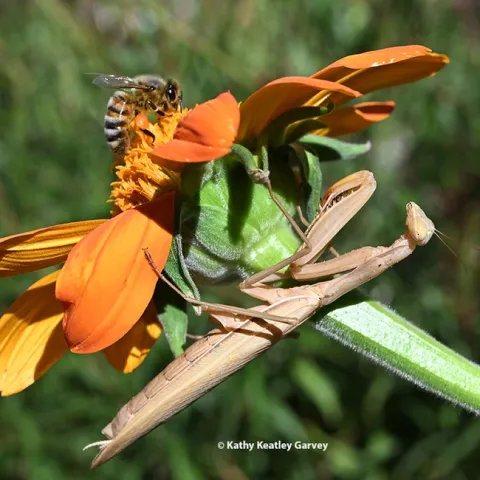
So here's this praying mantis, a female Mantis religiosa, tucked beneath a Mexican sunflower, Tithonia rotundifola, in a Vacaville garden. She's as still as a stone, and you know how still stones are. Along comes a honey bee, Apis mellifera. She's packing a load of orange pollen.
NITROGEN UPTAKE VARIATIONS IN DESERT LETTUCE: RECENT RESEARCH FINDINGS PRE-PLANT BENEFITS OF SUMMER COVER CROPS IN LOW DESERT VEGETABLE PRODUCTION DRY SANITATION IN FRESH PRODUCE: COMMERICAL APPLICATIONS AND CHEMICAL OPTIONS FOR ONIONS SOILBORNE DISEASES IN GOLDEN DEW MELONS 'FOREVER CHEMICALS' IN S...
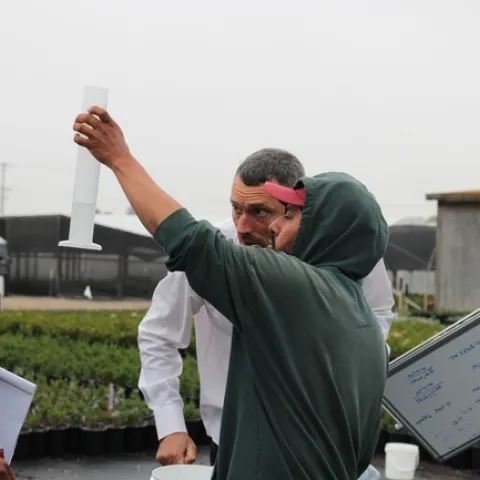
Globally, approximately 570 million small and medium-sized farms need training in various agricultural fields. However, the delivery of agriculture training faces significant challenges.
It's a dry year, no doubt about it, but there are still apples to harvest, bulbs and cover crops to plant, and tools to clean. Here's a a month-by-month to-do list to keep your garden in tip top shape in the fall.
It's a dry year, no doubt about it, but there are still apples to harvest, bulbs and cover crops to plant, and tools to clean. Here's a a month-by-month to-do list to keep your garden in tip top shape in the fall.
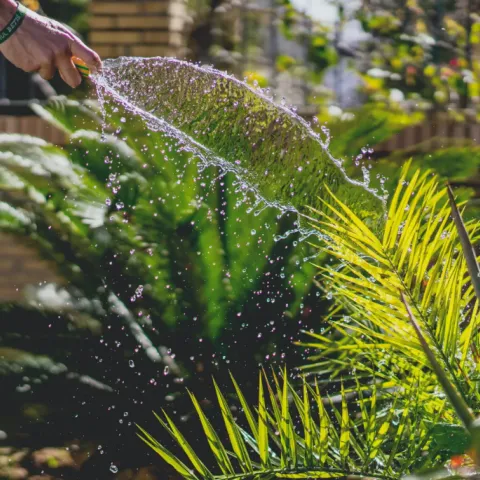
Working as an irrigator seems straightforward at first: if you're not watering plants by hand, you're building and managing systems that can do the watering.
In this issue: Fertilizing Your Trees, Unusual Edible: Chocolate Vine, Cover Cropping in Foothill Gardens, Hotline FAQs: Soil for Raised Vegetable Beds, All-Star: Marina Madrone, Water-Wise Gardening, Nevada County Demonstration Garden News, 2025 Gardening Guide and Calendar, Insect Bytes, BotLat: Red Flag…
July and August are traditionally the hottest months of the year, and this year is breaking heat records everywhere. Many plants do not do well in the heat, but plants native to the Central Valley have evolved over time and are adapted to our hot summer weather.