Ongoing research

Primary Image
cherimoya
Topics in Subtropics: Article

Cherimoya Manual Online

June 24, 2024
By Ben A Faber
Back in the early 1990s the California Cherimoya Association decided to put together all their knowledge about the fruit and plant - from history to pollination and costs of production. There are numerous authors who are steeped in love of the fruit. It took several years to bring this all together.
View Article
Primary Image
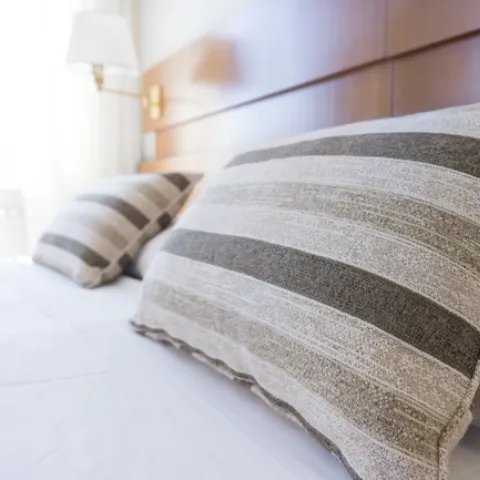
A freshly made bed with white sheets and striped pillows.
Pests in the Urban Landscape: Article

Don’t Let the Bed Bugs Bite This Summer!

June 24, 2024
By Lauren Fordyce
As vacation season begins, people will be traveling much more in the coming months. Whether you'll be staying at a hotel, hostel, motel, rental home, or summer camp, you should always be on the lookout for bed bugs.
View Article
Primary Image
Eleven young people holding clear plastic cups of blackberries pose between rows of blackberry bushes.
ANR Employee News: Article

HBCU-Berkeley Environmental Scholars visit KARE

June 24, 2024
By Pamela S Kan-Rice
While tasting avocados and blackberries at Kearney Agricultural Research and Extension Center in Parlier, undergraduate students from historically Black colleges and universities got a taste of California agriculture.
View Article

July 2024: Fruit Tree Maintenance

Primary Image
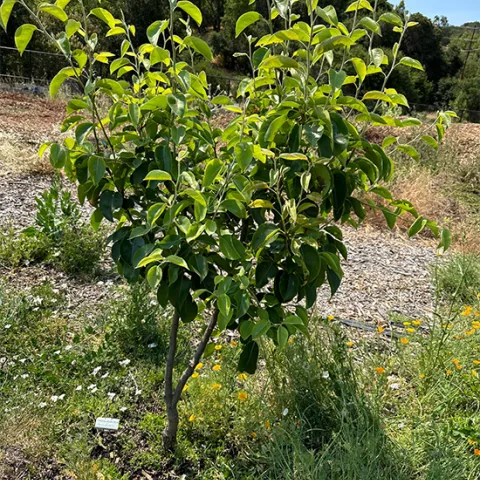
This Asian pear tree has been pruned for optimum size and shape.
Body

fruit tree 1
Two years ago, volunteers planted six bare-root fruit trees in the Edible Demo Garden. Although some did not survive and were replaced, there is now a row of small fruit trees that are beginning to produce. The trees in this little orchard do not demand as much attention as the annual edible crops, but they have their own seasonal care requirements.  In addition to regular irrigation and fertilization, fruit trees need pruning, fruit thinning, and disease management.


Why prune fruit trees?

All fruit trees require pruning for optimum vigor and fruit production. Pruning is also a way to control tree size, making care and harvesting easier. The first pruning of the fruit trees in the Edible Demo Garden was done at the time of planting. Following recommendations for keeping the trees small, a hard heading cut was made on the new bare root trees to remove approximately two-thirds of the main trunk to about knee height. In the following years, both winter and summer pruning have helped to shape the trees and maintain their health. Pruning in the winter when a tree is dormant helps to invigorate it and encourage new growth. Summer pruning is done to remove excess growth and control the dimensions and shape of the tree. Ideally, pruning should strive for a balance between the growth of new wood and the removal of old wood. The goal is also to allow sunlight to reach the lower limbs to enhance fruit production.

Pruning to remove any damaged, diseased, dying, or dead limbs is always important. Rootstock suckers and sprouts emerging below the graft section of the tree need to be pruned off. Shoots growing from the rootstock deplete energy from the scion or grafted part of the tree where the fruit is formed. Likewise, water sprouts are suckers that grow upright in the crown of the tree, and they also should be removed to direct the tree’s energy to fruit-producing branches.

fruit tree 2
fruit tree 3
fruit tree 5


Why should fruit be thinned?

fruit tree 4
Removal of flowers or fruit early in the spring increases the size of the remaining fruit by improving the leaf-to-fruit ratio. A ratio of 40-75 leaves per fruit is required to produce good-sized fruit in standard apple, peach, and nectarine cultivars. Plums and apricots need a leaf-to-fruit ratio of 30 to 50 leaves per fruit. The earlier that fruit are thinned, and the leaf-to-fruit ratio is increased, the larger the fruit will be at harvest and the greater the effect on next year’s bloom. Rather than count leaves, it’s more practical to thin most fruits to about 4-8 inches apart along a branch or to leave only one fruit per spur. Save the largest fruit and adjust the number of fruits to size of the limbs. Not only will the fruit be smaller on trees that are not thinned, but excess fruit can break branches and weaken the tree.


What common diseases have affected the trees in the Edible Demo Garden?

Sadly, organic gardens are not immune to the bacterial and fungal diseases that frequently affect fruit trees. Fire blight is a bacterial infection that attacks pome fruits like pear, apple, and quince trees. Young blossoms, shoots, and fruit shrivel and blacken, causing branches to appear burned. The disease can spread rapidly so it’s important to cut diseased branches back into about 12 inches of healthy wood to remove all the infected tissue. The bacteria can be transmitted by pruning tools, so they need to be sterilized before making each cut. In the Edible Demo Garden, a young Bartlett pear tree was infected by fire blight this year.

A frequent problem for stone fruits such as apricots, peaches, and plums, is leaf curl. This is caused by a fungal infection that attacks the leaves, shoots, and fruit, causing leaves to become thickened and pucker and fruit to drop. The fungus overwinters and becomes active in the spring when it is spread by splashing rainfall. The leaf curl fungus has infected an Asian plum tree in the Edible Demo Garden.

Copper-based fungicides can be used for the prevention of both fire blight and leaf curl; however, the timing of the applications is important. Treatment needs to be initiated early before any signs of disease are visible. Because copper is a naturally occurring mineral, it is acceptable for use in organic agriculture.

 

Click here for more information on the care of fruit trees

UC Marin Master Gardeners
Primary Image
Al Sokolow
ANR Employee News: Article

In memoriam: Alvin Sokolow

June 24, 2024
By Pamela S Kan-Rice
Al Sokolow, emeritus UC Cooperative Extension specialist in public policy and governance, passed away from complications from Parkinson's disease on June 1 at the University Retirement Community in Davis.
View Article
Primary Image
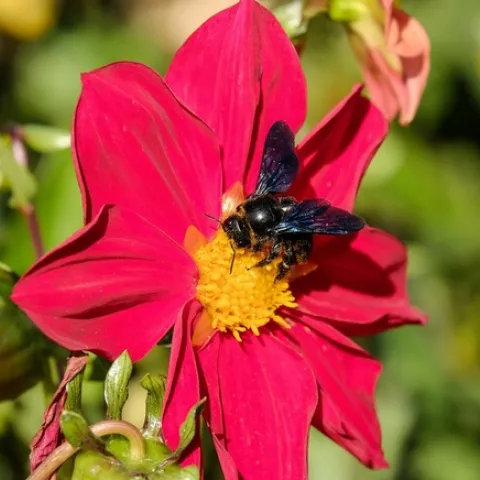
carpenter-bee-1696018 1280 Pixabay
Napa Master Gardener Column: Article

Native Bees

June 23, 2024
One of the pleasures of being a UC Master Gardener is our monthly seminars. Not only are they varied and interesting, but it is always a pleasure when the local members are present. I enjoy being reminded of how smart my colleagues are.
View Article