Ongoing research

Event Primary Image
Beef Quality Assurance
Grown in Marin: Event

Beef Quality Assurance - Free Training and Certification

Event Date
Jan 29, 2026

Join UC Cooperative Extension and UC Davis Veterinary Medicine for a free in-person BQA certification course. There will be a combination of chute-side and classroom learning, covering topics such as animal health, stockmanship, meat quality, and biosecurity.  Registration is free. Sign up at ucanr…
Grown in Marin
View Event
Event Primary Image
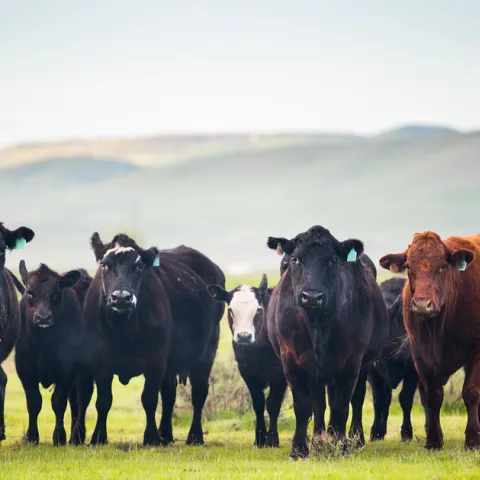
herd of beef cattle
Grown in Marin: Event

Beef Cattle Health Series – Free Online Webinars

Event Date
Jan 13, 2026

Join UC Cooperative Extension and UC Davis Veterinary Medicine for a free, Tuesday-evening webinar series focused on practical beef cattle health and management. The sessions cover topics important to cattle health and management and include lots of visuals. Webinars are held live and participants have the…
Grown in Marin
View Event

Transition to Organic Webinar Series

December 22, 2025
By Fadzayi E Mashiri
This information may be of interest to those running Mixed or Integrated Farming Systems. Wednesdays • January 14 – March 18, 2026 • noon-1:15pm with optional office hours 1:15pm-2pm • Free virtual series Hosted by CAFF, UC Organic Agriculture Institute (UC OAI), and UC Cooperative Extension (UCCE…
View Article
UC Cooperative Extension Marin County: Page

Watershed Management

 David Lewis Watershed Management Advisor University of California Cooperative Extension Email: djllewis@ucanr.edu 415-473-4204Through creative educational programs and adaptive research, I partner on working landscape solutions. From ridge top to streambed, across pastures and fields, there are options…
View Page

Latin is for gardeners and scholars and the Catholic Church
Primary Image
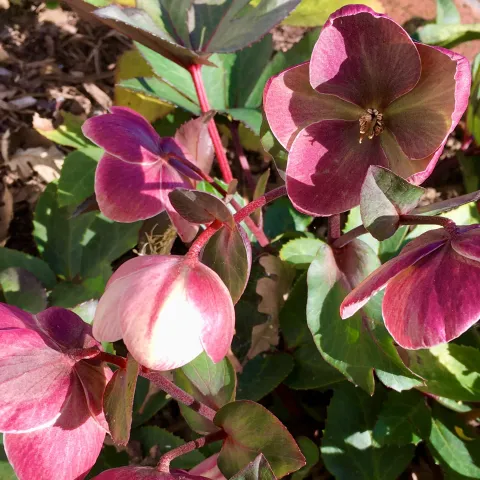
Helleborus foetidus flowers
Body
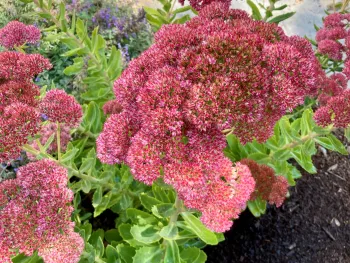
Sedum ‘autumn joy’ blossoms
Sedum ‘autumn joy’ is sometimes called a bee magnet.  It’s been renamed Hylotelephium telephium with the cultivar name ‘Herbstfreude’. Photo: Alice Cason

In case you’re wondering, the Swedish biologist and physician Carl Linnaeus was the one who came up with our current way of naming plants and animals.  About 300 years ago, he organized what’s called binomial nomenclature, the use of two Latin or Greek names: Genus (the main identifier used in nursery labeling, always capitalized) and species (individuals within the genus, always lower case).  The Genus and species are often italicized and follow the main general identifiers:  kingdom, phylum, subphylum, class, order, and family, which don’t show up on the nursery label.  Back in the dark ages of my biology and botany classes, there was a mnemonic device to remember them, but much has changed in the last 50 years.  

Latin was already the language of science, which meant that scientists all over the world could communicate with each other, and still can. Because Latin is considered a dead language, it’s not evolving like English and other languages, so it’s perfect for naming plants. But there’s nothing static about this system because names are constantly changing as research reveals information about where a plant actually should reside in the grander scheme.

Species names often describe characteristics such as smell:  foetidis, foetidissima, nauseosus, odoratus, fragrans, fragrantissima, citrodorus, pungens, inodorus, and can be deciphered pretty easily.  Others denote color:  rugosa, rubra, sanguinea, igneus, atrorubens, alba, violacea, atropurpurea, viridis, virens, azurea, aurea, leucantha, niger.  Some are descriptive:  bellus, ferris, major, robustus, simplex, vulgare.  Some give a clue to where the plant originated:  borealis, australis, orientalis, occidentalis, centralis, sinensis. japonica, italicus, persicus.  Still others tell us about growth habit:  pendulus, tortuosus, patens, horizontalis, erectus.

Many of us know a lot of plants by their common names, which can be confusing but sometimes definitive. Take the commonly named California fuchsia, also known as hummingbird trumpet,  hummingbird-flower, wild fuchsia, firechalice.  If that wasn’t confusing enough, its scientific name is now Epilobium canum, formerly Zauschneria californica.  Some old-timers still call it Zauschneria, though the youngster at the nursery recently wasn’t familiar with that name…
Helleborus foetidus flowers
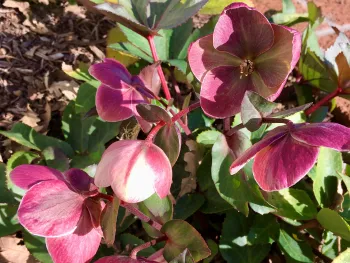
Helleborus foetidus has narrow leaves and diminutive blooms.  Despite the species name it only smells if you crush the leaves. Photo: Becca Ryan

Another example would be Helleborus, commonly called hellebores, Lenten rose, Christmas rose, winter rose, and oriental hellebore.  The names refer to the late winter into early spring bloom cycle.  This genus has about 20 species, but there are subspecies, hybrids and cultivars that have been developed over many years, which means there are likely dozens, maybe hundreds. of different ones out there.  When you see a species name such as H. x hybridus, it means that two species were hybridized, but there could be dozens of offspring, including some named for the breeder, such as Ballard’s Group.  The Sunset Western Garden Book has explanations of some.

Another Genus and species that have changed is that some Sedums are now considered distinct enough to merit their own Genus.  What used to be called Sedum ‘autumn joy’ now has the new, not so easy to pronounce name Hylotelephium with the cultivar name ‘Herbstfreude' in single quotes.  Rosemary used to be classified as Rosmarinus, but DNA testing revealed that it’s more closely aligned with the sage family, Salvia, so it’s now named Salvia rosmarinus.  Sometimes, re-naming of plants doesn’t take.  Pineapple guava, Feijoa sellowiana, was renamed Acca sellowiana when botanists noticed the two were similar, but 2019 DNA analysis revealed that they weren’t so similar after all, so now it’s gone back to its original name!  I’m sure there are many more names that have changed in recent years and research will continue to push these changes.

The bottom line is that if you want to be sure you’re getting a specific plant, it’s good to know the Latin name and make sure the nursery tag verifies that information.  Plant nerds all around the world may speak hundreds of languages, but we’re all on the same page when it comes to plants. 

By Diane Lynch, December 20, 2025
UC Marin Master Gardeners
Event Primary Image
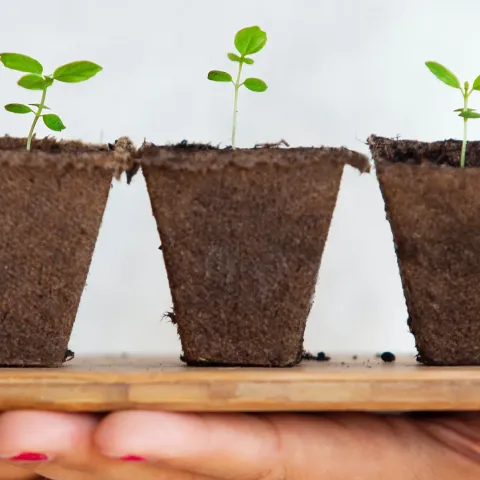
Picture of three plants
UC Master Gardeners of Merced County: Event

Seed Starting

Event Date
Jan 17, 2026

UC Master Gardeners of Merced County presents "Seed Starting", a Public Workshop on Saturday, January 17th from 10am-12pm. Presenter: Tom Dinwoodie, UC Master Gardener of Merced County Topics covered in this workshop are: -How to be successful starting plants from seeds -Basics of plant anatomy and…
UC Master Gardeners of Merced County
View Event
Event Primary Image
Orchard and mountains words Climate & Agriculture
Hansen Agricultural Research and Extension Center: Event

Climate & Agriculture: Farming in a changing climate

Event Date
Jan 20, 2026

Learn about climate trends, potential impacts on Ventura County crops and available resources. Offered in-person and via zoom.Climate and Ag Workshop Flyer
Hansen Agricultural Research and Extension Center
View Event
Event Primary Image
SPAM open house
UC Master Gardeners of Ventura County: Event

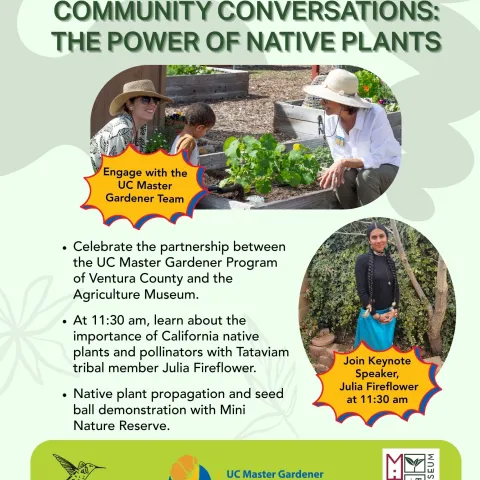
Santa Paula Agricultural Museum Open House

Event Date
Feb 21, 2026

Please join the VC Master Gardeners at the Santa Paula Agricultural Museum for our Open House. At 11:30 am, learn about the importance of California native plants and pollinators with Tataviam tribal member Julia Fireflower.See a  Native plant propagation and seed ball demonstration with Mini…
UC Master Gardeners of Ventura County
View Event
Event Primary Image
Orchard with mountains and words Climate and Agriculture
Cooperative Extension Ventura County: Event

Climate & Agriculture: Farming in a changing climate

Event Date
Jan 20, 2026

Learn about climate trends, potential impacts on Ventura County crops and available resources. Offered in-person and via zoom.
Cooperative Extension Ventura County
View Event
Event Primary Image
BQA Flyer
Cooperative Extension, Sutter-Yuba Counties: Event

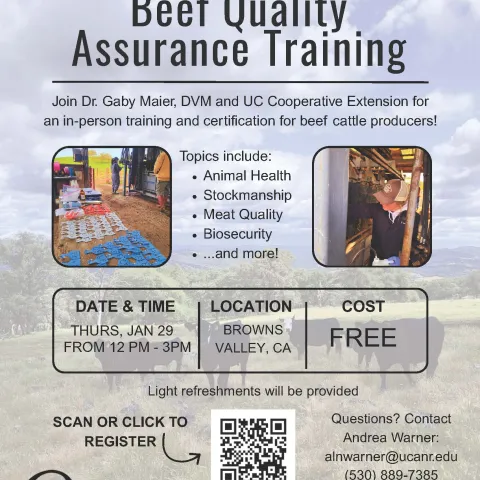
Beef Quality Assurance Training

Event Date
Jan 29, 2026

Join UC Cooperative Extension for a free, in-person Beef Quality Assurance (BQA) training and certification on Thursday, January 29, from 12–3 pm in Browns Valley, CA. Led by Dr. Gaby Maier, DVM, this hands-on and classroom-based training is designed for beef cattle producers and covers key topics including…
Cooperative Extension, Sutter-Yuba Counties
View Event