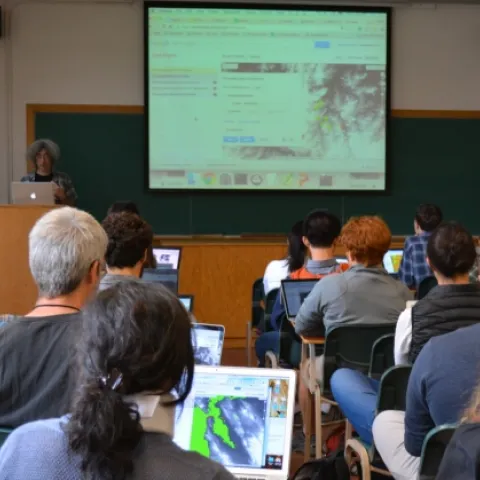
Students, researchers, mappers, and big data enthusiasts took place in an exciting 2 day Google Earth Engine workshop this last week hosted by the GIF and the Google Earth Engine Team.
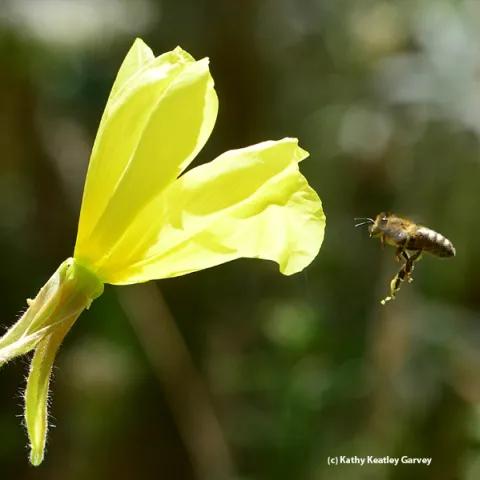
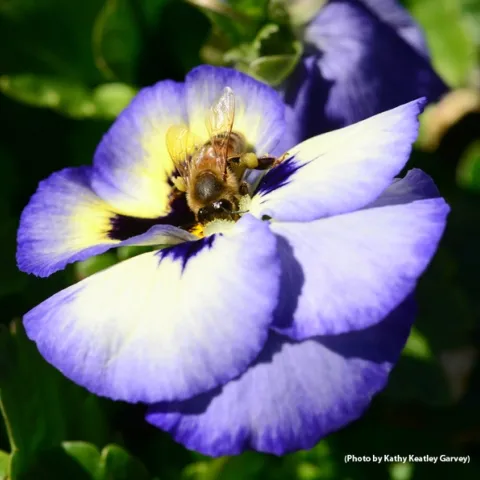
If you've ever seen honey bees foraging on primrose, you may have seen something unusual. What's with the pollen hanging below their hind legs as they buzz from primrose to primrose? There's a reason for that.
So you want to know about bee health? Yes, there's an app for that--and you're welcome to download it for free. Our good neighbor to the north of us, Alberta Agriculture, has just developed Phase 1 of its Bee Health.
Like to learn how to make mead? You know, transform honey into honey wine? The UC Davis Honey and Pollination Center at the Robert Mondavi Institute and the UC Davis Department of Viticulture and Enology are offering a beginners' introduction to mead making on Friday and Saturday, Nov.
RECOGNIZING NATURAL ENEMIES Proper identification of pests, and distinguishing pests from natural enemies, is essential for effective biological control. Carefully observe the mites and insects on your plants to help discern their activity.
I've always rather liked katydids. Anyone who is called "Kate" or "Katy" in their childhood usually winds up with "Katydid" as a nickname. And they repeatedly hear "Katy did. Katy didn't" (the sound the insect makes).
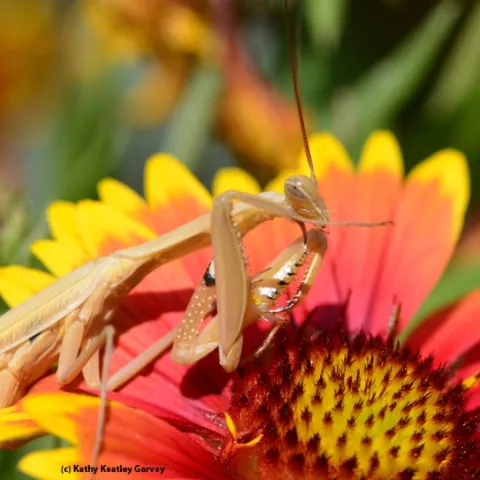
Whenever folks post photos of praying mantids, their readers expect to see prey. You know, the hapless bee or butterfly that made the fatal mistake of getting too close to those spiked forelegs. This praying mantis (below) appeared to have been a hapless victim of another predator.