Two members of IGIS - Shane and Robert, went to the the ESRI User Conference in San Diego this year. Here is their report: We were able to see the new offerings from ESRI that will be available in November of this year. ESRI will be releasing ArcGIS 10.
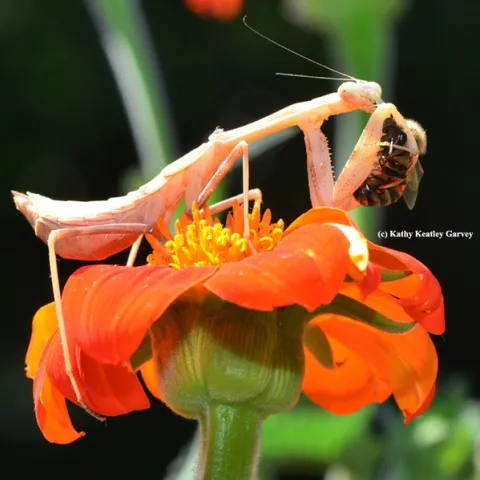
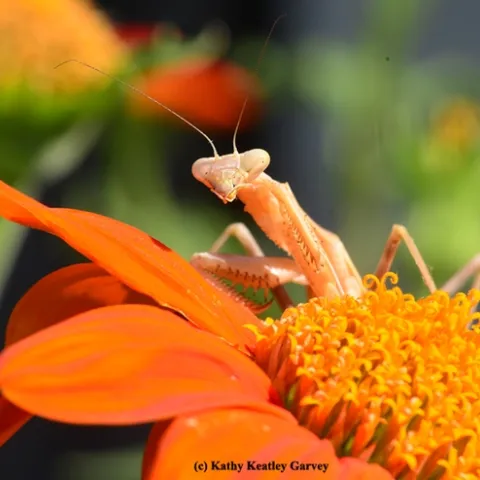
No, no, no, you got it all wrong! I said Please don't eat the pollinators! No butterflies and no bees. Eat the flies, gnats, mosquitoes, aphids and stink bugs. No butterflies or bees. Sadly, the praying mantis in our family bee garden does not listen to me.
The ESRI User Conference in San Diego was a great conference to attend this year. We were able to see the new offerings from ESRI that will be available in November of this year. ESRI will be releasing ArcGIS 10.
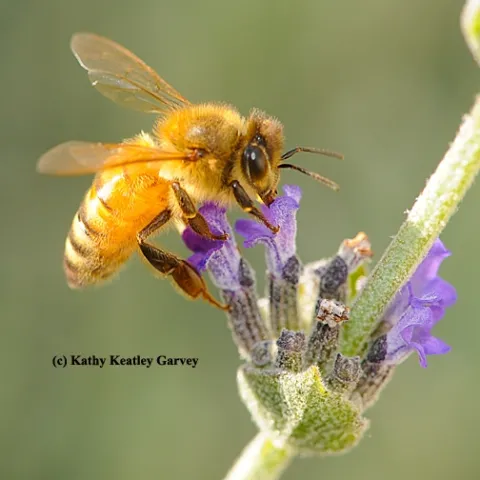
Every time I see a golden jar of honey, I'm reminded of the Cordovan bee (Italian subspecies) that visited the Garvey bee garden back in 2010. I managed to capture a photo of her and labeled the image "Golden Bee Nectaring on Lavender," because that's what she was doing. Nectaring on lavender.
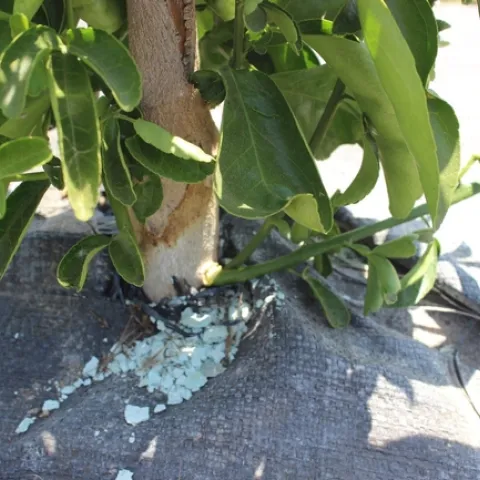
Since the first publication of this article on vole damage in citrus, a recent field observation regarding vole activity is worth noting. Voles prefer a situation where there is cover and shelter generally from weed or grass.
If I were in charge of a praying mantis' daily diet, I would enforce one stringent rule: "Please don't eat the pollinators! Do not, I repeat, target the bees or butterflies.
The Colusa County 2014-15 4-H year kicks off with Hot August ENROLLMENT Nights! Also included are New Leader Orientation dates, information on Primary 4-H Camp, California 4-H at Raley Field...
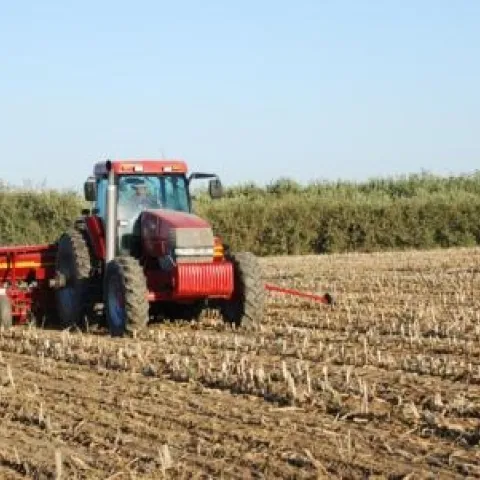
The belief that an unrivaled record of productivity, deep soils and dry climate mean conservation agriculture doesn't apply in California is flat wrong, said Jeff Mitchell, UC Cooperative Extension specialist in the Department of Plant Sciences at UC Davis.
Yesterday the White House launched the second phase of the Climate Data Initiative, focused on leveraging climate data and innovation to make food systems more resilient to climate change and reduce the impact of agriculture on climate change.