Ongoing research

UC Weed Science (weed control, management, ecology, and minutia): Article

Electrocuting weeds

February 26, 2014
By Gale Perez
From the Invasive Plants in Sourthern California blog (http://ucanr.edu/blogs/socalinvasives/index.cfm) This blog should be filed under, They'll try anything, especially if they think there is lots of money in it and they don't know the business.
View Article
Primary Image
White sapote
Topics in Subtropics: Article

White Sapote

February 26, 2014
By Ben A Faber
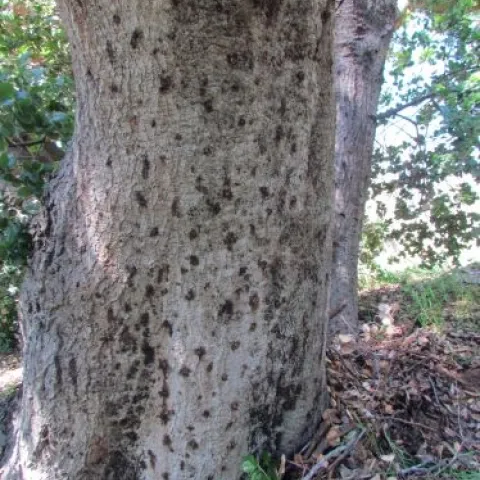
The white sapote is a relative of citrus. However, it is too distant botanically for the fruit to resemble, be graft compatible, or hybridize with citrus.
View Article
Primary Image
Ants by Alexander Wild.

A Book You Can't Refuse

February 25, 2014
By Kathy Keatley Garvey
If you want to learn more about ants, especially those in New York City, then here's a newly published book you can't refuse. And it's not only a book you can't refuse, but you can reuse over and over again. It's that fascinating. "Dr.
View Article
UC Weed Science (weed control, management, ecology, and minutia): Article

Herbicide-resistant weeds a growing problem

February 25, 2014
By Gale Perez
Todd Fitchette wrote the article "Herbicide-resistant weeds a growing problem" for the Western Farm Press (Feb. 18, 2014). Here's the link: http://westernfarmpress.
View Article
Primary Image
Extension apiculturist Eric Mussen getting stung on the wrist. (Photo by Kathy Keatley Garvey)

Can a Bee Unscrew the Sting?

February 24, 2014
By Kathy Keatley Garvey
When a honey bee stings you, she makes the supreme sacrifice and dies. She's usually defending her colony. In the process, she leaves behind part of her abdomen. A beekeeper simply scrapes the sting with a fingernail or a hive tool to stop the pulsating venom and continues working.
View Article
UC Weed Science (weed control, management, ecology, and minutia): Article

Tips on grazing for invasive plant control

February 24, 2014
By Gale Perez
Some tips on grazing for invasive plant control Using livestock for controlling invasive plants has a lot of appeal; the animals seem like a natural, green method; they're cute; and at times they can be a very inexpensive way to do some weed control.
View Article
Primary Image
solar compost
Topics in Subtropics: Article

A Safer Source of Inexpensive Orchard Mulch

February 23, 2014
By Ben A Faber
With the proliferation of pests and disease that might appear in mulch used in orchards, it might appear that the practice will become more limited unless the material can be guaranteed to be safe.
View Article
Primary Image
Honey bees foraging on the Pride of Madeira at Bodega Bay. (Photo by Kathy Keatley Garvey

Best of Bodega: Bees Buzzing on Echium

February 21, 2014
By Kathy Keatley Garvey
The Pride of Maderia (Echium candicans) is blooming in the tiny Sonoma coastal community of Bodega. The purplish-blue spiked flowers attract honey bees, bumble bees and syrphid flies. And visitors. And photographers. The honey bees were buzzing all over the Echium last Sunday, Feb.
View Article
Primary Image
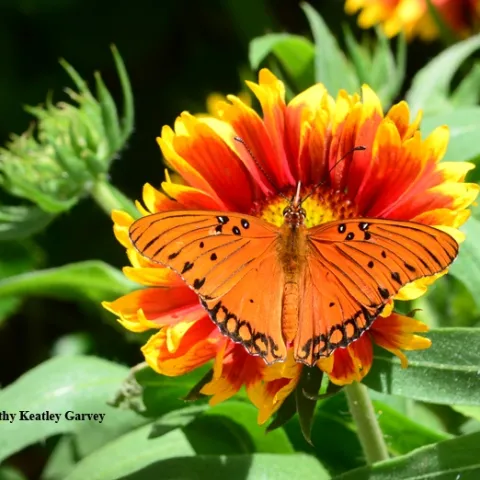
A Gulf Fritillary spotted Feb. 17 near downtown Vacaville, Solano County. (Photo by Kathy Keatley Garvey)

The Survivors

February 20, 2014
By Kathy Keatley Garvey
Just call them "The Survivors." They made it through the winter: the bitter cold with subfreezing temperatures; the 54-day drought (will it ever rain again?) and the heavy rain that caught us thinking about ark-building.
View Article
Primary Image
avocado fruit
Topics in Subtropics: Article

Avocado Pollinizers

February 20, 2014
By Ben A Faber
A trial planted in Oxnard involved eight different pollinizer varieties at three different distances from 'Hass' tree rows. Yield data collected from 2002 2005 suggest that the presence of pollinizer varieties in close proximity enhance the total number of fruit harvested from Hass'.
View Article