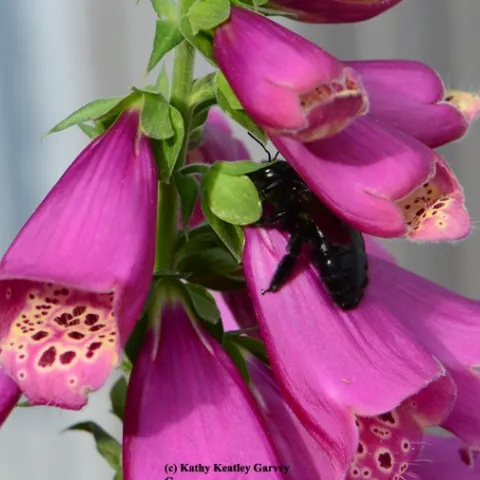
Foxgloves are called "the lurking place of the fairies." That could be. Foxgloves are also known by their genus name, Digitalis--meaning fingerlike. The genus is native to western and southwestern Europe, western and central Asia, Australasia and northwestern Africa.
We have this tall plant in our back yard. How tall is it? Tall enough to give weather forecasts. (It's never caught short by a sudden storm.) Tall enough to see over the neighbor's fence to find a missing ball.
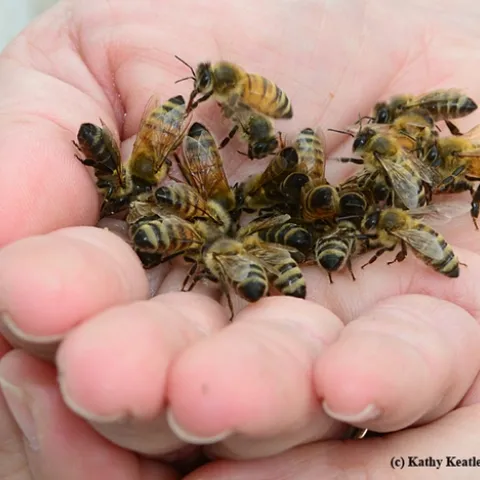
Just call it a "practice run." Or a "buzz run." Barbara Allen-Diaz, vice president of the UC Agriculture and Natural Resources (UC ANR) vowed last year to wear bees if she received at least $2500 in donations for UC student scholarships through the "Promise for Education" fundraising drive.
Elizabeth Fichtner and Dani Lightle, Farm Advisors, UCCE Cooperative Extension The report of a new disease on olive in Italy, called quick decline, marks the first report of the bacterial pathogen, Xylella fastidiosa, in Europe.
"It was a bad hair day," quipped native pollinator specialist Robbin Thorp, emeritus professor of entomology at the University of California, Davis. Yes, it was. A very bad hair day.
UCCE Day of Science and Service on May 8th beascientist.ucanr.edu Fair information: rabbit & poultry entries, fair award sponsorship form, trash can and parade entries, still exhibits received/released...
UC Integrated Pest Management Program (UC IPM) staff distributed ladybugs (actually lady beetles, but when you say "lady beetles," someone is sure to ask "Aren't those LADYBUGS?") at Briggs Hall during the recent UC Davis Picnic Day. A welcome gift, indeed.
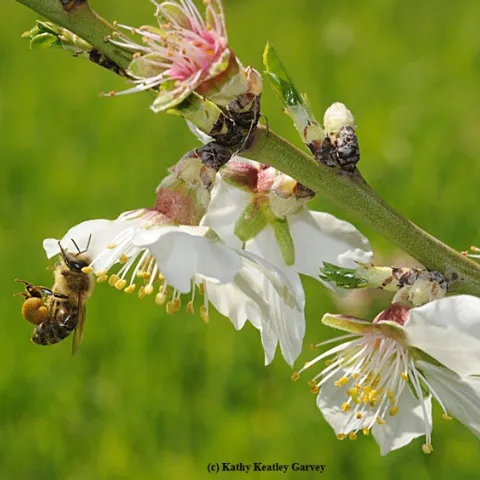
Beekeepers and almond growers are concerned--and rightfully so--about the some 80,000 bee colonies that died this year in the San Joaquin Valley almond orchards. In monetary terms, that's a loss of about $180,000. But the loss isn't just financial. It could have long-term effects.