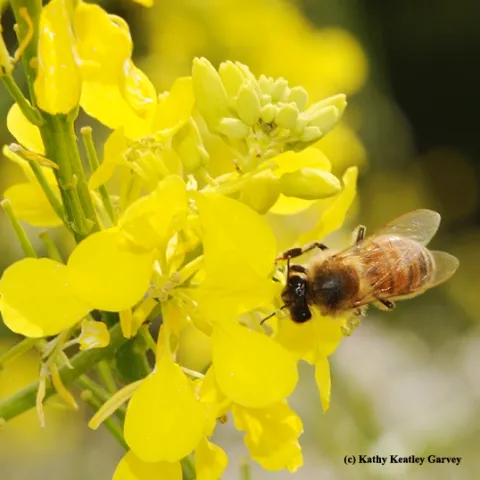
This little ditty was sent to the UC Weed Science group--thought I'd share this with you. The Wild Radish Song by Bill Long http://www.youtube.com/watch?v=J7Kv5tl2rK0&feature=youtu.
"How to Attract and Maintain Pollinators in Your Garden." That's the title of a new publication by the University of California Agriculture and Natural Resources (UC ANR) and what a gem this is. It's not only a gem, but it's free. You can download the publication on this site.
Prior to the latter half of the 20th century, weed control in agriculture was achieved almost exclusively through mechanical means (e.g. plowing, cultivating, disking, hoeing, and hand-pulling) (Timmons 1970).
We have had resurgence of broad mite damage on coastal lemons this year. We haven't seen damage like this in a long time. Chlorpyriphos should care of it, but with small orchards, spray drift can be an issue. We looked at releasing the predatoiry mite Neoseiulus californicus.
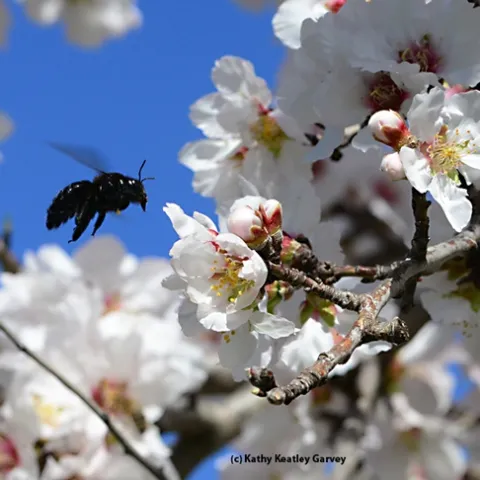
These freezing temperatures we're experiencing make us yearn for spring. True, it's still autumn and winter doesn't officially start until Dec. 22, but it's a good time to think of honey bees pollinating the almond blossoms. California almonds usually bloom around mid-February.
By law, fieldworkers and pesticide handlers must be trained in basic pesticide safety and personal protection, but who trains their trainers? Pesticide Safety Education Coordinator Lisa Blecker will be giving Train the Trainer workshops in 2014 in various locations around the state.
If you're looking for a cause to support, consider the Bohart Museum of Entomology at the University of California, Davis. The museum crew, led by director Lynn Kimsey, professor of entomology at UC Davis, is enthusiastic, knowledgeable, and dedicated.
Position Announcement Title: Assistant ProfessorOrnamental and Landscape Invasive Weed Management Location: Mid-Florida Research and Education Center, University of Florida, Institute of Food and Agricultural Sciences (IFAS) Apopka, Florida Salary: Commensurate with Qualifications and Experience Rev...
Evaluating Damage to Baby Trees Requires Patience Earlier temperatures and forecasted temperatures do not appear to be cold enough to freeze baby trees in the citrus belt. Time will tell.