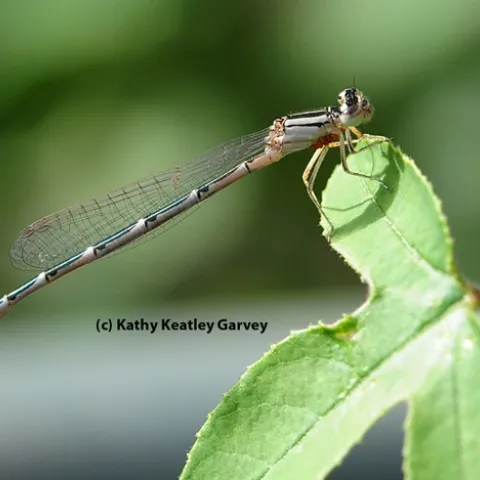
It pays to have a pond. A pond attracts dragonflies and damselflies. Last weekend, though, we spotted a damselfly a good 65 feet away from our pond. It touched down on our passion flower vine (Passiflora). Lights, camera, action...
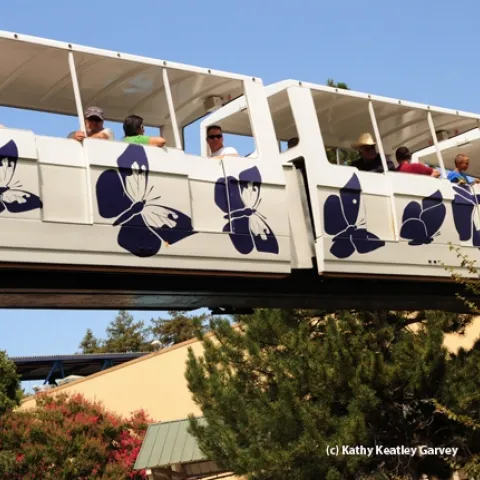
Quick! What butterfly is depicted on the California State Fair monorail train? Hint: It's the state insect. "What, we have a state insect?" you ask. Yes, and it's the California dogface butterfly (Zerene eurydice).
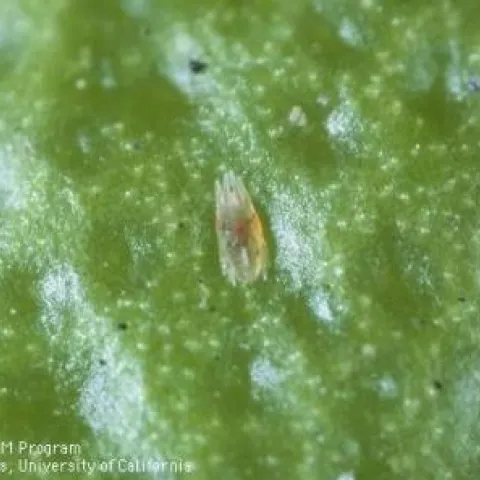
Brevipalpus mite species belong to a larger group or family of mites the Tenuipalpidae, referred to as flat mites. The genus Brevipalpus is considered the most important one in the family. The mites are small ranging in size from 200-400 micrometers in length, flattened and frequently red in color.
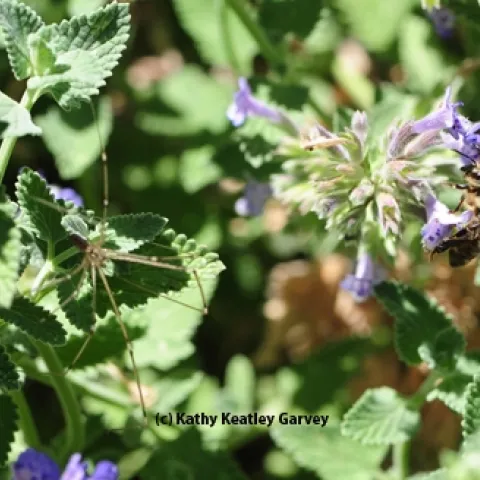
Just call it a missed opportunity. Catmint (genus Nepeta) draws scores of insects, from honey bees to leafcutter bees to European wool carder bees. It also draws spiders. We usually see a cellar spider (family Pholcidae) trapping prey in its web.
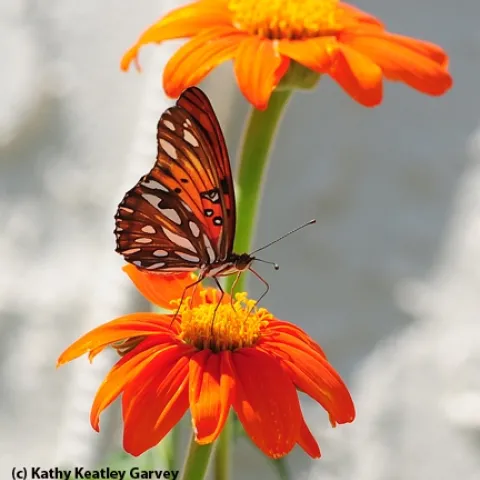
For months, I've been waiting ah, so patiently (well, not always s-o-o-o patiently) for the gulf fritillary butterfly to touch down on our Mexican sunflower, Tithonia. A perfect match, I figured.
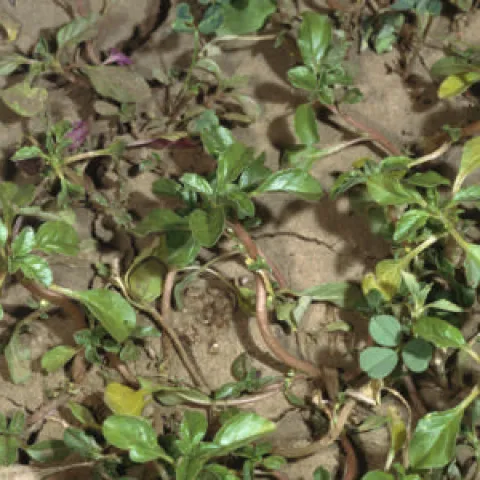
This is the third in my series of posts outlining current University of California weed science research published in the California Weed Science Society (CWSS) Research Update and News (June 2013, Volume 9, #2).
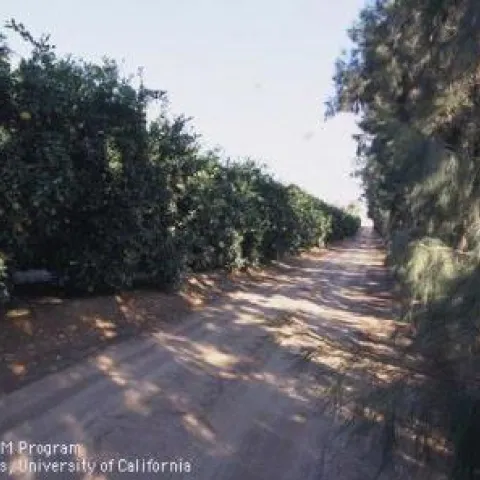
Along the coast, it is very common to see windbreaks protecting the citrus and avocado groves. Invariably the first two rows next to the eucalyptus trees are shorter and less thrifty than the citrus further away from the windbreak.
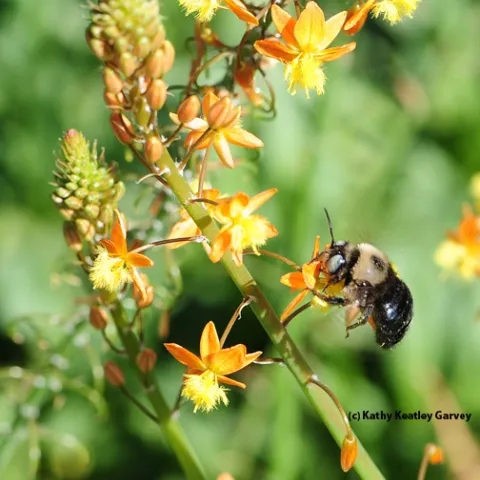
Look at the Xylocopa on the Xanthorrhoeaceae. If that sounds like a mouthful, think of the mountain or foothill carpenter bees, Xylocopa tabaniformis orpifex, on bulbine from the genus Bulbine in the family Xanthorrhoeaceae.
A repost of an article by Luis Espino (UCCE Farm Advisor, Colusa Co) on the UC Rice Blog. You can see the originl post HERE He also had a post on a similar topic earlier HERE that had some results from Albert Fischer and Jim Eckert's research on smallflower umbrella sedge.