UC ANR is committed to providing an accessible and inclusive web experience for all users. If you encounter an accessibility barrier or need content in an alternative or remediated accessible format, please contact anraccessibility@ucanr.edu.
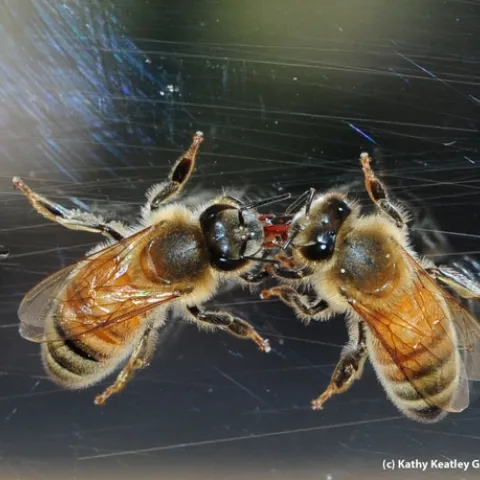
We can all learn from the honey bees. Worker bees--sisters--are like feeding machines. They not only feed each other, but feed the queen and their brothers, the drones. It's a marvelous sight to see, nectar being passed from one bee to another.
Everywhere you turn these days, the term citizen science is in use. The National Wildlife Federation (NWF) dedicates a page of its website to the topic.
The sixth and final segment of the Conservation Agriculture Systems Innovation documentary, posted today on the CASI website, features farmers who are successfully combining conservation tillage with overhead irrigation systems, such as center pivots. (The video is also posted below.
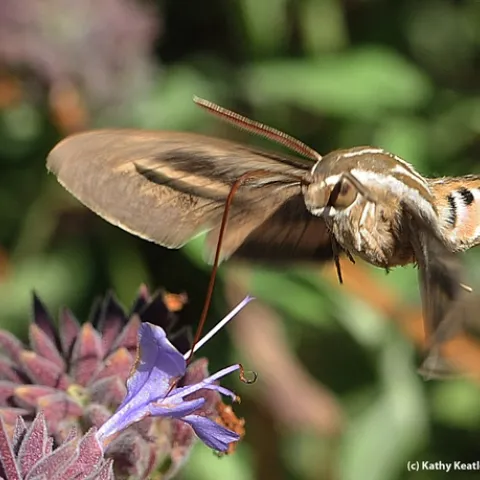
Our cat used to catch them. She'd bring them into the house and watch them flutter at our feet. The white-lined sphinx moth (Hyles lineata) flies during the day and at night. It's not a graceful flier. It bumbles along like Howard Hughes' Spruce Goose on empty. With a wing span between 2.7 and 3.
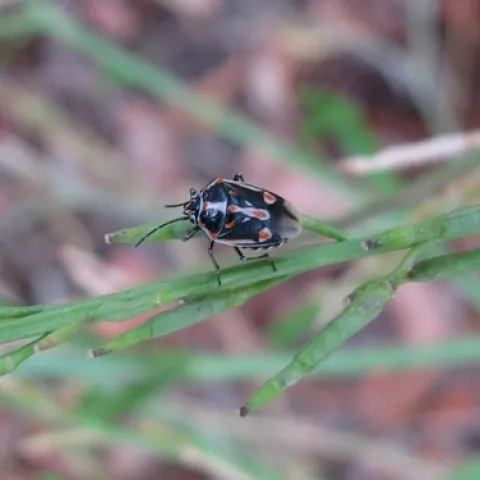
It was in last January when I first wrote about the invasive pest Bagrada bug (Bagrada hilaris). It was only reported in Imperial, Riverside, and Orange Counties at that time.
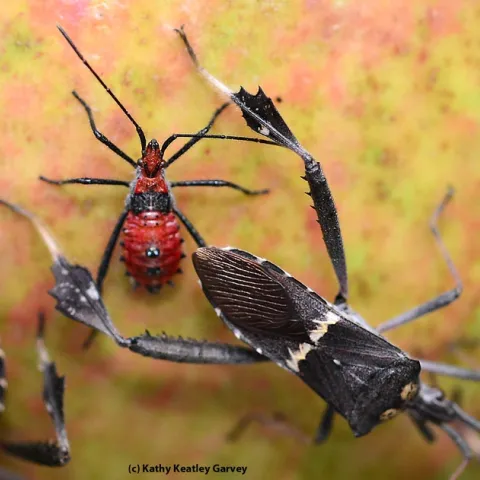
It's easily missed because it's only a fraction of an inch long. But the color--a brilliant red--is right there. It's a little difficult to see on a red pomegranate, but it's there. What's there? The nymph of a leaffooted bug (Leptoglossus zonatus).