UC ANR is committed to providing an accessible and inclusive web experience for all users. If you encounter an accessibility barrier or need content in an alternative or remediated accessible format, please contact anraccessibility@ucanr.edu.
Abstract: Farmers view weed management and the risk of lower yields as barriers to transition from conventional to organic agriculture. The 3 years of transition before organic certification can be used to implement strategies to suppress weeds and improve soil fertility.
This a link to an article in Western Farm Press about herbicide resistance in almond orchards. The article is a synopsis that Bob Curtis wrote about a presentation I made as part of a "What's new in Almond Pest Management" along with Drs.
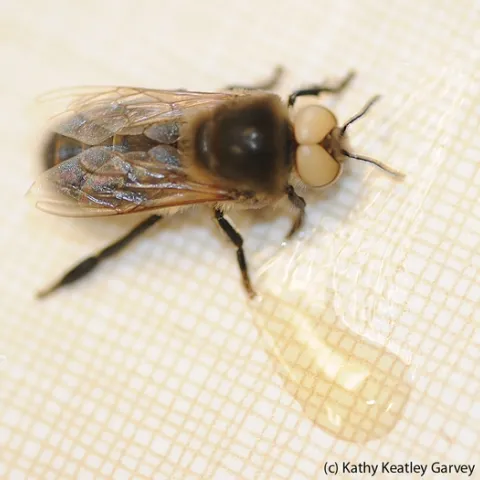
Beekeepers sometimes see a white-eyed drone in their hives--a genetic mutation. All drones (male) honey bees, have these spectacular wrap-around eyes that are perfect for finding a virgin queen on her maiden flight. After all, the drone's sole purpose is to mate with a queen and then die.
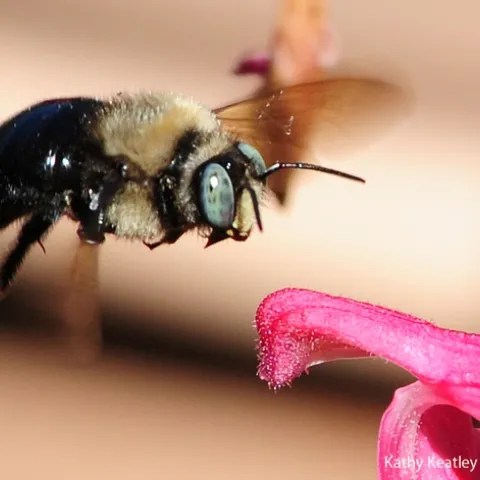
So you're sitting in your yard having your morning coffee, and you get buzzed--not a buzz from the caffeine but a buzz by a carpenter bee. A male carpenter bee, Xylocopa tabaniformis orpifex, is guarding the salvia, fending off all other male suitors as it waits for a female to arrive.
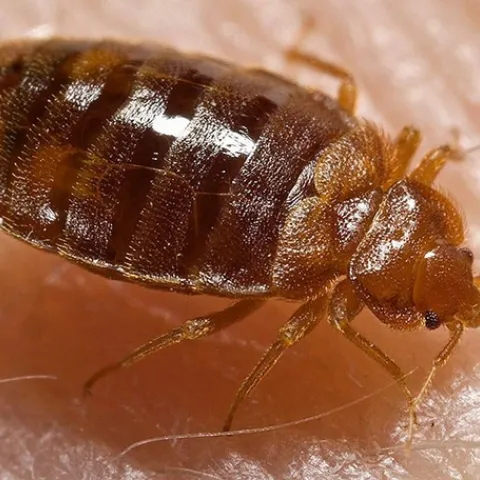
They're tiny--about 1/5 of an inch long. They feed at night and hide during the day. There's a good reason why they're called "the menace in the mattress." The mattress is one of their hiding spots. They? Bed bugs. Parasites that feed on human blood.
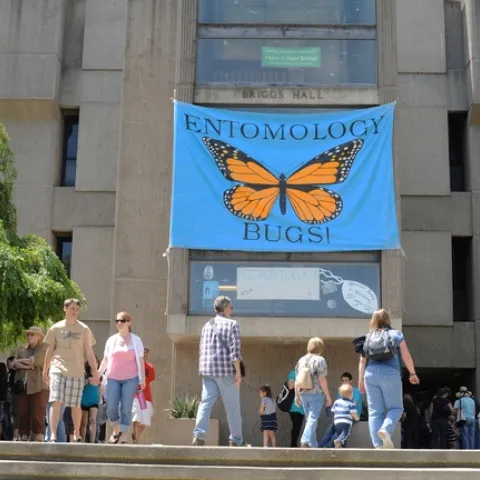
Is there a doctor in the house? If you head over to the UC Davis Department of Entomology's displays at Briggs Hall and at the Bohart Museum of Entomology on Saturday, April 21 during the campuswide UC Davis Picnic Day, you'll find them. Bug doctors. Lots of them. They'll be there from 10 a.m.
When you listen to a rainforest, what do you hear? What does it tell you? Those who attend the free public event, Mentawai: Listening to the Rainforest, on Sunday, April 22 on the UC Davis campus will find out.
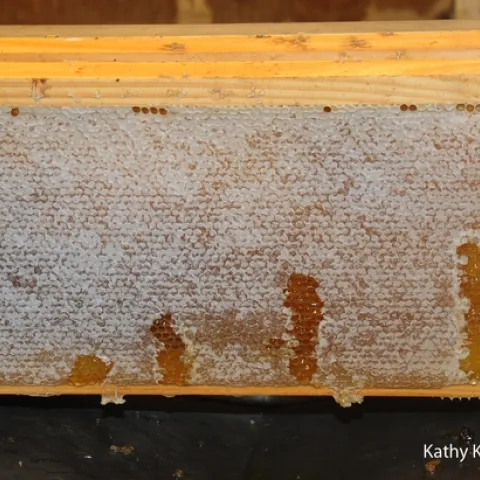
One of the six honey varieties that the UC Davis Department of Entomology will serve during the campuswide 98th annual UC Davis Picnic Day on Saturday, April 21 is...drum roll...cactus honey. Yes, you heard that right. Cactus honey.
While the Asian citrus psyllid/HLB pest-disease complex has received a lot of press lately, another deadly pest-disease combination has been found in Los Angeles County. Tea Shot Hole Borer (Euwallacea fornicatus) is a vector for the Fusarium fungus. A native from Asia, this beetle is very small.