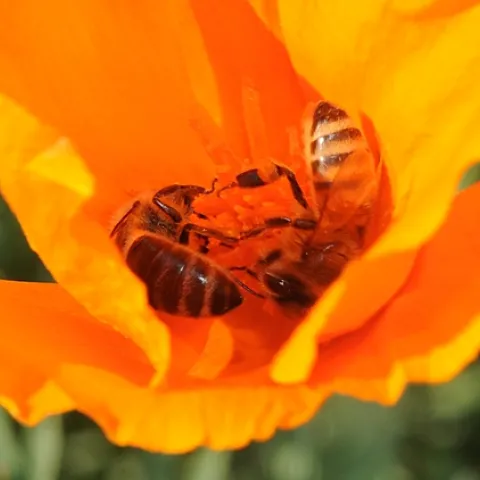
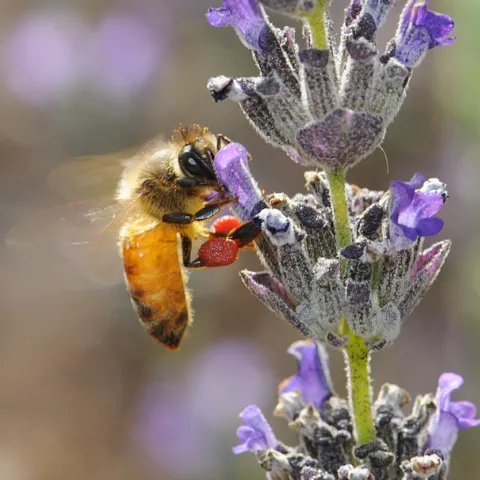
When California poppies (Eschscholzia californica) bloom and honey bees battle over the blossoms, can spring be far behind? No, it's just California's pleasant weather.
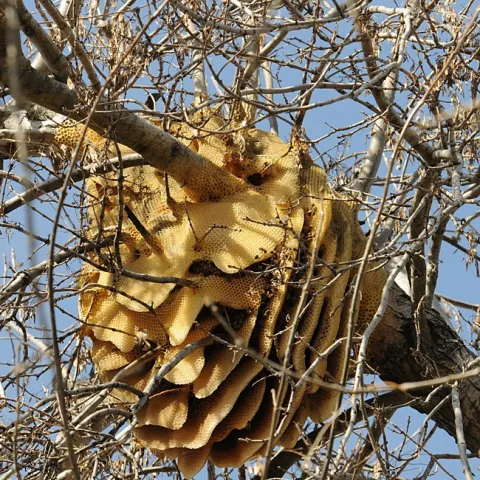
As 2012 approaches, it's "out with the old and in with the new!" Not always. The huge feral honey bee colony that we photographed Jan. 9, 2011 in a Modesto ash tree at a Vacaville (Solano County), backyard, is still going strong.
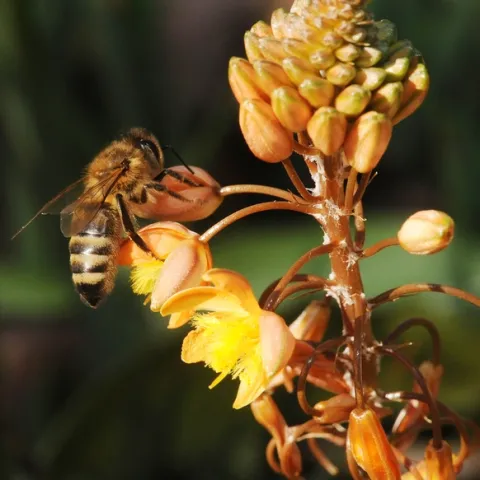
It's like a spray of sunshine in the depths of winter. The Bulbine frutescens, native to the desert grasslands of South Africa, is blooming well in the Hagen-Dazs Honey Bee Haven at the Harry H. Laidlaw Jr.
You won't find anyone more passionate about building a better bee than bee breeder-geneticist Susan Cobey, who holds dual appointments at the University of California, Davis and Washington State University.
Wed like to challenge you to take the following quiz. Take a minute to place a check mark next to all the practices you regularly employ in your operation.
If you're planning to join the ranks of backyard beekeepers in 2012, you should keep a few things in mind, says Extension apiculturist Eric Mussen of the UC Davis Department of Entomology.
Lots of youngsters received teddy bears as holiday gifts. But native pollinator specialist Robbin Thorp, emeritus professor of entomology at UC Davis, received a teddy bear, too. Of sorts.
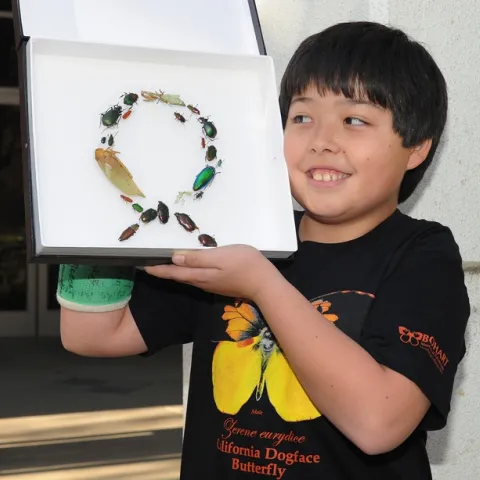
Gotta love those entomologists and all the "bug people" who love bugs. The folks at the Bohart Museum of Entomology on the UC Davis campus not only love their bugs but they're quite creative in showcasing them.
Assistant professors Louie Yang and Joanna Chiu have just announced the UC Davis Department of Entomology's list of seminar speakers for the winter quarter. And what a list it is! It's a winter wonderland of speakers.
One of my major areas of research the past few years has been related to alternatives to methyl bromide fumigation in perennial crop nurseries. A list of recent posts on soil fumigation research and issues is available.