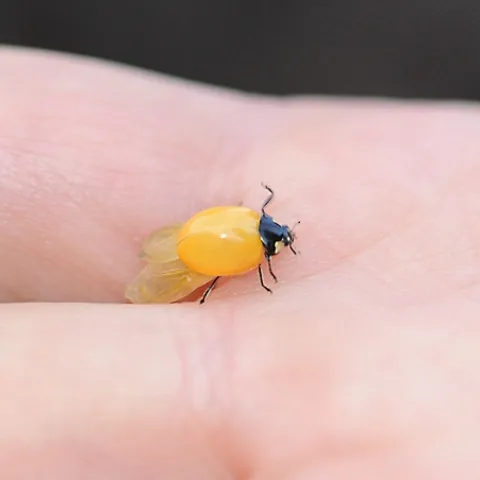
Yes, they are. The ladybugs are out, at least in some parts of Northern California. We received an email last week from a professional wildlife photographer from Germany who wants to film hibernating ladybugs in February. He's on a magazine assignment.
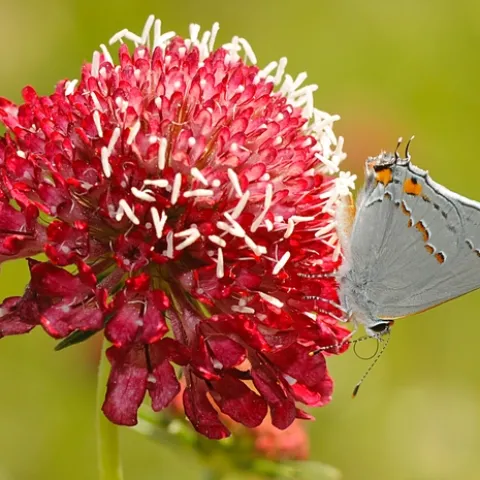
He did it. I knew he would Hardly anyone can beat University of California, Davis professor Arthur Shapiro in finding the first cabbage white butterfly of the year. For the past 38 years, he's been hosting a "Beer-for-Butterfly" contest.
The praying mantis glared at me. It was not afraid of me, my camera, or my jockeying around to get a better position. When I captured the image (below) last fall in a neighbor's garden, I decided that in 2009, I would get my very own praying mantis. Or maybe dozens of them.
Dianne DiBlasi is frustrated. Shes the advisor of Team B.E.E.S. (Bergen Environmental Effort to Save Bees), a group of six high school students in Allendale, N.J. involved in a honey bee project.
Dear Bee Scientists, wrote 6-year-old Katie Brown of Phoenix, Ariz. I am giving this money to you so you can help the bees. I love the bees. She enclosed $20 from her allowance savings. Hannah Fisher Gray, 11, of Wilmington, Del.
If you meander over to the Bohart Museum of Entomology, UC Davis campus, you'll see a very tiny predator that looks for all the world like a green leaf. It's the Gambian spotted-eye flower mantis and it's one of the many live specimens housed there.
If you've been around honey bee hives much, you know what a smoker is. It's a tool that beekeepers use to inspect, manipulate or handle a hive. They smoke a hive to check the health of the colony, to add a little food, and to take a little honey.
Know your ants. If you want to identify red imported fire ants and other invasive ants found in the Pacific Island region, a newly launched Web site by an entomology graduate student at the University of California, Davis, will help you do just that.
Heres another good reason to be kind to ladybugs. But we are, arent we? EurekAlert! alerted us Jan. 6 to a study relating that an abundance of ladybugs in olive orchards is an indicator of health and sustainability.
Catherine Chalmers hates cockroaches. She said so at her presentation Wednesday night, Jan. 7, at UC Davis. The occasion: The Consilience of Art and Science centennial colloquium, sponsored by the UC Davis Art/Science Fusion experimental learning program. We have an adversarial relationship.