Ongoing research

Primary Image
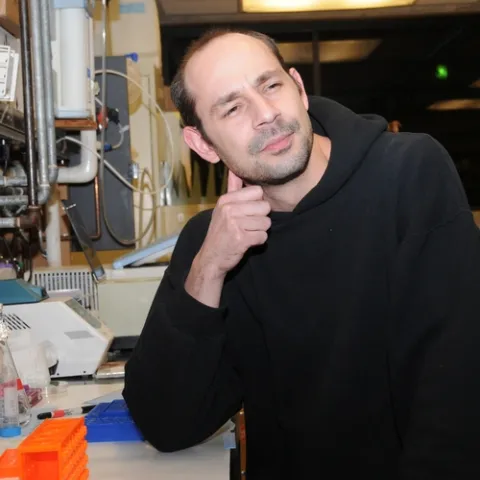
UC DAVIS ENTOMOLOGIST James R. Carey, director of a federally funded program on aging and lifespan, will speak on "Demography of the Finitude: Insights into Lifespan, Aging and Death from Insect Studies" from 12:10 to 1 p.m. on Wednesday, Oct. 21 in 122 Briggs Hall, UC Davis. It can be accessed live. (See above for link.) (Photo by Kathy Keatley Garvey)

What We Can Learn from Insects

October 16, 2009
By Kathy Keatley Garvey
What can we learn from insects? Lots. But first, let's talk about the UC Seminar Network. It's a pilot program that involves Webcasting scientific seminars on University of California campuses.
View Article
Primary Image
JERUSALEM CRICKET is not really a true cricket or a true bug. It's an insect that burrows beneath the soil to feed on decaying organic matter. During a heavy rainfall, you'll see them emerge from the soaked ground. (Photo by Kathy Keatley Garvey)

Not Jiminy

October 15, 2009
By Kathy Keatley Garvey
It was an unexpected visit. UC Davis bee breeder-geneticist Susan Cobey noticed the critter in one of the restrooms at the Harry H. Laidlaw Jr. Honey Bee Research Facility at UC Davis. She found it several days after the massive Oct. 12 storm raced through Northern California.
View Article
Primary Image
QUEEN BEE, marked with the dot, is circled by her royal attendants in a retinue. This was taken through the glass of an observation hive. (Photo by Kathy Keatley Garvey)

Life and Death in the Hive

October 14, 2009
By Kathy Keatley Garvey
Life and death in the bee observation hive... If you ever have the opportunity to check out a bee observation hive--a glassed-in hive showing the colony at work--you can easily spot the three castes: the queen bee, worker bees and drones.
View Article
Primary Image
HONEY BEE nectars a blue marguerite daisy, a member of the sunflower family. (Photo by Kathy Keatley Garvey)

Blue Day for the Bees

October 13, 2009
By Kathy Keatley Garvey
It's a blue day for the honey bees. The massive Northern California storm--one of our worst-ever storms and marked by heavy rains and equally strong winds--means that bees are clustering inside their hives. No foraging today.
View Article
Primary Image
THIS EGG CASE on a potted plant outside the Harry H. Laidlaw Jr. Honey Bee Research Facility, UC Davis, will yield from 100 to 200 tiny mantises next spring when the weather warms. A praying mantis recently deposited her eggs on the plant. (Photo by Kathy Keatley Garvey)

Cold Case

October 12, 2009
By Kathy Keatley Garvey
Here's a "cold case" to investigate. Check your backyard or neighborhood park and see if a praying mantis has deposited an egg case on a tree limb, plant or fence. Case in point: Over at the Harry H. Laidlaw Jr.
View Article
Primary Image
THIS VARROA MITE is feeding on a drone pupa. Varroa mites reproduce in the brood cells and attack the developing bees. (Photo by Kathy Keatley Garvey)

Not a Pretty Sight

October 9, 2009
By Kathy Keatley Garvey
It's not a pretty sight--the Varroa mite attacking a honey bee. Beekeepers are accustomed to seeing the reddish-brown, eight-legged parasite (aka "blood sucker") in their hives. UC Davis bee breeder-geneticist Susan Cobey, manager of the Harry H. Laidlaw Jr.
View Article
Primary Image
TINY female sweat bee (Halictus tripartitus) nectaring rock purslane. (Photo by Kathy Keatley Garvey)

Between a Rock and a...

October 8, 2009
By Kathy Keatley Garvey
Caught between a rock and a...soft place... You'll often see tiny sweat bees nectaring rock purslane (Calandrinia grandiflora) in urban gardens. This plant, a native of Chile, brightens landscapes with its pinkish magenta blossoms.
View Article
Primary Image
SUNFLOWER BEE, Diadasia enavata, forages on a New England Aster in the UC Davis Arboretum. This is a female, as identified by pollinator specialist Robbin Thorp, emeritus professor, UC Davis Department of Entomology. (Photo by Kathy Keatley Garvey)

Sunny Day, Sunny Bee

October 7, 2009
By Kathy Keatley Garvey
The UC Davis Aboretum--particularly the Storer Garden--is full of color--and sunflower bees. A recent trip to see the New England Asters (Aster novae-angliae from the Asteraceae or sunflower family) yielded a Nikon moment: fuzzy-wuzzy sunflower bees foraging on the striking purple flowers.
View Article
Primary Image
FIRST SPEAKER--Biological control scientist Madoka Nakai, associate professor, Tokyo University of Agriculture and Technology, will discuss biocontrol of tea pests in her talk, “A Novel Protein from Lepidopteran Virus Killing Endoparasitoid and Viral Control for Tea Pests in Japan,” at noon, Wednesday, Oct. 7 in 122 Briggs Hall, UC Davis. The lecture will be Webcast.

When Seminars Become Webinars

October 6, 2009
By Kathy Keatley Garvey
Like to know more about the biocontrol of tea pests? Aging of insects? What honey bee research is under way? If you can't physically attend the UC Davis Department of Entomology's fall seminars, starting Wednesday noon, Oct.
View Article
Primary Image
THIS TINY HOVER FLY is nectaring on a strawberry blossom at the Häagen-Dazs Honey Bee Haven, a half-acre bee friendly garden being developed on Bee Biology Road, UC Davis. This hover fly is most likely from the genus Paragus sp., said UC Davis emeritus professor and pollinator specialist Robbin Thorp. (Photo by Kathy Keatley Garvey)

Not Just the Bees

October 5, 2009
By Kathy Keatley Garvey
It's not just the honey bees that will be foraging in the half-acre Hagen-Dazs Honey Bee Haven on Bee Biology Road, UC Davis. Scores of native bees and other insects will be there, too. They already are. A weekend visit to the haven, a bee friendly garden being developed next to the Harry H.
View Article