Ongoing research

Primary Image
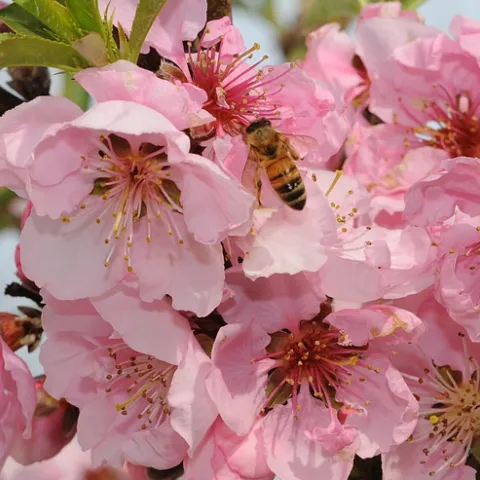
POLLEN-PACKING honey bee buzzes over a pink begonia. (Photo by Kathy Keatley Garvey)
Bug Squad: Article

A Bee on The Bee-gonia

September 21, 2009
By Kathy Keatley Garvey
If there's one plant in our yard that the honey bees don't like, it's the begonia. Lavender, sage, catmint and sedum? Bring 'em on. Sunflowers, citrus and pomegranate? Yes! Yes! Yes! Rock purslane? Like rock candy. Oh, how about a little begonia, Ms. Honey Bee? Sorry, not interested.
View Article
Primary Image
A HONEY BEE nectars sedum, a favorite among gardeners and bees. This sedum is "Autumn Joy." (Photo by Kathy Keatley Garvey)

Reducing Pesticide Use

September 18, 2009
By Kathy Keatley Garvey
Good news! Entomologist Michael Parrella, professor and chair of the UC Davis Department of Entomology and a member of the UC Davis Department of Plant Sciences faculty, has just received one of three Pest Management Alliance Grants awarded by the California Department of Pesticide Regulation (DPR)...
View Article
Primary Image
A HONEY BEE nectars a dwarf tangerine bulbine (Bulbine frutescens) in the UC Davis Arboretum. (Photo by Kathy Keatley Garvey)
Bug Squad: Article

Bee-ing There for the Bees

September 17, 2009
By Kathy Keatley Garvey
Apimondia. No, it's not a rock band or a new dance move or a new Billboard hit. It's the name of a worldwide bee organization. The 41st World Apiculture Congress is meeting this week through Sunday, Sept. 20 in Montepellier, France, and the buzz is all about what's killing the honey bees.
View Article
Primary Image
BAXTER HOUSE, built in 1938, went up in flames on June 30 in a UC Davis firefighters' control burn. The grounds will now be a quarter-acre field of wildflowers called The Campus Buzzway. (Photo by Kathy Keatley Garvey)

It's All the Buzz

September 16, 2009
By Kathy Keatley Garvey
Rising soon from the ashes of the Baxter House fire will be the soothing colors of the Campus Buzzway. It's a story that began in May 1938 with a farmhouse-turned-lab-turned-eyesore. It will end with the honey bees' version of "A Field of Dreams"--the Campus Buzzway.
View Article
Primary Image
HONEY BEE, packing pollen, heads into a patch of Argentine rain lilies (Zephyranthes candida) in the White Garden, UC Davis Arboretum. (Photo by Kathy Keatley Garvey)
Bug Squad: Article

It's Raining Rain Lilies

September 15, 2009
By Kathy Keatley Garvey
It's raining rain lilies in the Carolee Shields White Flower Garden of the UC Davis Arboretum. The Argentine Rain Lily (Zephyranthes candida), also known as the White Rain Lily, White Fairy Lily and White Zephyr Lily, is drawing a few honey bees, but the bees like the lavender and sage best.
View Article
Primary Image
BLACK-FACED BUMBLE BEE, Bombus californicus, nectars salvia in the Storer Garden, UC Davis. This salvia is Salvia officinalis, cultivar Berggarten. (Photo by Kathy Keatley Garvey)

Warding Off Evil

September 14, 2009
By Kathy Keatley Garvey
If you stuff your turkey with sage, chances are it's Salvia officinalis. Not the turkey, the sage.
View Article
Primary Image
BLACK SOLDIER FLY or Hermetia illucens, about three-fourths of an inch long, heads for bark mulch. (Photo by Kathy Keatley Garvey)

Soldiering Along

September 11, 2009
By Kathy Keatley Garvey
If you're into composting, chances are you've seen this one. Common name: black soldier fly (BSF). Scientific name: Hermetia illucens. Before you say "yecch"--wait! This is considered a beneficial insect because its larvae are quite desirable in compost piles.
View Article
Primary Image
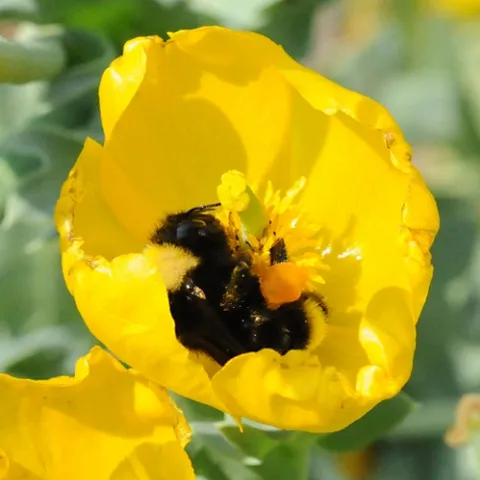
YELLOW-FACED bumble bee inside a rock purslane blossom. (Photo by Kathy Keatley Garvey)

Unexpected Visitor

September 10, 2009
By Kathy Keatley Garvey
It's time to pop open a bottle of champagne and do a happy dance. Finally, finally, we saw a yellow-faced bumble bee (Bombus vosnesenskii) in our yard. After a 20-year absence.
View Article
Colusa County: Article

January 2007

September 10, 2009
South Sacramento Valley Almond Meeting Announcement Sutter/Yuba/Colusa Walnut Day Announcement...
View Article
Primary Image
CARPENTER BEE (Xylocopa tabaniformis orpifex) robs nectar from a salvia (sage) by slitting the corolla. A carpenter bee is too big to enter the tubelike blossom. (Photo by Kathy Keatley Garvey)
Bug Squad: Article

Two Nectar Robbers

September 9, 2009
By Kathy Keatley Garvey
You've probably seen carpenter bees engage in the practice known as "nectar robbing." Due to their large size, they cannot enter tubelike blossoms such as salvia (sage), so they slit the base of the corolla. They rob the nectar without pollinating the flower.
View Article