Ongoing research

Primary Image
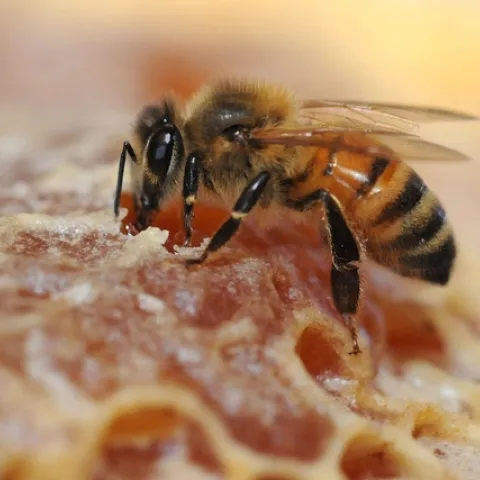
HONEY BEE at the Harry H. Laidlaw Jr. Honey Bee Research Facility at the University of California, Davis, samples honey. (Photo by Kathy Keatley Garvey)
Bug Squad: Article

Not the Honey!

January 5, 2010
By Kathy Keatley Garvey
How ironic. We recently wrote about Los Alamos National Laboratory scientists training honey bees to detect explosives. It works this way: they harness bees and place them in little scientific containers. When the bees detect the scent of explosives, they stick out their tongues.
View Article
Primary Image
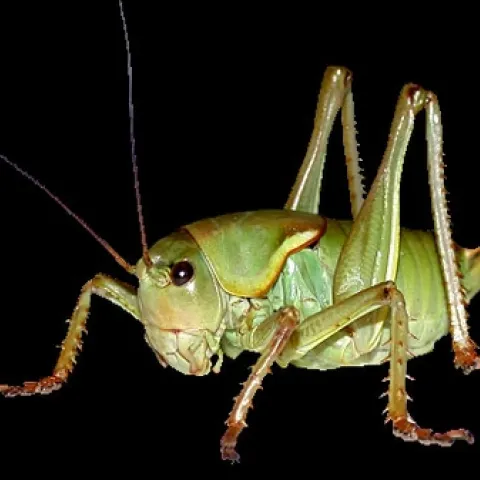
MORMON CRICKET, courtesy of Nathan Bailey of UC Riverside.
Bug Squad: Article

All About Crickets

January 4, 2010
By Kathy Keatley Garvey
When the Department of Entomology at the University of California, Davis, launches its winter noonhour seminar series on Wednesday, Jan. 6, crickets will be first in line.
View Article
Primary Image
SWAMP SUNFLOWER (Helianthus angustifolius) graces the entrance to the Harry H. Laidlaw Jr. Honey Bee Research Facility at the University of California, Davis. (Photo by Kathy Keatley Garvey)
Bug Squad: Article

Bees Love This Late Bloomer

January 1, 2010
By Kathy Keatley Garvey
The swamp sunflower that graces the entrance to the Harry H. Laidlaw Jr. Honey Bee Research Facility, University of California, Davis, does quadruple duty. It's stunningly beautiful. It's strong and sturdy. It's a late bloomer. And the honey bees love it.
View Article
Primary Image
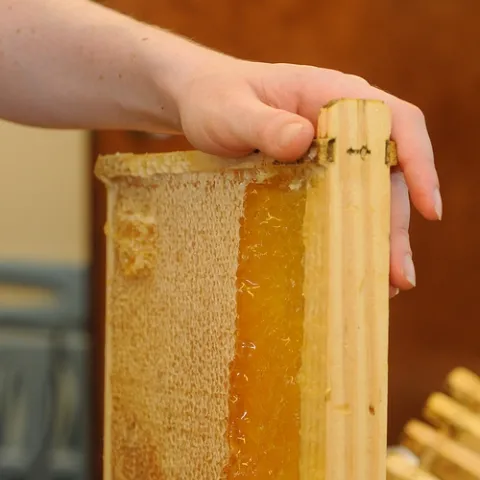
HONEY EXTRACTION at the Harry H. Laidlaw Jr. Honey Bee Research Facility, UC Davis. (Photo by Kathy Keatley Garvey)
Bug Squad: Article

A Taste of Honey

December 31, 2009
By Kathy Keatley Garvey
Honey! Say that at the American Honey Producers' Association (AHPA) convention Jan. 5-9 in Sacramento, and it's not a term of endearment. It's an occupation, a calling and a passion. This is their 41st annual convention and the talk is serious about the declining honey bee population.
View Article
Primary Image
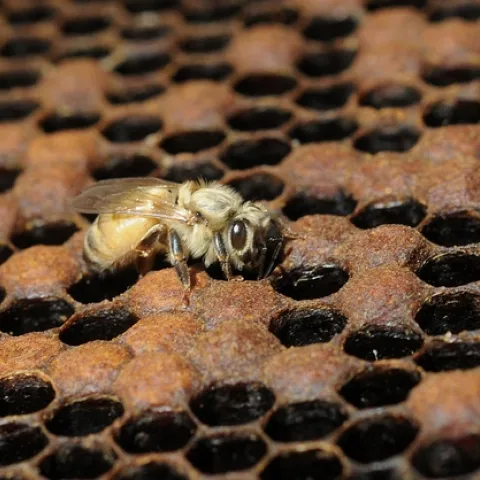
A NEWLY EMERGED BEE at the Harry H. Laidlaw Jr. Honey Bee Research Facility at the University of California, Davis. (Photo by Kathy Keatley Garvey)
Bug Squad: Article

A Victory for the Bees

December 30, 2009
By Kathy Keatley Garvey
It's being hailed by environmental groups as "a victory for the bees." A U.S. federal judge has ruled that the insecticide, spirotetramat, must be pulled from the shelves because it could be dangerously toxic to America's declining honey bee population. Starting Jan.
View Article
Primary Image
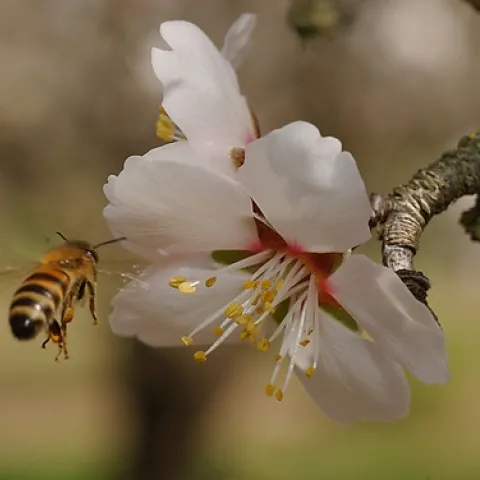
HONEY BEE makes a beeline to an almond blossom on the grounds of the Harry H. Laidlaw Jr. Honey Bee Research Facility at the University of California, Davis. California's annual almond pollination begins in February. (Photo by Kathy Keatley Garvey)
Bug Squad: Article

Waiting for the Almond Blossoms

December 30, 2009
By Kathy Keatley Garvey
Soon beekeepers from around the country will be trucking their bees to California for the annual almond pollination. California has some 700,000 acres of almonds, with each acre requiring two hives for pollination. But an article in the Dec.
View Article
Primary Image
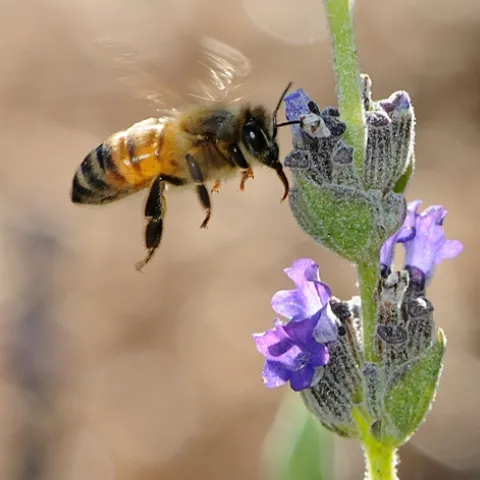
TONGUE EXTENDED in anticipation of nectar, a honey bee heads for lavender. Using the Pavlov dog method, bees can be trained to stick out their tongue, or proboscis, when they smell explosives. (Photo by Kathy Keatley Garvey)
Bug Squad: Article

Bomb-Sniffing Bees?

December 28, 2009
By Kathy Keatley Garvey
The attempt to down an airline over Detroit, Mich., on Christmas Day with a chemical explosive strapped inside a passenger's underwear may spur new interest in honey bees as bomb-sniffing detectives. It brings to mind scientist Robert Wingo's recent talk at UC Davis.
View Article
Primary Image
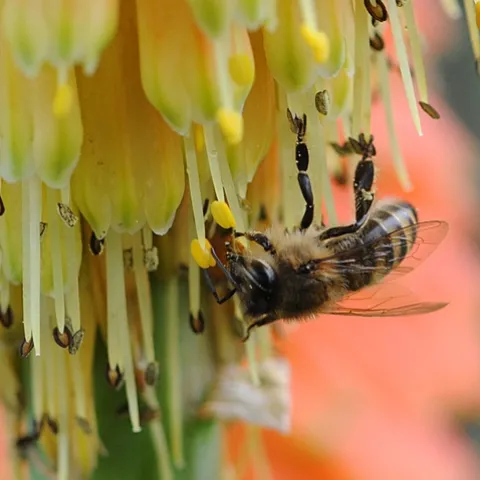
A SOLITARY HONEY BEE forages among the Christmas Cheer, also known as Knipofia "Christmas Cheer' or "red-hot poker." (Photo by Kathy Keatley Garvey)
Bug Squad: Article

Good Dose of Christmas Cheer

December 25, 2009
By Kathy Keatley Garvey
Definitely a good dose of Christmas Cheer! In the plant world, that would be the Kniphofia Christmas Cheer," also known as "red-hot poker." On a visit last week to the Storer Garden, UC Davis Arboretum, we encountered a lone honey bee foraging among the Christmas Cheer.
View Article
Primary Image
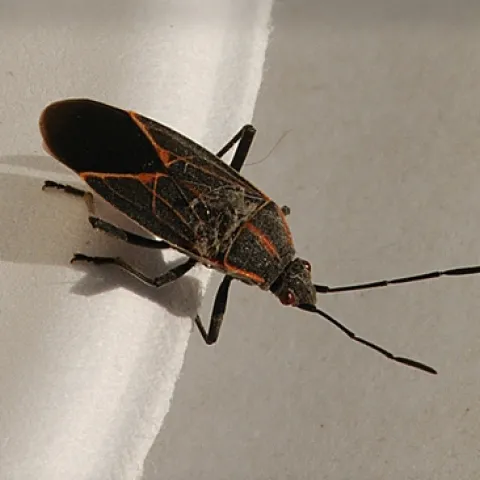
BOXELDER BUG likes to overwinter in homes and garages. (Photo by Kathy Keatley Garvey)
Bug Squad: Article

Not a Creature Was Stirring?

December 24, 2009
By Kathy Keatley Garvey
'Twas the night before Christmas When all through the house Not a creature was stirring Not even a mouse... --'Twas the Night Before Christmas by Clement Clarke Moore (1779-1863) No, but maybe a boxelder bug (Boisea trivittatus).
View Article