Ongoing research

Primary Image
PISTACHIO LOVER--This navel orangeworm showed a preference for pistachios. (Photo by Kathy Keatley Garvey)

Penchant for Pistachios Leads to Startling Find

January 2, 2009
By Kathy Keatley Garvey
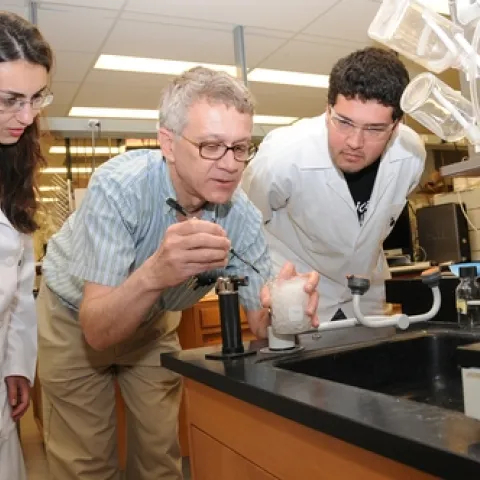
Chemical ecologists at the University of California, Davis, are changing their navel-orangeworm research direction after an elementary school students science project found that the major agricultural pest prefers pistachios over almonds and walnuts.
View Article
Primary Image
ROCK PURSLANE--The magenta-colored rock purslane (Calandrinia grandiflora) is a favorite of honey bees. (Photo by Kathy Keatley Garvey)

Twenty-Nine Days to Go

January 1, 2009
By Kathy Keatley Garvey
Twenty-nine days to go. If you love bees and know how to design a bee friendly garden, remember Jan. 30. Jan. 30 is the deadline to submit your design for the half-acre bee friendly garden at the Harry H. Laidlaw Jr. Honey Bee Research Facility, UC Davis.
View Article
Primary Image
TURN OVER A NEW LEAF--and there's a praying mantis. (Photo by Kathy Keatley Garvey)
Bug Squad: Article

Turning Over a New Leaf

December 31, 2008
By Kathy Keatley Garvey
For my New Year's resolution, I resolve to turn over a new leaf. Oh, sure, most folks resolve to eat less, exercise more, drink less, read more, stress less, save more, gripe less, and volunteer more. Not me. I'm turning over a new leaf.
View Article
Primary Image
BLUE BUTTERFLY--This butterfly in the live butterfly display at the Entomological Society of America's recent meeting in Reno prompted photographers to aim, focus and shoot. (Photo by Kathy Keatley Garvey)

Flying Flower

December 30, 2008
By Kathy Keatley Garvey
Ponce Denis couchard Lebrun compared the butterfly to a flying flower: The butterfly is a flying flower, The flower a tethered butterfly. At the recent Entomological Society of America meeting in Reno, a blue butterfly drew the attention of lepidopterists and photographers alike.
View Article
Primary Image
GATHERING NECTAR--This honey bee at the University of California, Davis, is gathering nectar on Cenizo (Leucophyllum frutescens). Newly published research from the University of Illinois finds that honey bees on cocaine dance more, and that the bees are motivated by feelings of reward. (Photo by Kathy Keatley Garvey)

What a Buzz!

December 29, 2008
By Kathy Keatley Garvey
Right out of Champaign, Ill., comes a research story about honey bees on coke. Cocaine. University of Illinois entomology and neuroscience professor Gene Robinson and his colleagues have found that honey bees on cocaine dance more.
View Article
Primary Image
DEAD BEES--Drones are pushed out of the hive, cold and hungry, as the honey-gathering season ends and the weather turns colder. Some of these bees are drones (males) and some are worker bees (infertile females). This photo was taken Dec. 20, 2008. (Photo by Kathy Keatley Garvey)

Not Brotherly Love

December 26, 2008
By Kathy Keatley Garvey
'Tis the season for brotherly love, but not in the bee hive. As the honey-gathering season ends and the weather turns colder, the worker bees (infertile females) push their brothers--the drones--out of the hive. Drones are of no use to the colony in the winter. They're another mouth to feed.
View Article
Primary Image
BEELINE--A pollen-packed honey bee makes a beeline for a red-hot poker, variety "Christmas Cheer," in the Storer Gardens at UC Davis. The date: Dec. 20, five days before Christmas. (Photo by Kathy Keatley Garvey)

Christmas Cheer

December 25, 2008
By Kathy Keatley Garvey
I always thought the red-hot poker was primarily red. Not. This one in the Storer Gardens at the University of California, Davis, was mostly yellow. It was Saturday, Dec.
View Article
Primary Image
LADYBUG--You should treat the ladybug with kid gloves; it's a beneficial insect. Here a ladybug, aka lady beetle, crawls on a gardener's glove. (Photo by Kathy Keatley Garvey)

Christmas Bug

December 24, 2008
By Kathy Keatley Garvey
If there ever were a Christmas bug, it would be the ladybug, aka lady beetle. The insects (family Coccinellidae) are brightly colored and spread joy in the garden when they feast on aphids. Last summer we enjoyed watching them hanging out and hooking up.
View Article
Primary Image
A HONEY OF A BEE--Newly published research in the journal Current Biology finds that the buzz of honey bee wings scares off plant predators, like caterpillars. This bee is gathering nectar from a guara. (Photo by Kathy Keatley Garvey)

Superman, Meet the Super Girls

December 23, 2008
By Kathy Keatley Garvey
You're sitting around discussing the importance of honey bees. The points include: they give us honey, they pollinate agricultural crops, and they serve as an example of a well-organized society. But wait, there's more. They scare off plant predators.
View Article
Primary Image
DOUBLE VISION?--Keep your eyes open for a cabbage white butterfly in California's Central Valley (Sacramento, Solano or Yolo counties). UC Davis professor Arthur Shapiro will trade a pitcher of beer for the first cabbage white of 2009. This photo was taken Sept. 7, 2008. (Photo by Kathy Keatley Garvey)

Beer for a Butterfly

December 22, 2008
By Kathy Keatley Garvey
Seen any cabbage whites lately? If you capture one before UC Davis professor Arthur Shapiro does, he'll trade you a beer for your butterfly. Actually, a pitcher of beer or its cash equivalent. Yes, it's time for Shapiro's 38th annual Butterfly-for-Beer contest.
View Article