Ongoing research

Primary Image
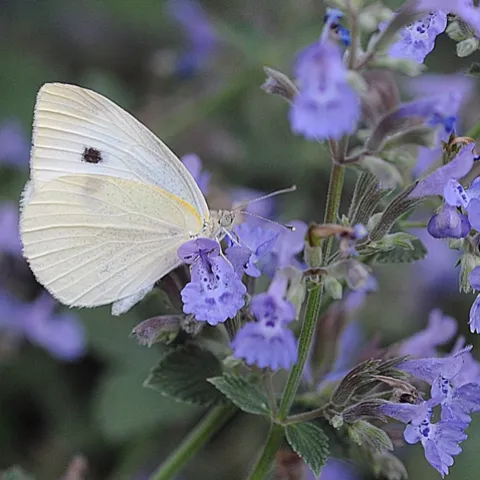
CABBAGE WHITE BUTTERFLY(Pieris rapae) nectars catmint. (Photo by Kathy Keatley Garvey)
Bug Squad: Article

Lady in White

July 30, 2009
By Kathy Keatley Garvey
The cabbage white butterfly (Pieris rapae) looks like a Lady in White when she perches on catmint. The colors are striking: A long, flowing white gown nestled among the rich lavender blossoms and earthy green leaves.
View Article
Primary Image
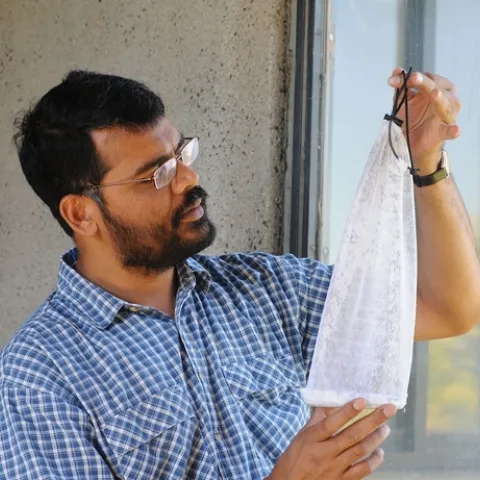
ZAIN SYED, chemical ecologist at UC Davis, holds a bag of 2000 Culex mosquitoes he trapped between Davis and West Sacramento. He is using them for his research. (Photo by Kathy Keatley Garvey)
Bug Squad: Article

Mosquito Heaven

July 29, 2009
By Kathy Keatley Garvey
Chemical ecologist Zain Syed of the Walter Leal lab, University of California, Davis, knows just where to find mosquitoes for his research. Rice fields. He's been collecting up to 3000 mosquitoes a night along the Yolo Causeway, located on Interstate 80 between Davis and West Sacramento.
View Article
Primary Image
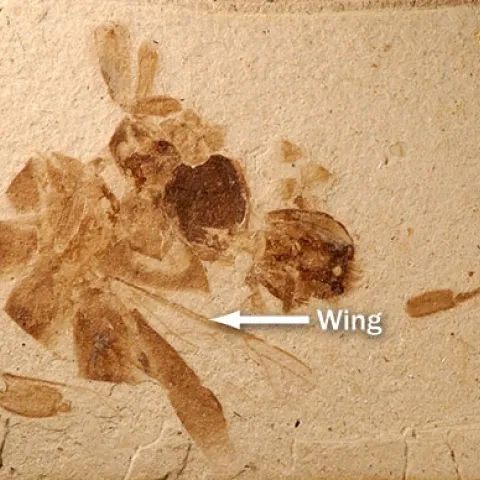
This 14-million-old fossil, unearthed in Nevada, is a honey bee, proving that North America did have a honey bee before colonists brought the European honey bee here in 1622. (Photo courtesy of Michael Engle)
Bug Squad: Article

First Native American Honey Bee

July 28, 2009
By Kathy Keatley Garvey
Amazing. An article posted on the ScienceNews Web site today indicates that North America did, too, have a honey bee. For nearly 400 years, we've been told that the honey bee (genus Apis) did not exist on this continent until 1622. That's when the colonists brought it over from Europe.
View Article
Primary Image
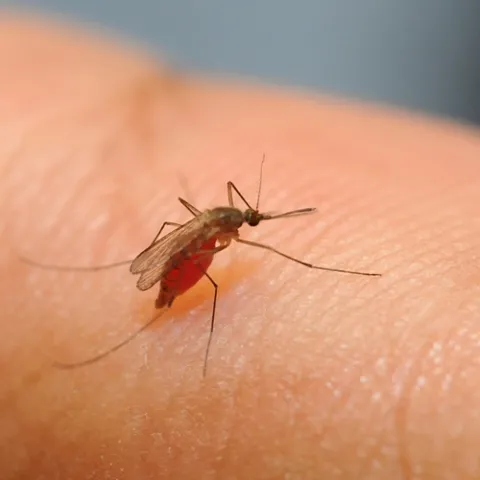
BLOOD-FED MOSQUITO--Culex quinquefasicatus after feeding on a non-treated DEET arm in the lab of chemical ecologist Walter Leal, UC Davis Department of Entomology. (Photo by Kathy Keatley Garvey)
Bug Squad: Article

Skeeter Season

July 27, 2009
By Kathy Keatley Garvey
Camping season is upon us, and with it came the news of California's first confirmed human case of West Nile virus (WNV). The San Diego County Health and Human Services Agency (HHSA) announced today that a 76-year-old man contracted WNV, but "he did not acquire the virus locally.
View Article
Primary Image
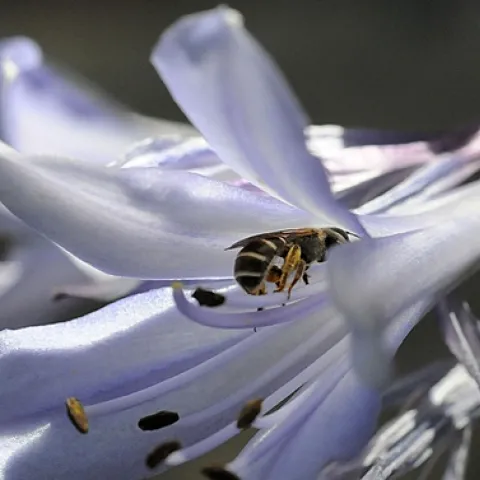
NATIVE BEE, a sweat bee (Halictus ligatus) nectars Agapanthus. This is a ground-nesting bee. (Photo by Kathy Keatley Garvey)
Bug Squad: Article

Ogling the Agapanthus

July 24, 2009
By Kathy Keatley Garvey
Seems like many folks assume that all bees are "honey bees." They're not. If you look around you, you'll see bees of all shapes, colors and sizes nectaring flowers.
View Article
Primary Image
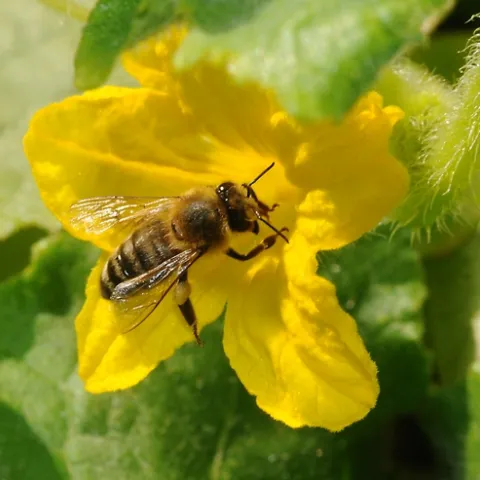
A HONEY BEE nectars a lemon cucumber blossom. (Photo by Kathy Keatley Garvey)
Bug Squad: Article

No Bees, No Cucumbers

July 23, 2009
By Kathy Keatley Garvey
Its the lemon law. When life hands you a lemon (cucumber), make honey. The lemon cucumber (Cucumis sativus) is an increasingly popular garden vegetable that doesn't look like your typical cucumber. The vegetable is round to oval in shape and is pale yellow to pale green in color.
View Article
Primary Image
CAUGHT IN THE ACT of nectaring lavender, a honey bee extends her tongue into the floral spikes. Lavender, a bee favorite, will be among the plants at the Haagen-Dazs Honey Bee Haven, scheduled to open Oct. 16. (Photo by Kathy Keatley Garvey)
Bug Squad: Article

Caught in the Act

July 22, 2009
By Kathy Keatley Garvey
You may not know about Lavandula "Goodwin Creek Gray" but the honey bees do. They love lavender. That's one of the plants selected for the Haagen-Dazs Honey Bee Haven, a half-acre bee friendly garden being implemented near the Harry H. Laidlaw Jr. Honey Bee Research Facility at UC Davis.
View Article
Primary Image
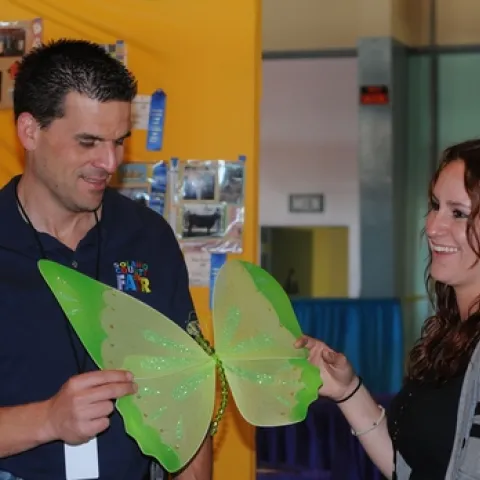
BUTTERFLIES abound at the Solano County Fair. Here assistant fair manager Chad Cabral (left) and Elisa Seppa, superintendent of McCormack Hall, look over a butterfly decoration. (Photo by Kathy Keatley Garvey)
Bug Squad: Article

Nature Meets Art

July 21, 2009
By Kathy Keatley Garvey
Butterflies, dragonflies, ladybugs and honey bees. What exists in nature is replicated in art. We sculpt them, draw them and paint them. We create their images on everything from clothing and jewelry to quilts and stepping stones.
View Article
Primary Image
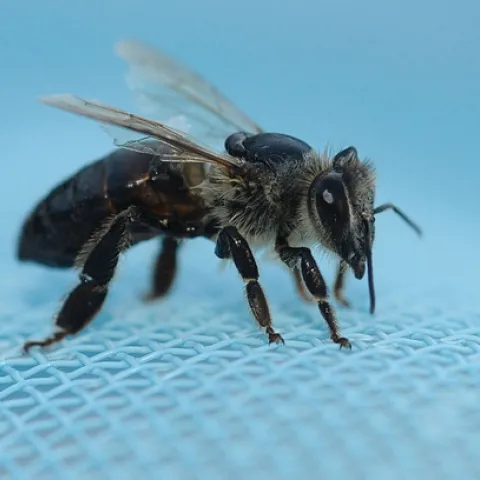
CARNIOLAN HONEY BEE, a dark bee, is drenched from falling into a swimming pool. She is magnum black. (Photo by Kathy Keatley Garvey)
Bug Squad: Article

Gone Fishin'

July 20, 2009
By Kathy Keatley Garvey
It's not just two-legged humans that take a dip in the pool. So do six-legged honey bees searching for water. When temperatures soar, honey bees scramble to collect water for their colony. They release droplets of water in the hive as their hardworking sisters fan their wings to "cool it.
View Article
Primary Image
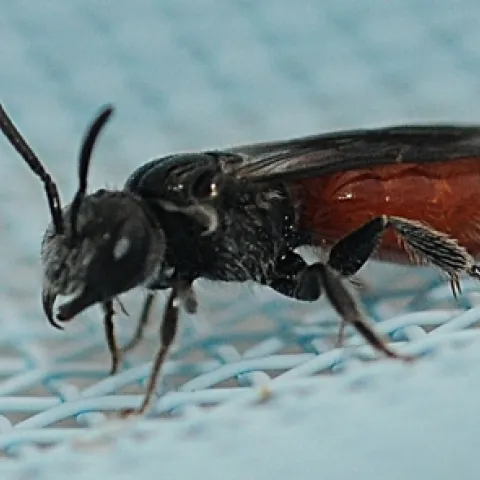
THIS GNAT-SIZED insect with a red abdomen is a female cuckoo sweat bee from the genus Sphecodes. Fished out of a swimming pool, it is crawling around on a net. (Photo by Kathy Keatley Garvey)
Bug Squad: Article

Seeing Red

July 17, 2009
By Kathy Keatley Garvey
Its triple-digit hot and youre relaxing in a swimming pool when suddenly you realize you have company. A knat-sized insect with a red abdomen lands next to you. It looks like a wasp. No, it looks like a bee.
View Article