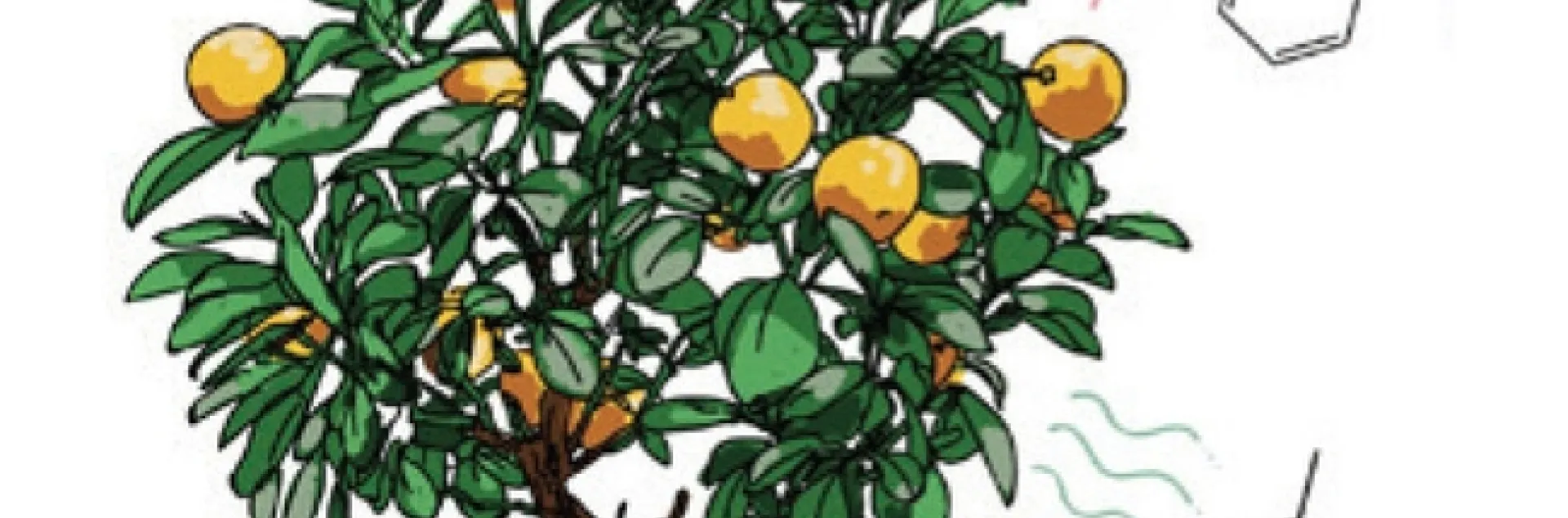
Citrus trees emit volatile compounds, or odors. HLB changes these odors.Citrus trees emit volatile organic compounds (VOCs), or odors, that are the end products of plant metabolism. Researchers can measure the VOCs emitted by a plant and create an “odorprint”. Pathogens, such as the bacterium CLas that causes huanglongbing (HLB), affect plant metabolism and alter the odor profile of the plant. Thus, the odor profile can be used to detect HLB-infected trees.
What happens once an odorprint shows the presence of HLB? Visit the Research Snapshot to learn more.
We have developed short, descriptions of research projects that aim to help in the fight against HLB. These projects include traditional breeding and genetic engineering to create resistant citrus varieties, psyllid modification, using other organisms to deliver HLB-resistance genes, and early detection of the bacterium in trees.