

From an entomologist's perspective, 2023 couldn't have been a more interesting year for oak pests!
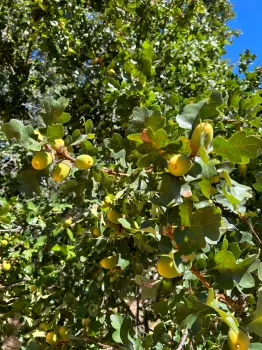
The first sign of great and awesome things to come was in the spring when it became clear many oaks were going to produce abundant acorns. I wouldn't call it a mast year, since there weren't entire populations of oaks producing acorns. But, looking at individual trees or sites, there were trees (coast live oak, valley oak, blue oak, Oregon white oak, and scrub oak) throughout Sonoma and Mendocino Counties loaded with acorns. And when you get lots of acorns, you can expect acorn pests!
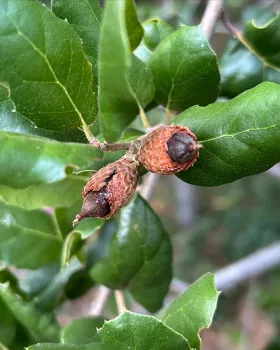
The first evidence that something was going on with acorns started when sticky drops started to appear under the canopy of coast live oaks with young acorns. These sticky drops were caused by drippy nut, a bacterial infection introduced to the acorn through wounds. The infection causes the tree to respond by producing copious amounts of sap that exude from the wounding and collect into big drops that rain down under the canopy of the tree (much like honeydew). Drippy nut is primarily known to infect coast and interior live oak.
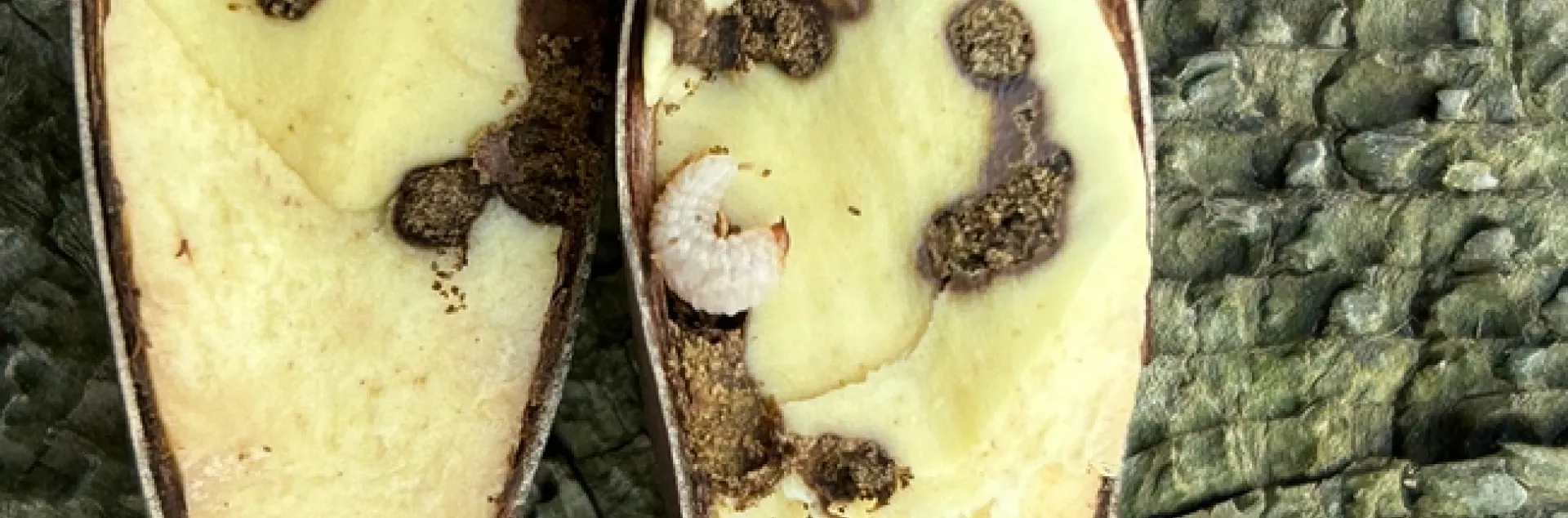
But, what causes the wounds that introduce the bacteria to the acorns? Well, it can be many different things, including physical damage or things that feed on acorns. Perhaps the coolest of the things that eat acorns are the insects that rely on the acorn for their food and reproduction, acorn weevils (filbert weevil) and filbertworms.
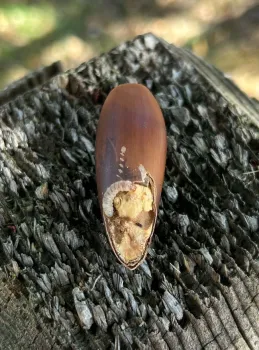
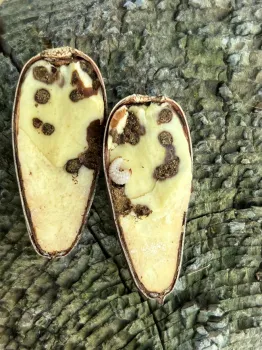
Acorn weevils are weevils (cousins of the bark beetles) and filbertworms are moths. Both insects (of which there are several species) lay eggs on or in the meat of an acorn and their offspring, or larvae, grow up inside the acorn eating the meat. Once the acorns fall to the ground, larvae chew their way out and overwinter in the litter beneath the tree. The following spring, the larvae pupate and emerge as adults to start the life cycle over again. As you can imagine, there are lots of predators and competitors in the soil and litter beneath oak trees that would impact the survival of these insects.

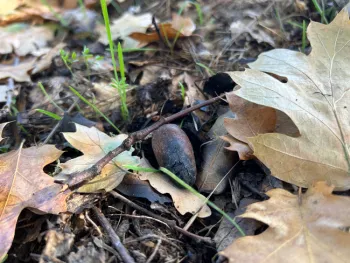
One last thought on acorn pests that I will share right now. A tree with damaged acorns will often drop infested acorns before healthy mature acorns, usually due to some hormonal or physical cue. The timing of this drop aligns fairly well with the fall wildfire season. In other words, damaged acorns often drop during the fall wildfire season and healthy acorns don't start dropping until the start of the rainy season.
The timing of these acorn drops makes it seem like the oaks are "using" fire to help control the pests of the seeds. Well, they are... in a sense. Oaks have co-existed with fire (both from lightning and Native Californians using fire as a tool) for thousands of years so holding on to healthy acorns until after fire season is one more fire-adapted strategy exhibited by the oaks.
While I was following acorn pests throughout the year, in early December I started to receive questions about coast live oak with leaf discoloration and loss in Sonoma County.
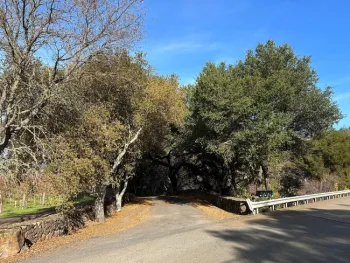
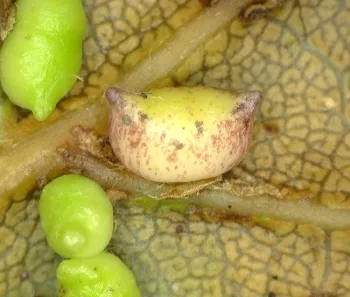
A landowner contacted me saying that his trees were heavily infested with twohorned oak gall wasp (thanks to an ID by my colleague Cindy Kron, Area IPM Advisor) and asked if I had any management recommendations. I'd never seen an outbreak of twohorned oak gall wasp, so I wasn't sure what to say and went to check it out.
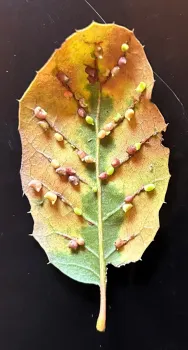
Upon observing the site, I found multiple trees with leaves heavily infested with twohorned oak gall wasp. The infested leaves were discolored and many of them were dropping from the tree.