
Tool Care and Maintenance
Adapted from the UC Master Gardeners of Santa Clara County website
Basics
Yearly Inspection. A yearly inspection is a good idea. Do this at a quiet time of year gardening-wise. Check the sharpness of all tools, inspect handles, and perform any needed maintenance.
Handle Replacement. You can replace handles on most tools. Consider repair before replacement.
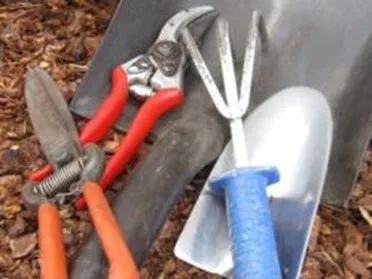
Label Your Tools. Mark tools with your name, especially if you loan them or work in shared spaces. Use a bright color so you can easily spot them in the grass.
Hats and Gloves Too! Don’t forget the most important “tools” you bring with you: a good hat, sunscreen, sturdy shoes, and gloves.
Clean and Sharpen Your Tools
Clean tools after each use—shovels, forks, hoes, pruners, saws, and more. Manual cleaning (with gloves) usually works, but a bristle brush, garden hose, or putty knife can help.
View our video on How to Clean and Sharpen Pruning Tools.
Metal Cleaning Tips
- Do not store tools when wet. Always allow them to dry completely.
- Remove rust with a wire brush before coating with oil. For heavy rust, soak in white vinegar and use fine-grade steel wool.
- Fertilizer and chemicals are corrosive. Clean tools thoroughly after contact.
- Coat steel surfaces with a light layer of oil before storage. One method: keep sand in a five-gallon bucket, add used motor oil, and dip tools after use. The sand removes debris and coats the tool with oil.
Handle Cleaning Tips
Wood Handles: Clean and inspect for splinters or cracks. Sand splinters smooth; replace cracked handles. Occasionally apply linseed oil in multiple coats until the wood no longer absorbs oil.
Fiberglass or Plastic: Clean with a rag and inspect for damage.
Hand Tool Cleaning
Because of moving parts, hand tools require extra care. Remove all dirt and moisture. A foaming bathroom cleanser can help. Wipe dry and apply household oil or greaseless lubricant to pivot points. WD-40 can be used if necessary, but it may leave a residue that attracts dirt.
Sharpening
Keep blades sharp to reduce stress on both the tool and the user. A moderately sharpened blade performs better than a dull one.
- If tools are very dull, nicked, or expensive, consider professional sharpening.
- Pruners may require disassembly. Use carbide, stone, or ceramic sharpeners. Pocket sharpeners work well for small tools; bench stones or grinders for larger ones.
- Sharpen only the beveled edge and maintain the original bevel angle.
- Tip: Color the bevel with a marker and sharpen until the color is evenly removed.
- Shovel blades do not need to be razor sharp. Remove folded metal using a flat file or coarse stone. A vise helps secure the tool while filing.