
from UC Master Gardener Program, Tulare/Kings County
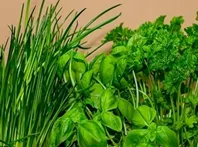
There’s almost nothing more satisfying than picking fresh grown herbs from your own garden to spice and season your cooking in the kitchen. Herbs are delightfully easy to grow and provide pleasure for the taste buds and the nose.
The obvious place to grow a kitchen herb garden is close to the kitchen in a sunny location. If space is a problem, herbs can successfully be grown in pots where you can move them around for adequate growth.
When growing in the ground, provide loose, well-drained moderately fertile soil (dig in plenty of compost before planting.) Herbs do not require heavy amounts of fertilizer. In containers, plant herbs in high quality planting mix and fertilize with a 7-5-7 blend over the growing season. Water when the soil is dry. Whether they are grown in pots or in the ground, herbs do not tolerate wet soggy soils.
Basic Herbs for a Kitchen Garden
| Herb | Botanical Name | Annual/Perennial | Plant Size | Plant in | Start with | Harvest Time | Sun Require-ments | Soil depth minimum | Pests | Uses |
|---|---|---|---|---|---|---|---|---|---|---|
| Basil | Ocimum basilicum | A | 1 – 2 feet | Spring | Seeds or seedlings | Summer | Full sun | 8 inches | Slugs and snails | Fresh herb vinegars and flavorings, vegetables and salads. Important seasoning in Italian dishes. For best aroma and flavor, shred gently with fingers. |
| Chives | Allium schoenoprasm | P | 12 inches | Spring or Fall | Seeds or seedlings | Spring through Fall with constant cutting | Full sun | 6 inches | Slugs | Good with butter, sour cream, cheeses, eggs, meats, vegetables, salads and soups. Better used fresh as they do not dry well. Delicate oniony flavor with a hint of pepper from stems and flowers. |
Cilantro Coriander | Coriandrum sativum | A | H: 12 – 36 inches W: 8 – 12 inches | Spring or Fall | Seeds or seedlings | Summer | Full sun | 8 inches | None | Beans, curries, fish, lamb, salsa and stir-fry. Mexican and Thai dishes. Known as Chinese parsley. Highly aromatic but quickly loses its flavor when cooked |
| Dill | Anethum graveolens | A | 1 – 5 feet, depending on variety | Spring or Fall | Seeds | Summer into Fall | Full sun | 12 inches | None | Tasty with eggs, poached fish, especially salmon, potato salad, coleslaw, fresh beets and Hollandaise sauce. |
| Lavender | Lavandula vera | P | H: 1.5 – 4 feet tall W: 1 – 2 feet | Spring or Fall | Seedlings | Summer | Full sun / drought tolerant | 8 inches | None | Salads, cakes and vinegars. Blend with rosemary, fennel seeds for roasting meat or fish. Essential herb in bouquet garni. |
| Majoram | Origanum majorana or Majorana hortensis | A | 6 – 12 inches | Spring or Fall | Seeds or seedlings | Summer | Full or morning sun / partial shade in afternoon | 6 inches | None | Cheeses, eggs, meats, pasta sauces, stews and vegetables. One of the essential herbs in Italian cooking. Can be used fresh but becomes stronger in flavor dried. |
| Mint | Mentha apicata | P | ½ - 2 feet, depending on type | Spring or Fall | Seedlings | Spring through Fall | Full sun to partial shade | 6 – 8 inches | Slugs and ear wigs | Must be grown in containers otherwise considered invasive. Lamb, salads and as a garnish. Middle Eastern and Mediterranean dishes. |
| Oregano | Origanum vulgare | P | 6 – 12 inches tall and wide | Spring or Fall | Seeds or seedlings | Summer into Fall | Full sun / drought tolerant | 8 inches | Slugs and snails | As a salt replacement in chicken, vegetables, beans cheese, eggs, meats, pasta, salsa, soups and stews. Can be used fresh or dried. |
| Parsley | Petroselinum crispum | A | 6 – 12 inches | Cool weather | Seeds or seedlings | Spring through Fall | Full sun with partial afternoon shade | 8 inches | None | Extensively used for cooking in European and Middle Eastern countries. Is one of the ingredients for bouquet garni. Enhances the flavor and appearance of most foods. Used as a side garnish to freshen breath. |
| Rosemary | Rosmarinus species | P | 1 – 2 feet | Spring | Seedlings | All year | Full sun | 8 inches | Spider mites | Roasts, vegetables, chicken, breads, cheese, vinegars and stuffing. It is one of the most fragrant of the kitchen herbs with its’ bold assertive flavor. |
| Sage | Salvia officinalis | P | 1 – 3 feet | Spring | Seeds or plant cuttings | Summer and Fall | Full sun / drought tolerant | 8 inches | None | Mainly in stuffing but also with apples, beans, butters, cheeses soups and stews. Used with butter to brush on grilled goods. |
| Thyme | Thymus species | P | 6 – 12 inches tall and wide | Spring or Fall | Seeds or seedlings | Summer | Full sun to partial shade | 6 inches | None | Breads, casseroles and tomato based sauces. Mandatory herb in French cooking. Teamed with parsley, marjoram and bay for classic bouquet garni. |
Drying Herbs
While in season, fresh herbs are a culinary delight. However, abundance at the end of season makes drying a prudent choice for gardeners.
Make sure the herbs for drying are clean and free of pests. Find a spot indoors that is warm and has good air circulation (above a refrigerator is a good place). If drying a small amount at any time, lay branches on a paper towel or plate. If you have large amounts, bundle them together with rubber bands and hang upside down from a dowel or curtain rod. It will take anywhere from a few days to a couple of weeks. When leaves crumble to the touch, they are ready for the next step. If you choose, you can leave them whole (which will retain their flavor better), or crumble (because of storage space). Store them away from direct sunlight in glass containers with tight fitting lids. Be sure to label with name and date.
For seeds, (such as fennel or caraway), clip the heads that are starting to look brown and brittle. Scrunch the seed heads in your hand over a large bowl and discard the stems. Set your oven at the lowest temperature (200 degrees F.) Spread seed in one layer on a cookie sheet or pie tin and bake at least one hour or until they are no longer flexible when trying to bend in half. Store in glass jars. Herbs will retain their flavor for at least a year (or until the next growing season).
Reference
Basic Herbs for a Kitchen Garden was developed by the UC Master Gardener Program of Tulare/Kings County.