
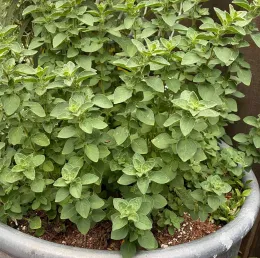
Oregano is grown for its aromatic leaves, which can be used fresh or dried. Closely related to marjoram, oregano is stronger and more pungent. There are many varieties of oregano, for both culinary and ornamental use. With a wide range of flavor characteristics, you may wish to grow different varieties of oregano and marjoram. Enjoy oregano in tomato, meat, and poultry dishes, as well as in stuffings and sauces.
How to grow
- Type: Perennial, evergreen, woody
- Light: Full sun
- Soil: Average soil, good drainage
- Water: Dry to moderate
- Size: 1 to 2 feet high, up to 18 inches wide or more. Space plants 18 inches apart.
When to plant/propagate
- From seed: Direct seed after the last frost date in spring, or sow seeds indoors 6 to 10 weeks prior to the last frost date
- Transplants: Plant seedlings when the danger of frost is past
- Cuttings & divisions: Can be successful year round. Propagate from cuttings prior to bloom.
Harvesting
- For the best leaf flavor, do not allow the plant to flower
- Harvest both the tender leaves (to be added at the end of cooking) and hardier leaves with whole stems (typically added at the beginning of the cooking process, then removed)
- For most tender leaves, harvest frequently to encourage new growth and to prevent flowers from developing. Pinch off any flowers that do develop.
- Dry the leaves for winter use. Shelf life is approximately one year.
- Many beneficial insects appreciate oregano flowers, so consider allowing some plants to flower.
Pruning
- Trim during the growing season to keep plants compact and the leaves tender. Oregano can become woody if not kept compact.
- Soft stems and leaves may be renewed in winter or very early spring by cutting woody stems near their base, just above a low set of leaves.
Indoors
Oregano can be grown as an indoor plant with 5 to 6 hours of bright light from a sunny window, or with 12 to 16 hours of supplemental light from cool-white fluorescent or LED lamps.
Common pests & diseases
More information
- Oregano & Marjoram, UC Master Gardeners of Sonoma County
- Grow Herbs!, UC Master Gardeners of Sacramento County