
To guide the Forum in its choice of topics, invited participants and location, the chair and an advisory committee of academic and policy leaders from varying countries plans each conference. Local host country members also serve on the committee on a limited term.
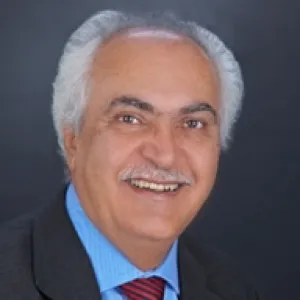
Chair, Soroosh Sorooshian, Civil & Environmental Engineering and Earth System
Science, UC Irvine
Soroosh is the Founding Director of the Center for Hydrometeorology & Remote Sensing (CHRS) and Distinguished Professor of Civil & Environmental Engineering and Earth System Science Departments at UC Irvine. Prior to 2003 he was a faculty at the University of Arizona for 20 years. His area of expertise is Hydrometeorology, water resources systems, climate studies and application of remote sensing to earth science problems with special focus on the hydrologic cycle and water resources issues of arid and semi-arid zones. He is a member of the US National Academy of Engineering (NAE), the International Academy of Astronautics (IAA) and fellow of TWAS. He is the current Chair of UC Rosenberg International Forum on Water Policy. Currently Sorooshian and his group are working on developing global hydrometeorological data sets and information using remote sensing for use by the water resources water community.
https://www.faculty.uci.edu/profile.cfm?faculty_id=5082
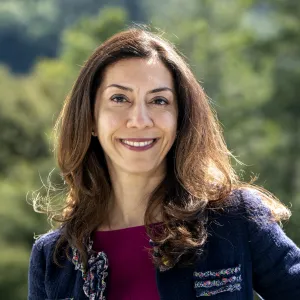
Newsha Ajami, Stanford Doerr School of Sustainability
Dr. Newsha Ajami is an internationally recognized expert in sustainable water resource management, smart cities, water policy, and finance. She is the Director of the Governance for Risk, Resilience, and Recovery Program (GR3) at Stanford Doerr School of Sustainability. She was the former Chief Strategic Development Officer for Research in the Earth and Environmental Sciences Area at Lawrence Berkeley National Laboratory, where she drives impact-focused initiatives at the nexus of water, energy, and carbon. Her work has pioneered the use of data science to study the human and policy dimensions of resilient urban water and hydrologic systems. Dr. Ajami has held several high-profile public service roles, including mayoral appointee to the San Francisco Public Utilities Commission (2021–2024) and two terms as a gubernatorial appointee to the Bay Area Regional Water Quality Control Board (2013–2021). She also served on the National Academies’ Board on Water Science and Technology (2018–2024). Currently, she is a Nonresident Senior Fellow at the Brookings Institution and serves on multiple state and national advisory boards. She is a Fellow of the American Geophysical Union (AGU) and recipient of the prestigious AGU Ambassador Award, recognized for her leadership in bridging science, policy, and society, advancing science communication, and mentoring the next generation of interdisciplinary thinkers. Dr. Ajami earned her Ph.D. in Civil and Environmental Engineering from the University of California, Irvine.
Christina Babbitt, Meta
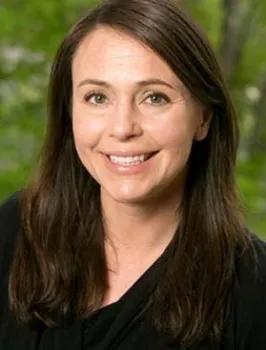
Christina serves as a sustainability program manager, water stewardship at Meta. In her role, she manages the water stewardship program at Meta in support of the company's Water Positive goal. Previously, Christina was the Global Water Lead for Starbucks Coffee Company and has also served as Director, Climate Resilient Water Systems at Environmental Defense Fund where she worked at the intersection of water, agriculture, and climate with a focus on supporting the successful implementation of California’s Sustainable Groundwater Management Act. Christina’s past research has focused on water resources management in stressed watersheds across the western U.S., Europe, and eastern Africa. Christina holds a PhD in Natural Resources from the University of Nebraska, Lincoln and a MBA from the University of California, Berkeley, Haas School of Business.

Julia Bucknall, The World Bank
Julia Bucknall is a Senior Advisor to the Vice President of the East Africa Region at the World Bank, and is based in Nairobi, Kenya. She focuses on issues of sustainability and environmental risk management. Before that, she has worked as a Global Director for Environment and Manager, Water at the World Bank. She has worked in every region of the world on operations and knowledge relating to environment, water, climate change and energy. She was the lead author of a flagship publication on water in the Middle East “Making the Most of Scarcity” and a core team member for the 2010 World Development Report on Climate Change. She studied at Cambridge University and MIT.
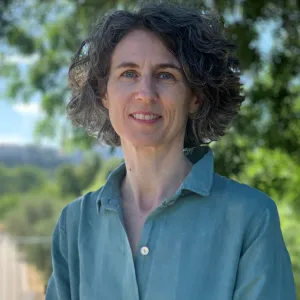
Lucia De Stefano, Universidad Complutense de Madrid & Water Observatory; Water Observatory, Botín Foundation
Dr. Lucia De Stefano is Associate Professor at Complutense University of Madrid (Spain) and Deputy Director of the Water Observatory of the Botín Foundation, a Spanish think-tank. She has worked as a consultant for USAID, The World Bank, University of Oxford and Oregon State University. She has been senior researcher at the Botín Foundation and postdoctoral researcher at Oregon State University, USA. Previously she worked as a policy officer for World Wide Fund for Nature (WWF), and as a water management specialist in the private sector. Hydrogeologist by training, she holds an advanced degree in Geological Sciences from University of Pavia (Italy), and a PhD on water policy evaluation from Complutense University of Madrid. Her main fields of interest are multilevel water planning, drought management, groundwater governance, transboundary waters, and the assessment of good governance attributes.
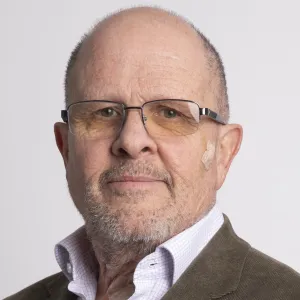
Guillermo Donoso Harris, Water Law and Management Center, Catholic University of Chile
Guillermo Donoso is a professor at the Department of Agricultural Economics of the Pontificia Universidad Catolica de Chile and Director of the Water Law and Management Center of the Pontificia Universidad Catolica de Chile. His research focuses on understanding and modeling agent´s decisions with respect to water resources management and allocation. He has specialized in the research of water institutionality and governance and economic policy instruments applied to water management such as water markets and water pricing, as well as water affordability, fair allocation, and welfare implications of these economic policy instruments. He has worked for more than 25 years on water-related issues in a multidisciplinary context, aimed at comprehensively analyzing water management issues, rather than by a piecemeal silo approach, so as to contribute to agent´s and policy-makers decision, efficient and sustainable management of water, and the design of effective public policies that leaves no one behind. Guillermo is an author or coauthor of more than 40 publications in international water multidisciplinary journals, 2 books and more than 25 book chapters.
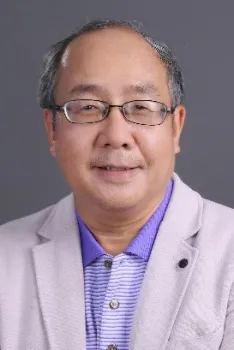
Qingyun Duan, College of Hydrology and Water Resources, Hohai University
Qingyun is currently a Chair Professor in the College of Hydrology & Water Resources at Hohai University in China. He received his PhD in hydrology from the University of Arizona in 1991. His research interests include hydrological modeling and forecasting, uncertainty quantification of hydrological and water resources systems and impacts of climate change on water resources. He has authored or co-authored more than 180 peer reviewed articles and edited 4 books in hydrology and water resources. Dr. Duan has been active in many international scientific activities, including serving as a member of the scientific steering committees of the Global Energy and Water cycle Exchanges (GEWEX) Project and the Hydrological Ensemble Prediction Experiment (HEPEX). He is a foundational leader of College of Fellows of American Geophysical Union. He was or is serving as an editor or editorial board member for numerous scientific journals, including Reviews of Geophysics, Bulleting of American Meteorological Society and Water Resources Research. Dr. Duan is a Fellow of American Geophysical Union and American Meteorological Society.
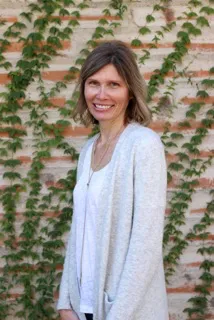
Andrea K. Gerlak, School of Geography & Development, University of Arizona
Andrea is a Professor in the School of Geography, Development and Environment and a Research Professor and Associate Director at the Udall Center for Studies in Public Policy at the University of Arizona. She has consulted on water governance and climate resilience efforts for UNESCO and the WMO. Gerlak has two decades of experience leading interdisciplinary environmental studies programs and university-community environmental partnerships. She is an author and coauthor of more than 100 publications. Her research agenda focuses on cooperation and conflict in water governance, including questions of equity and access, and institutional change, learning and adaptation.
https://geography.arizona.edu/people/andrea-k-gerlak

Wendy Jepson, Dept. of Geography, Texas A&M University
Dr. Wendy Jepson is a University Professor in Geography at Texas A&M University, recognized internationally for her research on water insecurity. She is a Fellow of both the AAG and AAAS, AGS Medalist, and a Fulbright Scholar. She has led multiple major projects related to water insecurity, including the NSF-funded HWISE-RCN initiative. Dr. Jepson currently leads development of a U.S. water insecurity metric and research on water trust and affordability. Her work has attracted over $9 million in funding, notably a $4.6M Mellon Foundation grant to establish a national center for community-engaged environmental justice research at Texas A&M.
https://artsci.tamu.edu/geography/contact/profiles/wendy-jepson.html
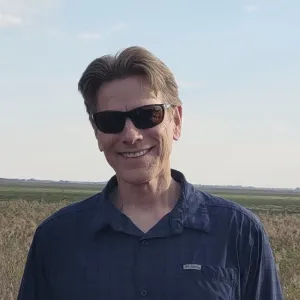
Kurt Schwabe, School of Public Policy, University of California, Riverside and Public Policy Institute of California’s Water Policy Center
Dr. Schwabe’s research focuses on economic issues associated with water use and water affordability, agricultural production, urban water conservation, ecosystem services, and environmental regulation. His papers have appeared in wide range of peer-reviewed publications, including Nature Sustainability, Proceedings of the National Academy of Sciences, Journal of Risk and Uncertainty, Land Economics, and the American Journal of Agricultural Economics, and was co-editor of two books on water titled, Drought in Arid and Semi-Arid Regions: A Multi-Disciplinary and Cross-Country Perspective, and The Handbook of Water Economics. Dr. Schwabe received a BA in Mathematics and Economics at Macalester College, an MS in Economics at Duke University, and a PhD in Environmental Economics at the North Carolina State University. He currently is a Professor of Environmental Economics and Policy at the School of Public Policy at the University of California, Riverside, a Senior Consultant at the Public Policy Institute of California’s Water Policy Center, and was a 2023-24 Fulbright Distinguished Chair Fellow of Science, Innovation, and Technology (Australia). Dr. Schwabe was a first-gen college student, and serves as Chair on the Board of Directors for Feeding America of Riverside and San Bernardino Counties.
Ex officio Members
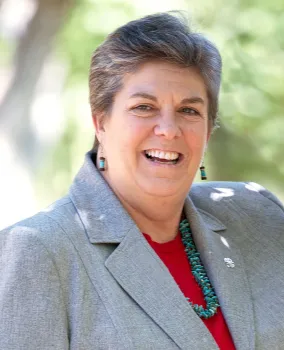
Glenda Humiston, University of California, Agriculture and Natural Resources
As Vice President of UC Agriculture and Natural Resources, Dr. Glenda Humiston brings over 25 years of policy development and program implementation supporting sustainability, including time as a Peace Corps volunteer in Tunisia and as a consultant on environmental and agricultural issues throughout the western states. She served President Obama 2009-2015 as the California State Director for USDA Rural Development. From 1998-2001 she served President Clinton as Deputy Under Secretary for Natural Resources and Environment at USDA. Glenda managed the Sustainable Development Institute at the 2002 World Summit for Sustainable Development in South Africa and the 2006 World Water Forum in Mexico City. She earned her PhD in Environmental Science, Policy and Management from UC Berkeley; a Master’s in International Agricultural Development from UC Davis and a Bachelor’s degree in Animal Science from Colorado State University.
https://ucanr.edu/?facultyid=30758
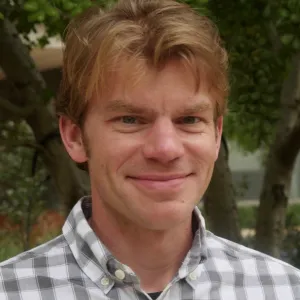
Erik Porse, University of California, Agriculture and Natural Resources, California Institute for Water Resources
Dr. Erik Porse is the Director of the California Institute for Water Resources and an Associate Cooperative Extension Specialist within the University of California Division of Agriculture and Natural Resources (UC ANR). Erik is an engineer, environmental scientist, and policy analyst who focuses on water and environmental management. Erik's work specializes in bringing together interdisciplinary teams to investigate complex environmental management questions. In California, he has contributed to state and regional studies for safe drinking water, efficient urban water use, sustainable groundwater management, water reuse, beneficial uses of stormwater, environmental finance, and water resource systems analysis. He earned a Ph.D. in Civil and Environmental Engineering (water resources) from UC Davis and a Master's degree in Public Policy (Science and Technology) from George Mason University. His professional experience includes international work and teaching in Mexico, Europe, Japan, and East Africa. He has authored over 50 reports and peer-reviewed articles.
Administrative Officer
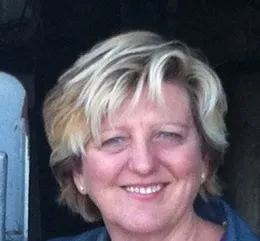
Sherry Cooper, University of California, Agriculture and Natural Resources
Emeritus Members | |
 | Kimberly Beaird, Administrative Officer, University of California, Agriculture and Natural Resources, United States of America |
 | Leith Boully, Murrumbidgee Irrigation, Australia |
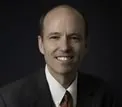 | Fred Cannon, Keef, Bruyette and Woods, United States of America |
![Ariel_Dinar_2015[5]](/sites/default/files/styles/medium/public/2020-08/332323.jpg.webp?itok=3smzrLah) | Ariel Dinar, School of Public Policy, UC Riverside, United States of America Served on the Advisory Committee from 1997 to 2025. |
 | Dan Dooley, New Current Water & Land; University of California, Agriculture and Natural Resources, United States of America |
| Don C. Erman, Wildlife, Fish & Conservation Biology, University of California, Davis, United States of America | |
 | Yuksel Inan, Bilkent University, Turkey (deceased) |
 | Helen Ingram, Planning, Policy and Design, School of Social Ecology, UC Irvine, United States of America |
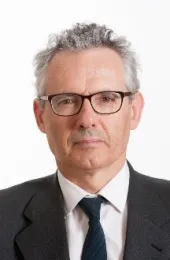 | Alberto Garrido, Agriculture and Natural Resource Economics; CEIGRAM, Universidad Politecnia de Madrid Spain Served on the Advisory Committee from 1997 to 2025. |
| John Letey (deceased) | |
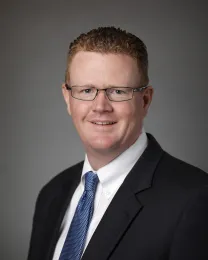 | Ben Maddox, Bank of America, United States of America |
| John Nilson, Saskatchewan Legislature, Canada |
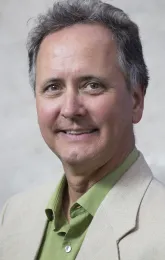 | Doug Parker, University of California, Agriculture and Natural Resources, California Institute for Water Resources, United States of America |
 | Paul J. Perkins, Australia |
| John J. Pigram, Australia (deceased) | |
| Robert A. Pietrowsky, United States of America | |
 | Ayman Rabi, Palestinian Hydrology Group, Palestine Served on the Advisory Committee from 2006 to 2025. |
 | Mordechai Shechter, Israel |
| Sekou Toure, Republic of Cote D' Ivoire | |
 | Henry J. Vaux, Jr., Emeritus Chair, Rosenberg International Forum on Water Policy and Emeritus Professor, Resource Economics, UC Berkeley, United States of America |
| Jun Xia, Chinese Academy of Sciences; Research Institute for Water Security, China | |
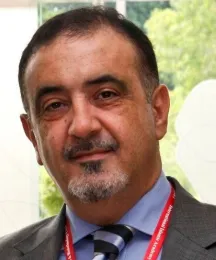 | Moneef Zou'bi, Islamic World Academy, Jordan |