
Image
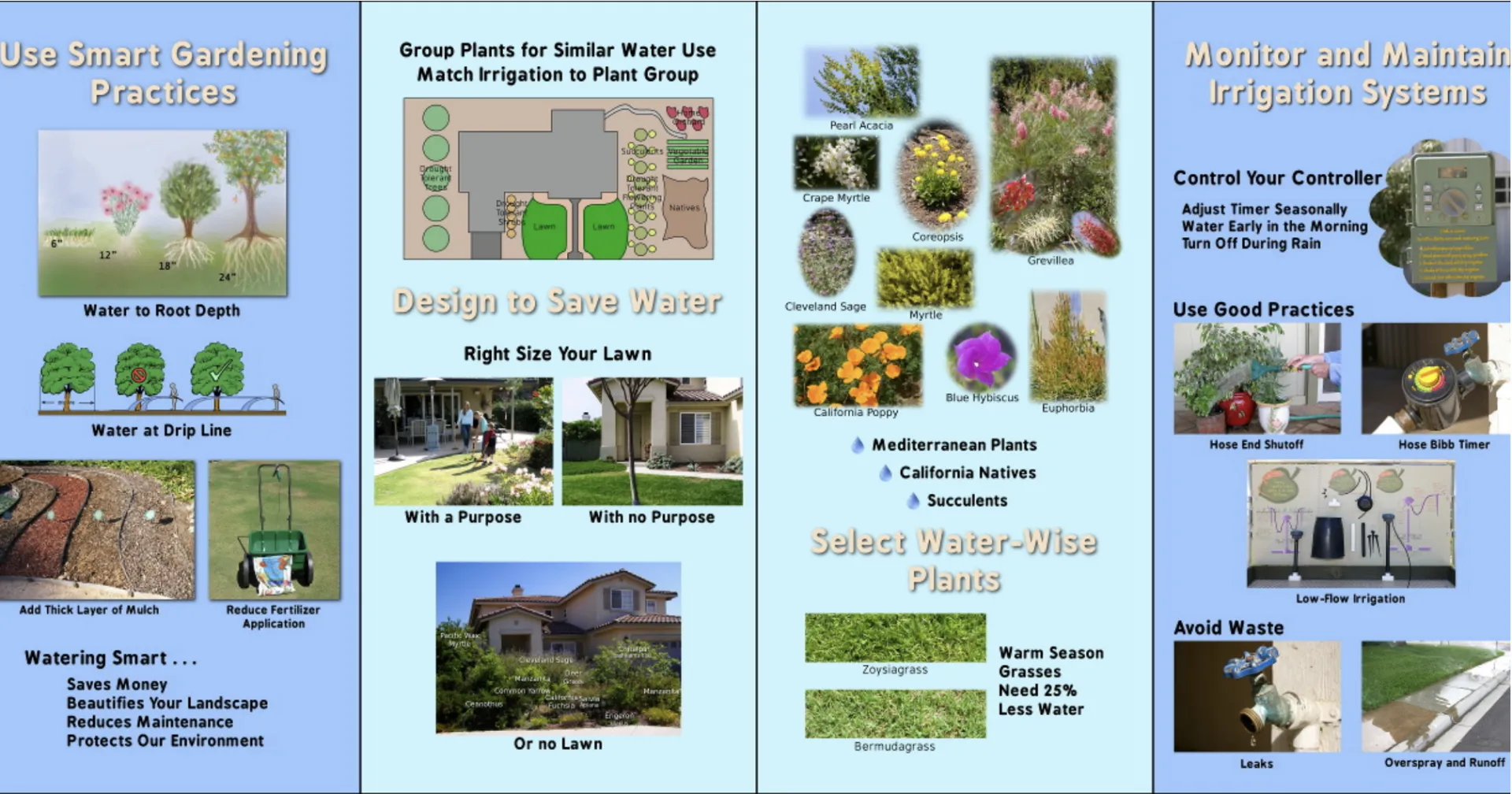
Panel 1: Use Smart Gardening Practices Concept - Smart watering for conservation.
- Water to root depth: Adjust the amount of water to the depth of the roots. Typically smaller plants have shallow roots, and trees have deep roots.
- Water at drip lines: This is the area defined by the outermost circumference of a tree canopy where water drips from and onto the ground.
- Add thick layer of mulch: By applying mulch you
- Conserve moisture
- Improve soil quality
- Reduce weeds
- Enhance the visual appeal of the area
- Reduce fertilizer application: Use only what a plant would need. Over-fertilizing encourages overgrowth which requires more water to sustain.
- Watering smart: Saves money, beautifies your landscape, reduces maintenance, and protects our environment.
Panel 2: Design to Save Water Concept - Plan your yard to fit your purpose.
- Group Plants for Similar Water Use: Match Irrigation to Plant Groups: When you group plants with similar water needs, you avoid over watering or under watering as often happen in mixed beds.
- Right Size for Your Lawn: Determine the purpose of your lawn.
- With A Purpose: Plan your lawn for your needs. A small lawn for children to play on or a larger lawn for outdoor games.
- With No Purpose: Gone are the days where the front of your home has large expanses of lawn.
- No Lawn: The front of your home planted with a well thought out grouping of plants can provide a very satisfying landscape.
Panel 3: Select Water-Wise Plants Concept - Selecting plants that require less water will conserve water and provide a beautiful landscape.
- Mediterranean Plants: Plants from a Mediterranean climate are adapted to survive dry summers and mild, moist winters. These plants come from western Australia, South Africa, central Chile, coastal California, and the Mediterranean Basin.
- California Natives: Native plants have adapted over time to local environmental conditions. They need minimal irrigation, little to no fertilizer, and little to no pesticides. Native plants support native birds, butterflies, beneficial insects, and other species of native wildlife.
- Succulents: Many succulents come from dry areas such as steppes, semi-‐desert and desert. To survive high temperatures and low precipitation, the leaves, stem or roots have developed water-‐storing tissue. All succulents need good drainage and very little water.
- Warm Season Grasses Need 25% Less Water: Warm season grasses thrive in scorching sun and high temperatures so require less summer water than cool season grasses. They grow best when temperatures are between 75-90 F, but go dormant and turn brown during the cool season. Grasses in this category include Bermuda grass and Zoysia grass.
Panel 4: Monitor and Maintain Irrigation Systems Concept - The mechanical side of water conservation.
- Control Your Controller
- Adjust Timer Seasonally: The need for water changes with the seasons. The summer months require more watering than the rainy season.
- Water Early in the Morning: This will allow the water to percolate through the soil and reach the roots of the plant without too much excess water lost to evaporation. Watering in the early morning will also make the water available to the plants throughout the day so that the plants will be able to deal better with the heat of the sun.
- Turn Off During Rain: Take advantage of the rain and stop automated watering systems.
- Use Good Practices
- Hose End Shutoff: Having the ability to turn off the water when moving from place to place reduces water waste.
- Hose Bib Timer: A timer will give you added control of the release of water.
- Low-Flow Irrigation: Low-flow watering systems use much less water than conventional methods. They regulate the amount of water supplied, taking the guesswork out of watering rates, and they distribute water close to individual plants, so water goes only where it’s needed, soaking slowly into the root zone.
- Avoid Waste
- Leaks: A leaky faucet that drips at the rate of one drip per second can waste more than 3,000 gallons per year. That's the amount of water needed to take more than 180 showers!
- Overspray and Runoff: Runoff occurs when water is applied too fast, to the soil or garden. Runoff often occurs on sloped landscapes.