
Model of disruptions from bird flu may be used to prepare for other threats to food supply chain
The COVID-19 pandemic caused widespread disruptions to the U.S. and global economies, including labor shortages and food supply chain breakdowns that profoundly affected producers and consumers alike.
In response, the Western Institute for Food Safety & Security (WIFSS) at University of California, Davis sought to better understand food system vulnerabilities in California and explore how simulation modeling could help anticipate and lessen the impact of future disruptions.
On Thursday, Jan. 15 (3–4 p.m.), the Southwest Regional Food Business Center will host a webinar on how risk modeling can inform preparedness and strengthen the resilience of our food systems.
The Jan. 15 webinar is designed for dairy producers and others to learn about new efforts to keep cows healthy, said presenter Bennie Osburn, WIFSS director of Outreach and Training and emeritus dean of the UC Davis School of Veterinary Medicine.
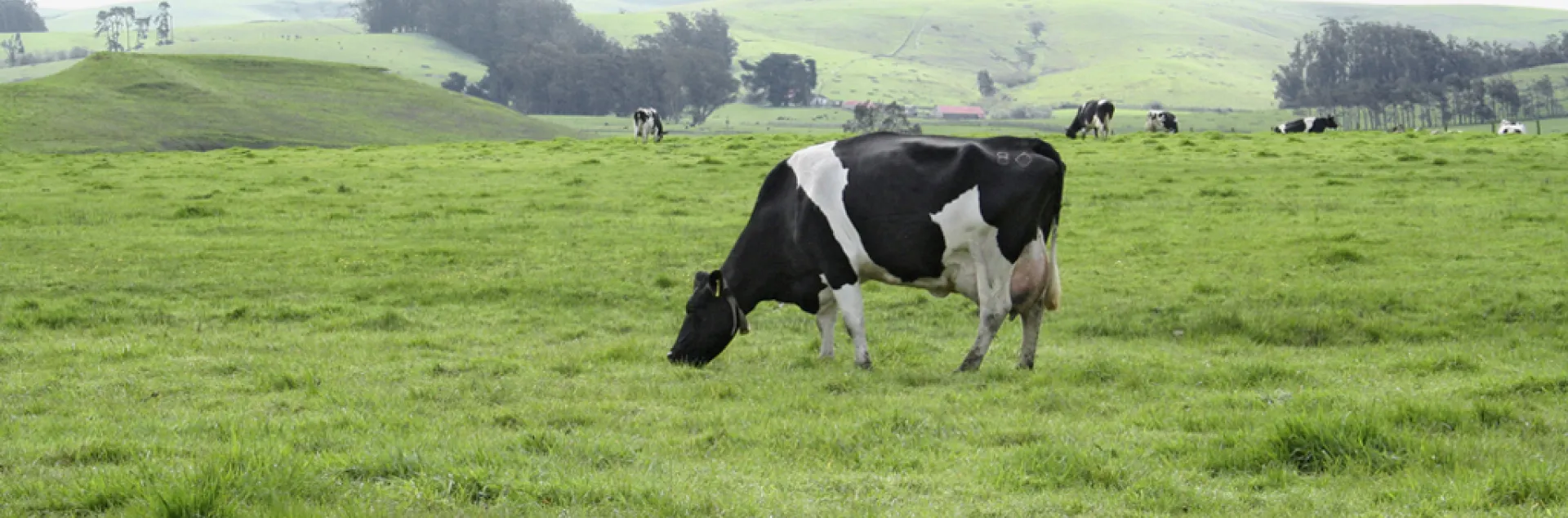
This proof-of-concept project applied simulation modeling to assess the potential impacts of Highly Pathogenic Avian Influenza (HPAI) H5N1 – a virus that devastated the poultry industry and spread to dairy farms. The model focused on production, economic variability, and behavioral factors over time on a small dairy operation to limit the spread of bird flu.
For example, the “digital twin” platform – which creates a virtual, data-based model of real-world assets and processes – was used to monitor the health of cows on a daily basis and quickly identify sick animals before they actually show signs of illness or become less productive.
“The immediate removal of each affected cow is important to not allow contaminated milk to enter the milking system,” Osburn explained, noting cows could rejoin the group once they have completely recovered and are healthy again. “This assures safe milk for consumers and a major economic savings for the dairy farmer.”
Osburn added that this modeling concept can be used on a wide variety of other products along the food chain.
“As consumers become more astute, they will demand safer food products,” he said. “We continue to find ways further reduce contamination of foods from farm to fork, and the digital twin model is one aspect which is being used to meet this goal.”

Other webinar presenters include David Goldenberg, WIFSS food safety and security training coordinator; Saurabh Parakh, co-founder and partner of MOSIMTEC, which provides consulting for decision support model development and computer simulation; and Nelson Alfaro Rivas, MOSIMTEC simulation consultant.
This approach demonstrates how modeling disease simulations can serve as a powerful tool for evaluating and planning responses to outbreaks in the agricultural industry. Future expansion of this work could enable industry-wide assessments of production and economic impacts.
Some benefits of developing a risk model include early detection and prevention, informed policy and resource allocation, cross-sector collaboration, economic stability and pandemic preparedness.
Register for the webinar at https://swfoodbiz.org/events/center-events/ to learn how risk modeling can guide preparedness and strengthen the resilience of food systems. The webinar will be recorded and posted on the Southwest Regional Food Business Center website: https://swfoodbiz.org/events/center-events/.
The Southwest Regional Food Business Center is a partnership effort led by UC Agriculture and Natural Resources, Valley Vision and UC Santa Cruz Center for Agroecology. The center improves opportunities for food and farm businesses across Arizona, California, Nevada and Utah through coordination, technical assistance and capacity building.