
Authors: Robinson Johnson, Deniz Inci, Kassim Al-Khatib
Department of Plant Sciences, University of California, Davis
Background
White Water Fire (Bergia capensis L.) is an annual broadleaf weed native to southern China, tropical Asia, and Africa, which was recently reported in a California rice field by the Butte County Agricultural Commissioner's office in September 2023 representing the first confirmed report of this weed in California and likely in the United States. This discovery immediately raises concern regarding its spread potential, economic, and environmental impacts. White Water Fire seeds collected from the field had deep dormancy which required cycles of low temperature. However, seeds from greenhouse grown plants did not have any dormancy.
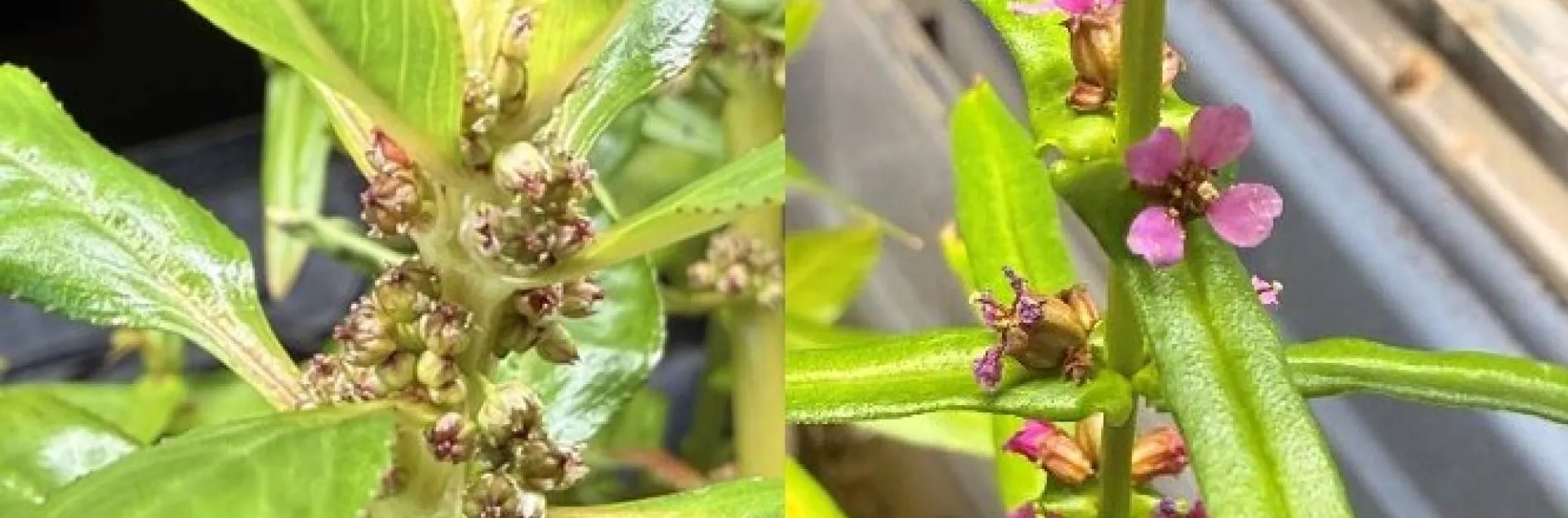
White Water Fire plants.
Identification
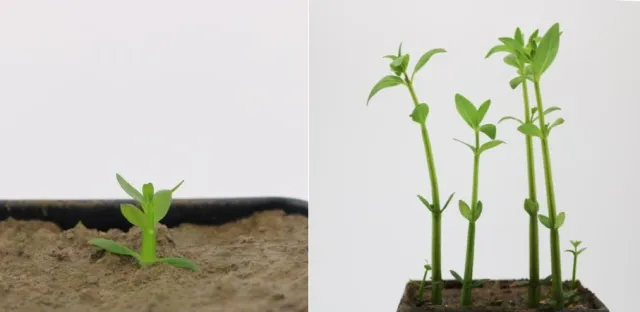
White Water Fire plants look similar to the more common broadleaf weed Redstem (Ammannia spp.), leading to potential misidentification in the field. However, some of the key distinguishing features include that White Water Fire plant has broader, thicker, ovate leaves with having minor serration. They also distinctly produce white flowers, which all surround a round stem that is characterized by an extremely small central pith surrounded by large air spaces known as lacunae that are arranged in a highly organized radial pattern like spokes on a wheel. On the other hand, Redstems produced purple flowers.
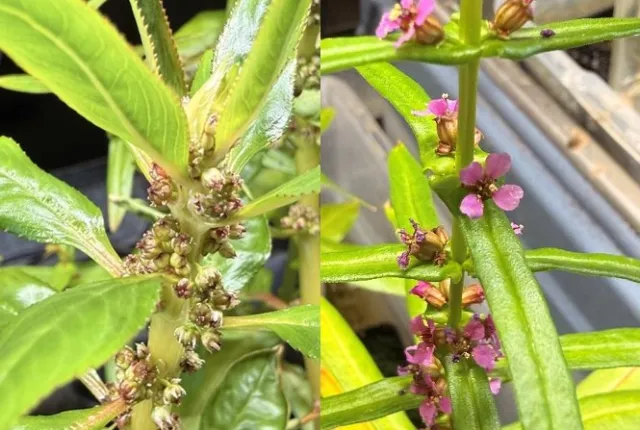
Flowers of White Water Fire (left) and Redstem (right).
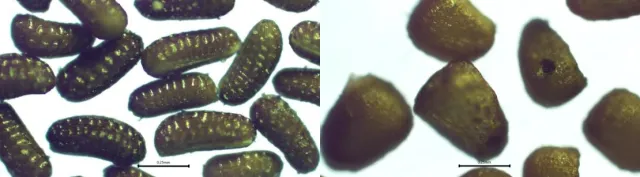
Seeds of White Water Fire (left) and Redstem (right).
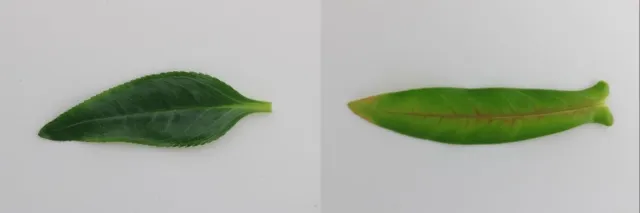
Leaf of White Water Fire (left) and Redstem (right).
Redstem on the other hand has narrower, thinner, linear leaves with a very distinct shape characterized by the base of the leaf wrapping around the stem, with the shape known as auriculate, and the overall shape of the leaf being lanceolate. These all are surrounding the stem, which distinctly varies from red to green with a clear square/rectangular shape. The internal portion of the stem differs significantly from that of White Water Fire, featuring a distinct, large pith in the stem area. This pith is surrounded by a more sponge-like aerenchyma/cortex with air spaces that are less organized than those of White Water Fire plant. Another key feature is the flowers, which typically exhibit purple to pink flowers.
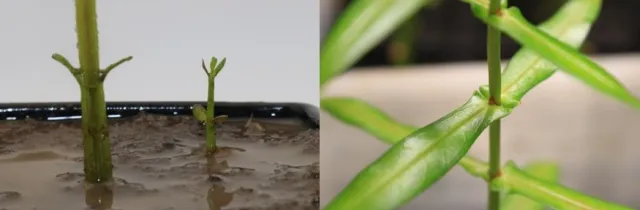
White Water Fire (left) and Redstem (right).
Other distinct features include the seeds of both plants being quite different, with White Water Fire having small ellipsoid or oblong seeds that have regularly aligned rows of pits that create a ribbed look. While on the other hand Redstem seeds are more like a hemisphere with an overall more ovate shape with less consistency. With how small the seeds are there is not a benefit for field identification as they look close enough to each other that they would be difficult to identify in the field. However, one key character that could assist in the field identification would be the Redstem has a more yellow seed and a rounder shape while White Water Fire seeds are dark brown to black, longer seed, and oval.
Control
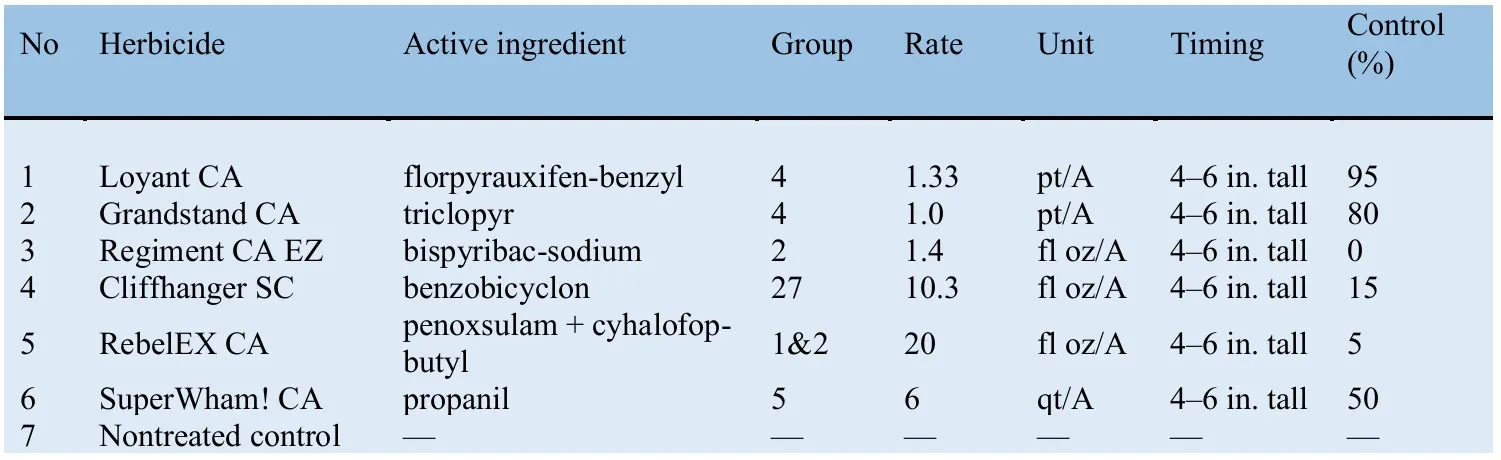
White Water Fire and Redstem were treated in the greenhouse with six herbicides commonly used in rice fields including Loyant CA, Grandstand CA, Regiment CA, Cliffhanger SC, RebelEX CA, and SuperWham! CA. Loyant CA was the most effective herbicide with over 95% control of White Water Fire seedlings at 28 days after treatment followed by Grandstand CA with 80% control. Preliminary results also confirmed that copper sulfate applications inhibit seed germination and controls White Water Fire plants that might be promising to reduce the overall costs for rice growers.
Table 1. White water fire herbicide treatments.
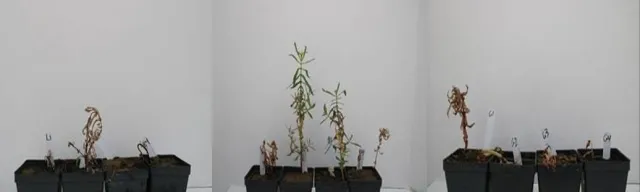
White Water Fire control at 28 days after treatment. left, Loyant; middle, SuperWham!; and right, Grandstand.