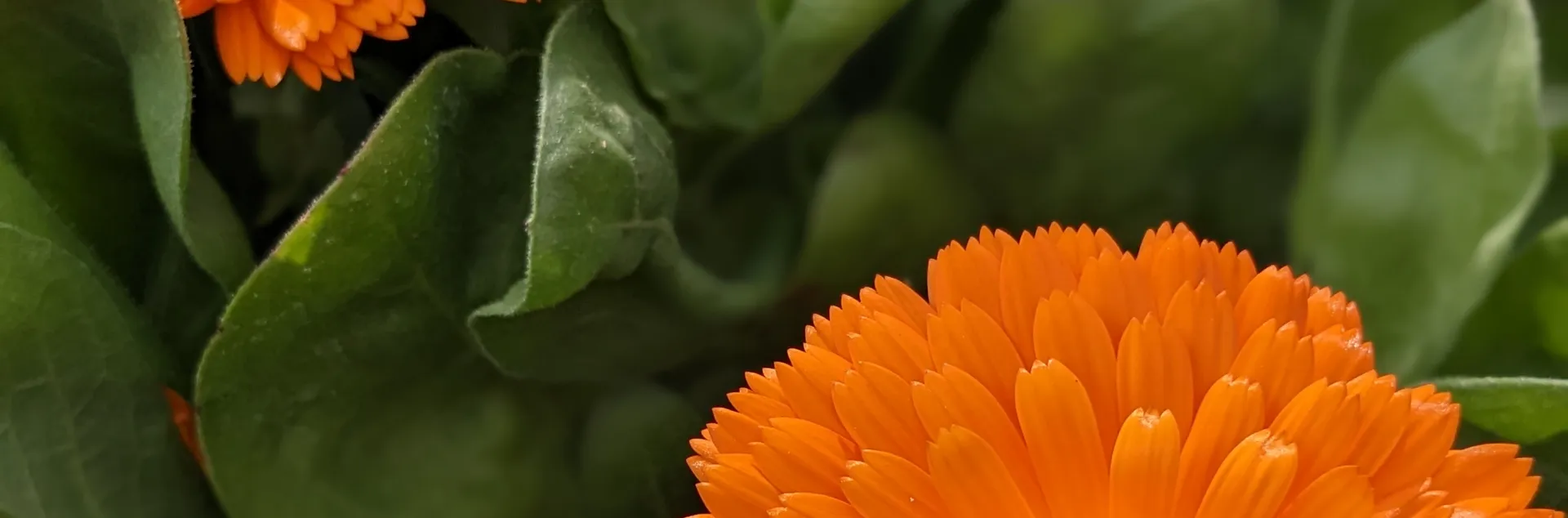
I love walking on garden paths with friends. Together we enjoy the scent of the flowers, the buzz of the bees, and the chirps and chatter from the many birds. As I meander along, I reach down and pluck a colorful bloom – then pop it in my mouth, chewing contently as I walk. Gasp! My friends look horrified, until I explain...
Many flowers are edible! Yes, edible, and quite tasty. Those soft petals and bright colors hide a culinary treat few know about. Listed below are just a few of the many flowers that you can enjoy.
But before you start tasting, please note that before consuming any ornamental edible flower follow these guidelines:
Flowers should come from your personal garden or from a trusted source that have not been sprayed with pesticides.
Be certain what the flower is. Since flowers often share common names, check the scientific name to be certain you have the correct flower. Not all flowers are edible no matter how similar they look.
If you have asthma, allergies, or hay fever, you may want to pass on the flowers. They may trigger an allergic response.
Collect your treats in the cooler part of the day and when the flower is fully opened for best taste and freshness.
Bee balm (Monarda fistulosa)
This member of the mint family is wonderful for attracting bees and other pollinators. It has a slightly minty, citrusy flavor, making it perfect for adding to salads and as a garnish for iced tea. Bee balm is sometimes called wild bergamot, but it’s not to be confused with true bergamot (a member of the citrus family).
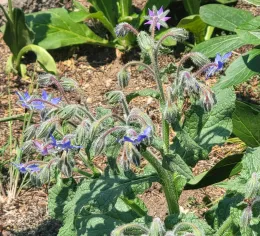
Borage (Borago officinalis)
This beautiful plant is a 2 for 1 as both the flowers and leaves are edible. The star-like blue flowers are sweet, and the leaves have a mild cucumber flavor.
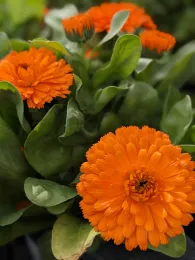
Calendula (Calendula officinalis)
These bright, colorful blooms have a slightly peppery, almost citrus-like taste and make a great addition to salads, soups, and herbal teas.
Chamomile (Matricaria recutita, Chamaemelum nobile)
German chamomile (Matricaria recutita, an annual) and Roman chamomile (Chamaemelum nobile, a perennial) are distinct species within the Asteraceae family. Most often used in teas (both flowers and leaves, their sweet, apple-like aroma makes them perfect for fresh salads.
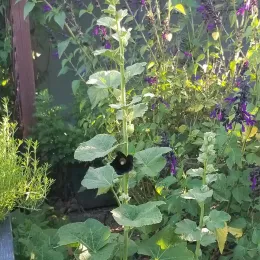
Hollyhock (Alcea rosea, Malva alcea)
It’s amazing to discover that this stunning flower is completely edible, including flowers, leaves, roots, and seeds. While the taste isn’t a showstopper – the petals can be chewy and a touch bland - the whole flower in a salad or as a garnish will delight the senses.
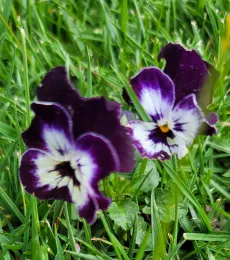
Viola (Viola tricolor, Viola odorata, Viola cornuta, Viola hybrida, Viola x williamsiana)
Violas have a range of flavor profiles, from mild to sweetly floral. Johnny jump-ups, (Viola tricolor) has a mild, lettuce-like flavor with a hint of wintergreen. Add these colorful flowers to salads, use as a garnish, or candied for dessert.
These are but a few of the many tasty treats to be found in your garden beds. So, the next time you plan your garden, don’t forget the edible flowers. You, and the pollinators, will be happy you did!
A Huge List of My Favorite Edible Flowers and What They Taste Like - Garden Betty
https://gardenbetty.com/edible-flowers/
Terry Pellegrini has been a UC Stanislaus Master Gardener since 2020