
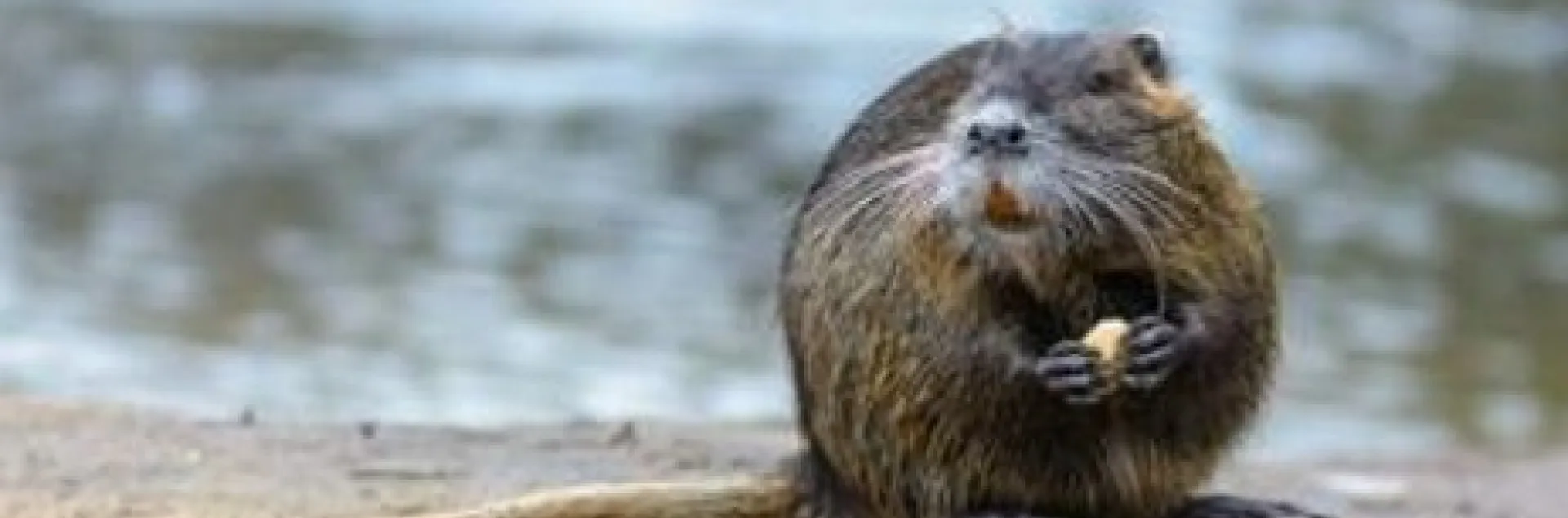
Last year during the 2025 Winter Grower Meetings, we mentioned nutria as an emerging invasive pest capable of harming rice fields, especially in the Delta region. After these meetings, we received several anecdotal confirmations of sightings of nutria and nutria burrows around the Stockton area and further south. Although this pest has not been positively identified north of Solano County, California Department of Fish and Wildlife continues to document increased numbers and spread of this pest.
Nutria introduction to California
While nutria are nonnative to California, they have been in residence since the 1890s, where they were introduced in order to be farmed for their fur. With the collapse of the fur trade, many nutria were abandoned to the wild. Nutria were considered eradicated from the wilds of California by the 1970s and largely ignored until 2017, when a breeding pair was identified in Merced County. Since then, tracking efforts have revealed an extensive spread of this pest throughout the waterways within the Sacramento-San Joaquin River Delta and Central Valley.
Nutria have the capacity to damage irrigation infrastructure and crops. These rodents can burrow deeply into the banks of waterways, leading to collapse of levees and canals. They are also wasteful feeders; nutria can consume up to 25% of their body weight in above- and below-ground vegetation each day and can destroy up to 10 times that amount through their destructive feeding habits.
Ongoing eradication efforts
CDFW and collaborators believe that there is still a possibility to eradicate nutria, as California populations and geographic spread indicate that the level of nutria abundance is within the realm of eradication possibility. As time advances, both the population size and geographic range of infestation continue to grow, necessitating increased effort, resources, and funding for effective eradication. Consequently, the likelihood of successful eradication diminishes, potentially requiring California to focus on managing and mitigating the significant impacts of nutria on wetlands, agriculture, and water conveyance or flood control infrastructure.
ID tips
Nutria are commonly mistaken for other semi-aquatic species, such as beavers, groundhogs, muskrats, minks, and river otters. CDFW has a great graphic (linked here) with tips for identifying nutria.
Distinguishing characteristics of nutria are:
- Large orange front teeth
- White whiskers
- Dark round ears
- Partially webbed hind feet (front feet are clawed for digging)
- “Rat-like” tail
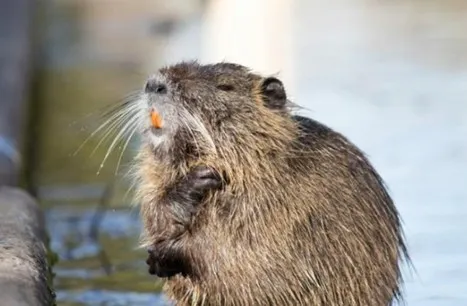
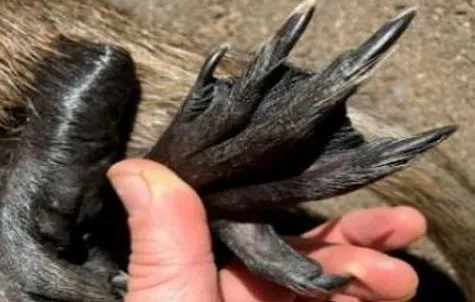
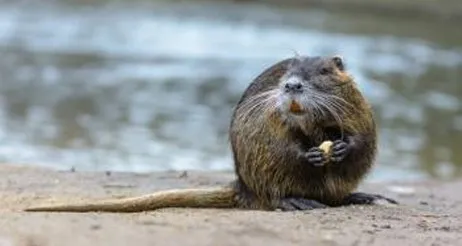
Photos courtesy of Mark Reuters (Adobe Stock) and M. Enos.
Signs of presence typically include cut, emergent vegetation (e.g. cattails and bulrushes), with only the basal portions eaten and the cut stems left floating, or grazed tops of new growth. Nutria create runs between feeding sites and burrows. Nutria often pile cuttings to create feeding/grooming platforms. Nutria construct burrows with entrances typically below the water line, though changing water levels may reveal openings. Nutria tracks have four visible front toes and, on their hind feet, webbing between four of five toes. Tracks are often accompanied by narrow tail drags.
If you see a nutria, report it!
Suspected observations or signs of nutria in California should be photographed and reported immediately. There are 3 ways to report:
- Online at www.wildlife.ca.gov/Conservation/Invasives/report
- Email Invasives@wildlife.ca.gov
- Call (866) 440-9530
Sightings on state or federal lands should be reported to your local agency staff. There are 6 CDFW regions in California; the regions that encompass rice production are Regions 2, 3, and 4. Specifics on where your county falls into these CDFW regions can be found at https://wildlife.ca.gov/Regions.