
The Issue
Rodents remain one of the most persistent pest challenges in both urban and agricultural environments. In California, increasing concern about the environmental impacts of rodenticides has led to new regulations and public pressure to reduce pesticide use. At the same time, property managers, growers and pest management professionals must still address rodent infestations that threaten food production, infrastructure and public health.
Early detection is critical to successful rodent management. Rats often access hidden entry points into structures and agricultural facilities long before infestations become obvious. When these entry points go unnoticed, infestations can grow quickly and lead to management efforts that rely more on rodenticides.
Identifying new tools that allow pest managers to detect infestations earlier and focus on exclusion and sanitation is an important step toward reducing pesticide reliance while maintaining effective pest control.
How UC Delivers
At the 2026 Vertebrate Pest Conference in Southern California, UC Cooperative Extension (UCCE) Advisor, Niamh Quinn, organized a field tour to demonstrate innovative approaches to rodent detection and management.
The tour brought conference participants to the farm of Mike Mellano, owner of Mellano & Company, a multigenerational flower-growing operation in coastal San Diego County. Mellano is a long-time collaborator with UC Agriculture and Natural Resources and regularly partners with UCCEAdvisors to test science-based pest management practices on working agricultural lands.
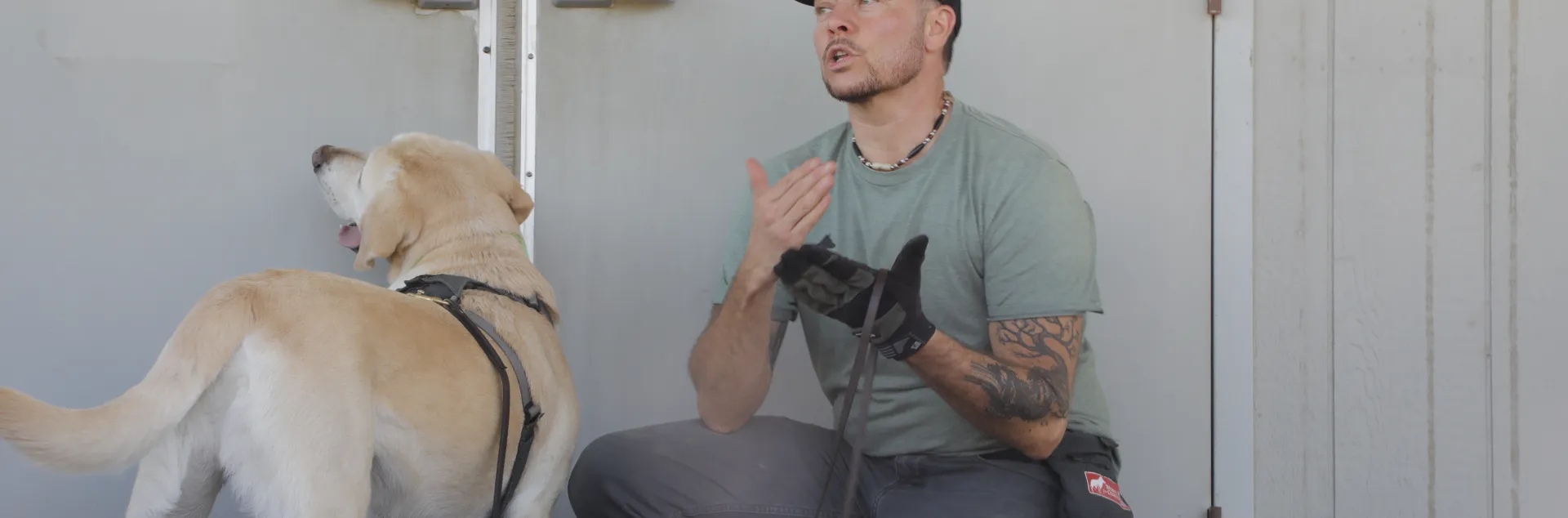
During the visit, specialists from Working Dogs for Conservation demonstrated how trained detection dogs can identify rat activity and pinpoint structural entry points that might otherwise go unnoticed. Mark Vick and his detection dog JJ, a rescued labrador, worked around farm buildings, locating scent trails and structural access points used by rats.
“The dogs are able to give us insights into odor-based information beyond the limitations of what we can see,” Vick said.
Detection dog teams have long been used in conservation to locate rare wildlife and invasive species across vast landscapes. Researchers are now exploring how those same scent detection methods can improve how rodents are detected and monitored in built environments.
“Rodents leave complex odor signatures as they move through landscapes and structures,’ Vick said. “Detection dogs allow us to interpret how that scent is distributed, helping identify activity zones, travel routes and entry points much faster than traditional inspections alone.”
The demonstration gave conference participants a first-hand look at how detection dogs could complement integrated pest management programs by helping identify infestations earlier and revealing structural vulnerabilities that allow rodents to enter buildings.
The Impact
By bringing together growers, pest management professionals and conservation specialists, UCCE created a unique opportunity to demonstrate a tool that could help improve rodent management while reducing pesticide reliance.
Earlier detection of rodent activity allows pest managers to prioritize exclusion, sanitation and structural repairs before infestations escalate. These preventive strategies are central to integrated pest management and can reduce the need for rodenticides by addressing the underlying conditions that allow rodents to thrive.
Hosting the demonstration on a working farm also highlighted the role growers can play as partners in applied research and innovation.
“Partnerships like this help growers stay on the cutting edge,” Mellano said. “Working with UC researchers allows us to try new ideas that can improve pest management while protecting the environment.”
Mellano plans to seal up the rodent access hole identified by JJ. That change will lead to less pesticide use and save him money in the long term.
The impact of that behavior change shouldn’t be underestimated, Quinn says. Not only can reductions in the use of pesticide benefit the environment, but keeping rats out of buildings improves public health. Rats and mice are linked to early onset of asthma and pose a threat to people’s mental health.
The kind of field demonstration organized by Quinn is a hallmark of UCCE’s approach to problem solving. By connecting researchers, agricultural producers and industry professionals, UC ANR helps translate emerging science into practical tools that can be tested under real-world conditions.
“I’m a scientist – I love science,” Mellano said. “Vertebrate pest control is a big issue and it’s getting bigger.”
As California continues to balance effective pest management with environmental protection, collaborations like this one will be essential for developing new approaches that help communities manage rodent problems while reducing reliance on pesticides.