

Don't miss this UC Davis seminar on the complexities behind ecosystem services. It will be a two-pronged approach: (1) The biological control of a coffee pest in Puerto Rico, and (2) a look at the parasites and viruses in bees in urban gardens along the California coast.
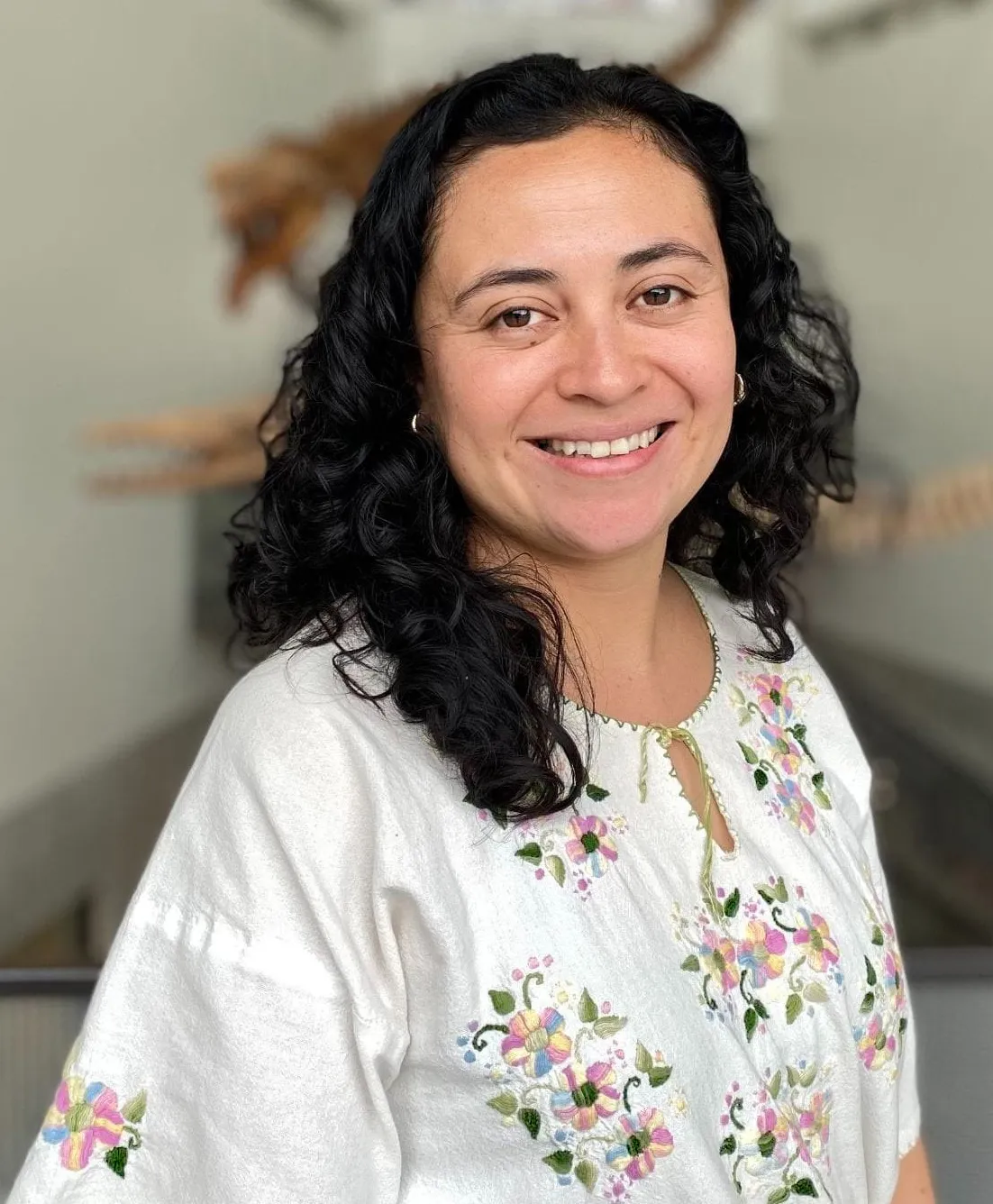
Iris Rivera-Salinas, a Chancellor Postdoctoral Fellow at UC Santa Cruz who goes by Iris Rivera, will speak on "Uncovering the Complexities Behind Ecosystem Services: Pest and Disease Control" at the next seminar hosted by the UC Davis Department of Entomology and Nematology.
Her hybrid seminar begins at 12:10 p.m., Wednesday, April 15 in 122 Briggs Hall. The Zoom link: https://ucdavis.zoom.us/j/95882849672. Urban landscape entomologist Emily Meineke, associate professor, is the host.
"Biodiversity provides vital ecosystem services, including the regulation of pests and diseases in agroecosystems," Rivera writes in her abstract. "However, the effectiveness of these services depends on various factors, such as complex ecological interactions, landscape characteristics and seasonal variations. In this talk, I will first present the results of my doctoral research, which examined the role of a diverse assemblage of natural enemies in the biological control of an important coffee pest in Puerto Rican coffee agroecosystems. Secondly, I will discuss my proposed postdoctoral research, which aims to understand how flower composition, landscape configuration, and seasonality influence the dilution and concentration of parasites and viruses in bees in urban gardens along the Californian coast. This talk will emphasize the importance of investigating the complexities behind ecosystem services that facilitate win-win scenarios for both biodiversity conservation and the management of agroecosystems."
Rivera, who received her PhD in Environment and Sustainability from the School of Environment and Sustainability at the University of Michigan, is a member of the Stacy Philpott lab, Department of Environmental Studies. Members of Philpott's research group (The ANTS lab) "aim to learn about the ecology, conservation, and sustainability of agroecosystems and surrounding landscapes." Rivera-Salinas's research interests include agroecology, ecological complexity, insects, disease transmission and predation.
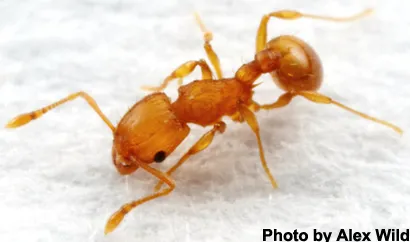
Rivera co-authored "Pest Control in Coffee: A Tri-Trophic Comparison between a Mainland and an Island Agroecosystem," a chapter in the book, "Ecology and Evolution of Plant-Herbivore Interactions on Islands," published online in January 2024.
"The practical requirement of pest control in agriculture is an evident application of principles of tri-trophic ecological interactions—plant (crop), herbivore (pest), and predator (natural enemy)," the authors wrote in part. "We analyze the coffee agroecosystem and four of its main pests, the coffee berry borer, the coffee leaf miner, the green coffee scale, and the coffee leaf rust, comparing a mainland site (Mexico) and an island site (Puerto Rico). In addition to the direct trophic, competitive, and mutualistic interactions, there are a variety of indirect higher order interactions, many of which qualitatively increase the complexity of the organizational structure. We explore how the basic nodes of the natural enemy network remain relatively constant between mainland and island, but their frequency and, especially, the complications of their interconnections are dramatically different."
Among her other publications: she is a co-author of "Mexico's Ants: Who Are They and Where Do They Live?" published April 1, 2020 in the Bulletin of the Ecological Society of America
For any seminar technical issues regarding Zoom, contact seminar coordinator Marshall McMunn at msmcmunn@ucdavis.edu.