Trivia question of the day: Who introduced the UC Davis Roach Races, a popular attraction at the annual campuswide UC Davis Picnic Day?
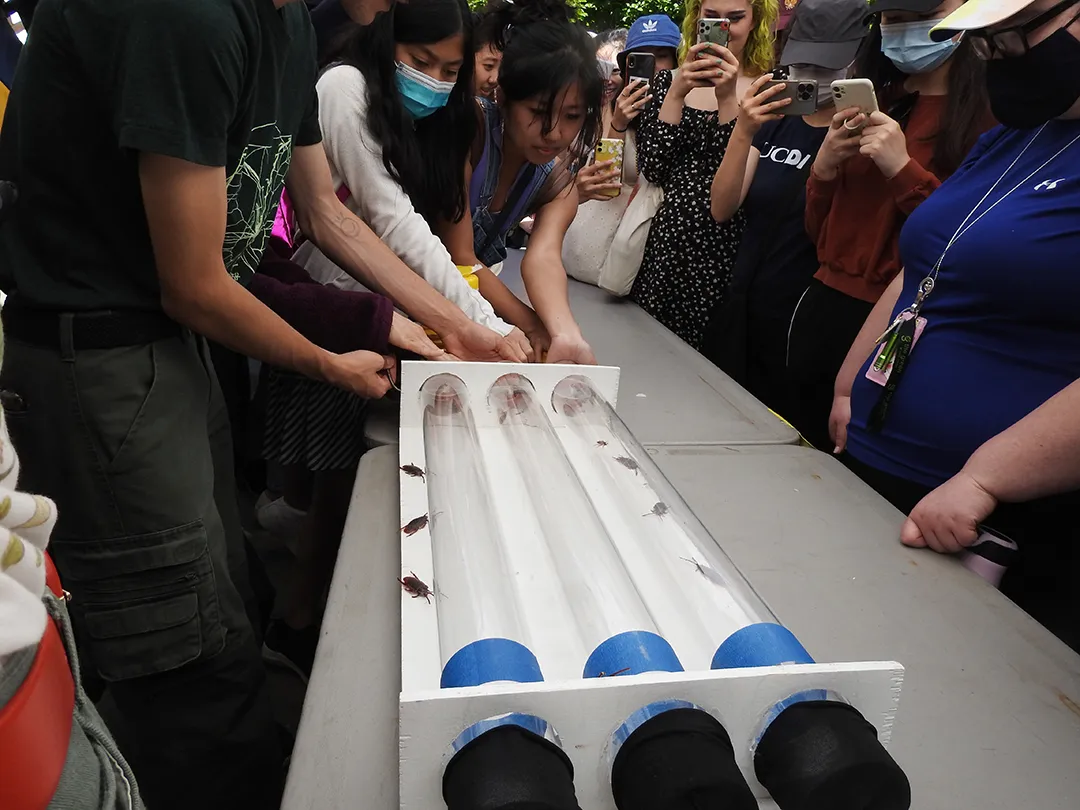
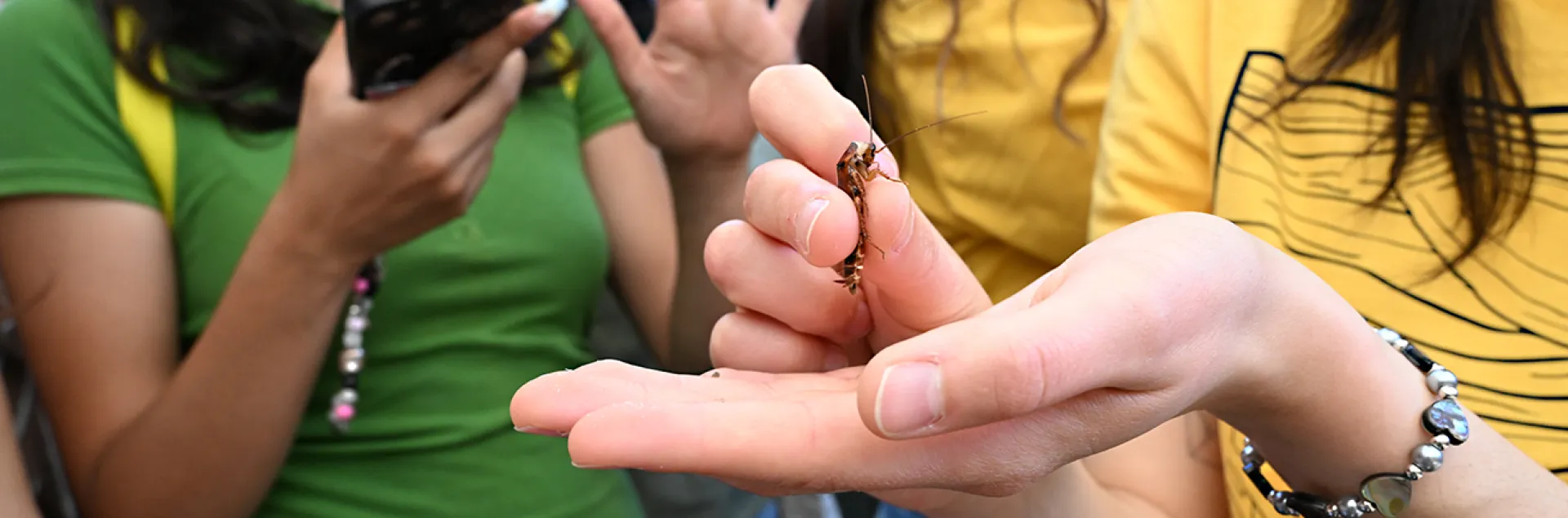
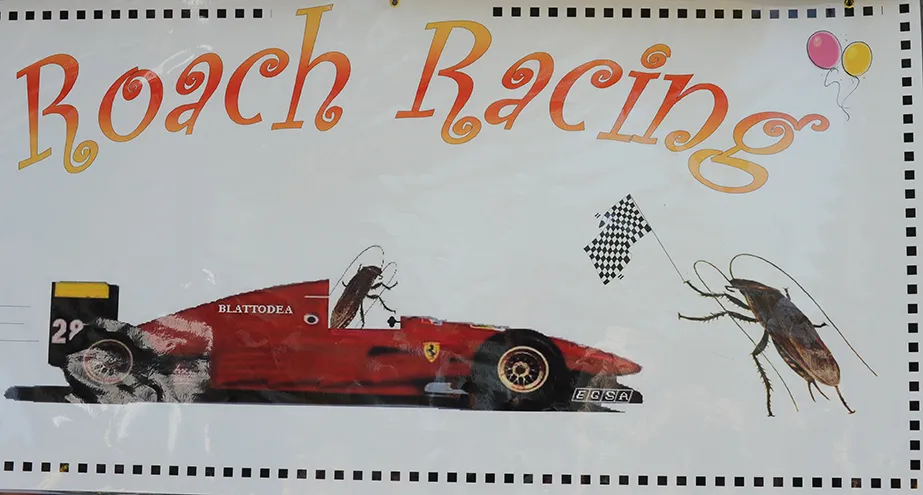
Have you ever been to the roach races, hosted by the UC Davis Entomology Graduate Student Association (EGSA) and heard all the cheering and shouting? The roaches are American cockroaches (Periplaneta americana), "born and bred" in a UC Davis research lab. They race in front of Briggs Hall, home of the UC Davis Department of Entomology and Nematology.
This year's event is from 11 a.m. to 3 p.m. on Saturday, April 18.
But who introduced or launched the races? And when?
Drum roll...Rutgers University alumnus Steve Schutz, then a postdoctoral researcher in the lab of medical entomologist Bruce Eldridge (1933-2025), launched the races in 1992.
A recent email conversation between several UC Davis entomologists resolved the mystery. UC Davis professor emerita Sharon Lawler, who retired in January 2023 after a 28-year career with the department, said it was Schutz who introduced the roach races to the UC Davis Picnic Day.
"A Cockroach Derby had been a feature of the Rutgers Ag Field Day, now Rutgers Day," Lawler said, attributing the information to Debbie Dritz (former Lawler lab member and now a vector ecologist with the Sacramento -Yolo Mosquito and Vector Control District). "He brought the tradition here. "
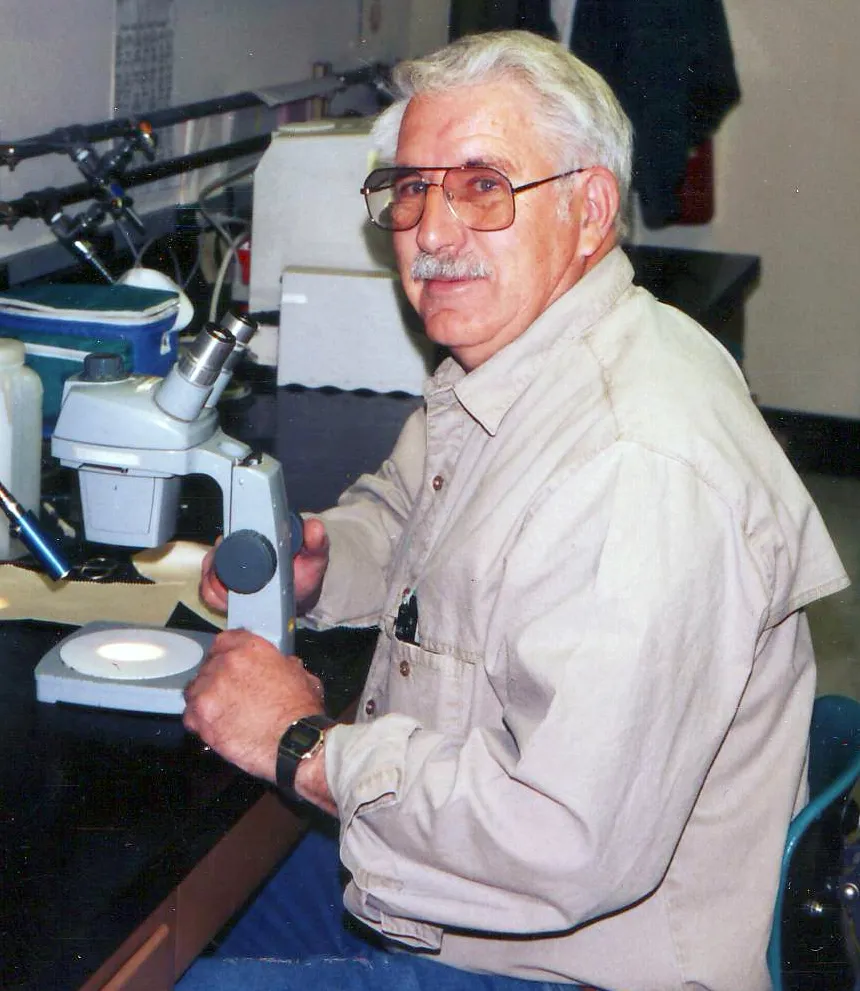
"Sharon is correct," wrote Schutz, the scientific programs manager of the Contra Costa Mosquito and Vector Control District since 1995. "When I was a postdoc in Bruce Eldridge's lab, I volunteered for the Picnic Day Committee (would have been 1992) and suggested that we add 'cockroach races' to the event. I got the idea from the Rutgers Entomology Department where I did my MS/PhD work. Cockroach races had started as an activity in the undergraduate 'Insects and Man' class, taught by Donald Sutherland at the time, and became a popular part of the annual Cook College Ag Field Day event. We gave out jars of honey from the University's hives as prizes. I thought it would also be a hit at UC Davis, although there was initially some skepticism, and apparently, I was correct, since they're still doing it. The SRA (senior staff research associate) from the lab next door built the racetracks based on my description of the design." That was Marvin Kinsey (1931-2011).
Schutz holds a master's degree in entomology from Rutgers University, where he studied honey bee and bumble bee foraging behavior on cranberry bogs in response to spatial and temporal vriability of nectar rewards. He obtained his doctorate in 1990 from Rutgers, where he focused on the behavioral ecology, physiology and genetics of salt marsh Tabanids. He then served as a postdoctoral researcher at Rutgers in the Center for Theoretical and Applied Genetics for a year, 1990-1991, researching the genetics of pesticide resistance in mosquitoes, population genetics of deep sea hydrothermal vent mollusk.
Then it was off to UC Davis, 1991 to 1993. He was a postgraduate researcher at the Mosquito Control Research Laboratory, Parlier, where he conducted research on population genetics of Culex tarsalis and Aedes nigromaculis and conducted lab bioassays of new insecticides and repellents.
Marvin Kinsey, who joined the UC Davis workforce in 1960, serving 37 years, "did many, many things for the department," noted UC Davis Distinguished Emerita Diane Ullman, who retired from teaching in 2024. Kinsey invented an electronic monitoring system that enabled scientists to study insect feeding behavior inside plant tissue. A 1994 national scientific symposium honored his contributions.
Kinsey was an internationally known entomologist and inventor. In a blog posted on the simonleather.wordpress.com site under "Don't Forget the Roundabouts," UK Professor S. R. Leather (1955-2021) wrote:
"In the early 1960s, two entomologists from the Department of Entomology, at the University of California, Davis, Donald McLean and Marvin Kinsey, came up with a system that was to revolutionise the study of the feeding behaviour of aphids and other insects that feed internally on plant using piercing mouthparts (McLean & Kinsey, 1964). In essence, what they did was to make an aphid part of an electrical circuit by attaching a thin copper wire to its back using a quick-drying silver paint. The feeding substrate, a leaf, had a 2.0 Volt, 60-cycle alternating current introduced to it and this was placed on an insulated grid connected to an amplifier connected in parallel with an oscilloscope, a chart-recorder and a speaker. The wire attached to the aphid, was joined to the grid and when the aphid began to feed this completed the circuit, and changes in voltage were able to be observed and recorded. The next step was to identify which chart recordings were associated with sap ingestion and salivation by the aphid. Using an artificial leaf, Parafilm stretched over a well containing a sucrose solution, and watching the aphids under a high power microscope, these innovative entomologists were able to identify four different stages involved in aphid feeding (McLean & Kinsey, 1965)."
Picnic Day Used to Be 'Businesslike'
UC Davis doctoral alumnus Richard Meyer, who studied with Professor Richard Bohart (1913-2007), remembers: "FIFTY years ago campus culture bore no likeness to today's modernity-- no high tech and old-school philosophy...Picnic Day as I remember it, was somewhat businesslike. No catchy activities to gain attention-- boring! Mostly emphasized pest management, largely oriented toward agriculture! IPM was just beginning to gain traction. We were often referred to as 'nozzle heads.' I believe the SRA who built the original racetracks was Marvin Kinsey."

UC Davis doctoral alumnus (2010) Yao Hua Law, now a science, environment and data journalist and co-founder of Macaranga.org, remembers being a race director for the Roach Races. He explained the races like this to the local press in 2010:
"Our cockroach race is modeled after a 100m sprint, albeit with a much shorter length of ~1.5 yard. We hold the cockroaches in big jars and line the top with vaseline to prevent escape. We have two tracks made of wood, one colored blue and the other yellow. The tracks have walls to their sides and a plastic cover on the top. The tracks are put side-by-side and for all to see. One end of the track is the 'starting chamber' where we put the racing cockroach and the other end of the (finishing line) track is left open. Before the race we ask the members of the rowdy crowd to pick a tag of either blue or yellow to prove their support. One of us counts down from 3, 2, 1 and lift the gates and away! The roaches sprint along the tracks. Another of us will be at the finishing side of the with open paper bags to catch the racing roaches as they pass the finishing lines. The supporters of the winning cockroach can then come forth and receive their prizes (usually a sticker or some form of economic entomological prize!). A minimum of two persons is needed to handle the event. We always get volunteers from undergrads and grad students. I myself have conquered my fears of cockroaches by handling them with gloved hands!"
"There are always mixed reactions from the crowd, but roach racing never fails to hold their attention," Law continued. "Some people, particularly the kids, are always excited and often prove to be the most ardent fans. Others may be disgusted and only watch from a safe distance. Although 'safe' can be deceptive because occasionally an overly pumped up cockroach would escape from the tracks and if we fail to catch it, scurry into the crowd. Waves of screams and laughter often follow. Surprisingly nobody steps on the runaway roach. We rear the cockroaches ourselves. They are the American cockroach, (Periplaneta americana), though their origins aren't American. Of course, we do receive batches of adults from other sources. Yes, roach racing is an integrated part of our annual Picnic Day event."
Presidential Cockroach Race
Rutgers still hosts roach races. One popular event is the Presidential Cockroach Race where the roaches "determine" who will win the presidency. (In this video, someone quipped that politicians and cockroaches are alike.)
Forensic entomologist Robert "Bob" Kimsey, who retired from teaching in 2024, is an integral part of the UC Davis Picnic Day. He served as the faculty chair of the UC Davis Entomology and Nematology Picnic Day Committee from 1998 to 2024. The cockroaches are from his lab. Kimsey has served as "Dr. Death" in Briggs Hall since 1990 and will do so again on April 18. As Dr. Death, "I will be answering questions from the public about how forensic entomology evidence is used to help solve homicides and in court room combat, essentially Physiological Ecology, developmental biology and community ecology-type stuff," he related.
So, mystery solved. Steve Schutz introduced the roach races to the UC Davis campus 32 years ago, and Marvin Kinsey built the original track.
Run, roaches, run!