The Issue
A research-based best practice for gaining community partner buy-in for health promotion initiatives is to communicate “wins” with partners to help them see the community impact. Consistent with this research, most (66%) of California’s local health departments who deliver the CalFresh Healthy Living program expressed in a needs assessment that they believe evaluation data is valuable for communicating their programs’ impact to stakeholders. However, many shared that they did not have the capacity or tools to effectively communicate program data and evaluation findings.
How UC Delivers
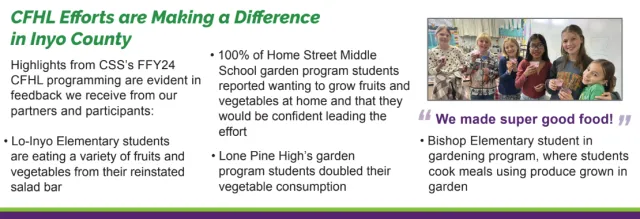
To support local health departments, evaluators at the Nutrition Policy Institute (NPI) developed a Data Storytelling Toolkit. The toolkit has two main components: a Canva data story template and Excel data tables. The Canva template is attractive and flexible, follows CalFresh Healthy Living branding guidelines, and was designed so that local health departments can customize their stories, especially if they want a shorter, more focused piece for a specific stakeholder audience. The Excel toolkit component synthesizes a large amount of complex data from a range of annual reporting and evaluation projects with external sources into easy-to-read data tables. Each table corresponds with a section of the Canva template, so that local health departments can easily find and copy relevant data points into Canva. NPI invited local health department staff to attend one of three hands-on workshops in June 2024. During the workshops, NPI introduced 53 participants to each toolkit component, walked them step-by-step through matching their data with the Canva template, and provided time for participants to begin crafting their data stories and to leave with a draft in hand. Finally, the toolkit is accompanied by a Quick Start Checklist that can be referenced to support local health departments after the workshops, or if they were unable to attend a workshop.
The Impact
Local health department participants who attended the workshops responded favorably to the workshops and the toolkit, and participant feedback suggested that the toolkit would help fill the capacity gap that local health departments had previously described. For example, one participant “loved that it’s super user friendly and straight forward” and added a thank you for the “walk through on how to utilize this new tool.” Another participant commented that “this toolkit is incredibly useful and will make communicating our programming and its impact much easier for us!” Among the workshop participants who completed a post-training evaluation survey (n=32), two-thirds (n=21) reported that they were more confident in their ability to share program data and outcomes with stakeholders after the training. In addition, 97% (n=31) indicated that they intended to use the toolkit to create at least one data story, and many commented that they were excited to take advantage of the flexibility to create more than one.
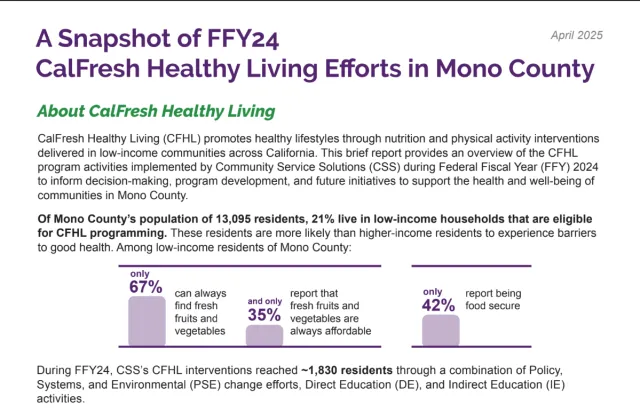
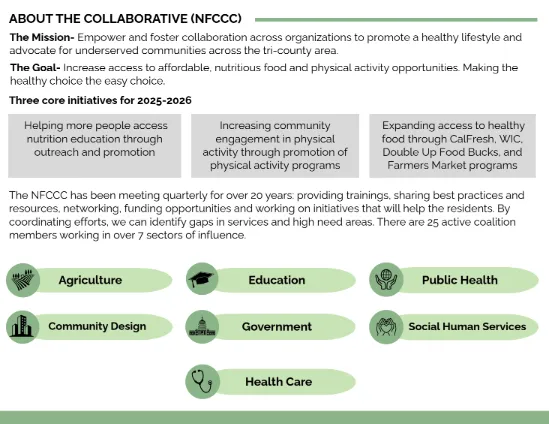
Since the release of the Data Storytelling Toolkit in June 2024, NPI has refreshed the toolkit with annual data file updates and subsequently surveyed local health departments to learn whether they have used the toolkit. Over two-thirds (69%) of LHD respondents completing this survey indicated that they’ve used it to create research or policy briefs to communicate with stakeholders. Among these respondents, 78% have used it for communicating with current partners, 44% for communicating with other county or city agencies, 44% for communicating with policy makers, and 33% with potential new partners. As an example, Monterey County Public Health’s CalFresh Healthy Living program designed a brief featuring the work of the Nutrition and Fitness Collaborative of the Central Coast. They wanted to communicate their data with the goal of expanding resources for nutrition and physical activity programs in their county. Program staff used their data brief to support discussions with county supervisors and health department administrators about the loss of SNAP-Ed funding in 2025. They were ultimately successful in securing funding from the health department to help sustain nutrition and physical activity programs in their jurisdiction. More examples of completed data stories can be found in our Data Story Repository.
The Data Storytelling Toolkit has improved workforce development and supported increased capacity for civic engagement among California’s local health departments, as well as increased public engagement and confidence in science, not only within local health departments, but also for their community partners. In addition, by helping jurisdictions like Monterey County secure funding to sustain community health programs, the toolkit can contribute to improved food and nutrition security as well as improved community health and wellness.