
Community invited to open house showcasing research and educational programs
This year, the Hopland Research and Extension Center celebrates its 75th anniversary as the University of California’s principal field research facility for agriculture and natural resources in the North Coast.
Hopland REC, operated by UC Agriculture and Natural Resources, invites the community to an open house on Sunday, May 17, from 10 a.m. to 2 p.m.
“Being a little off the beaten track in the hills east of Hopland in Mendocino County, many people in the region may not know about what we are doing here, so we are having an open house where anyone can come to learn and enjoy springtime among the oaks,” said John Bailey, Hopland REC director.

The event is free to the public and will include a short walking tour where visitors can meet scientists, participate in educational programs and hands-on learning activities, and learn about the research happening at the center.
Timed activities include a sheep shearing demonstration at 10 a.m., a 5k fun run (all paces welcome) at 10:30 a.m., a sheepdog demonstration at 11 a.m., and a guided hike at 1 p.m.
Visitors are invited to bring a packed lunch or purchase lunch from a food truck that will be on site. RSVP is highly encouraged; RSVP for the event. Due to the presence of guardian dogs protecting the sheep, pets are not permitted.
“We would love to see both familiar and new faces so we can celebrate both our impacts and our supporters, while welcoming our broad and diverse communities,” Bailey said.
The site has inspired not only researchers, but also artists over the decades, including Ansel Adams, who visited the site in May 1966. His photographs of Hopland REC's oak woodlands can still be found hanging in Rod Shippey Hall, the site’s main event center.
“We’d like to answer all the questions visitors have about the site and the ongoing research so everyone can learn and experience this wonderful woodland together,” said Hannah Bird, community educator at Hopland REC. “Every year we welcome more than 3,000 participants for school field trips, adult classes and educational programs, but I regularly meet community members who have never had the chance to visit and would love to learn more. May 17 is the day!”
Hopland REC research encompasses fire science, rangelands, Lyme disease and more
The center sits on 5,358 acres of oak woodland, grassland and chaparral lands purchased from a local rancher by the UC in 1951 to support long-term research on rangelands and environmental management.
For the past 75 years, Hopland REC has been a learning landscape, exploring how agriculture and ecology can co-exist on working lands. The site has hosted researchers from all over California and beyond, playing a key role in over 2,000 scientific publications.
Research has been conducted across a variety of fields, including sheep biology and management; rangeland improvement, including vegetation management and soil fertility; fire science; and public health related to vector-borne diseases and parasites.
Some of the knowledge gained through the studies conducted at Hopland REC has had immediate application, not only in Mendocino County, but statewide, nationwide and worldwide.
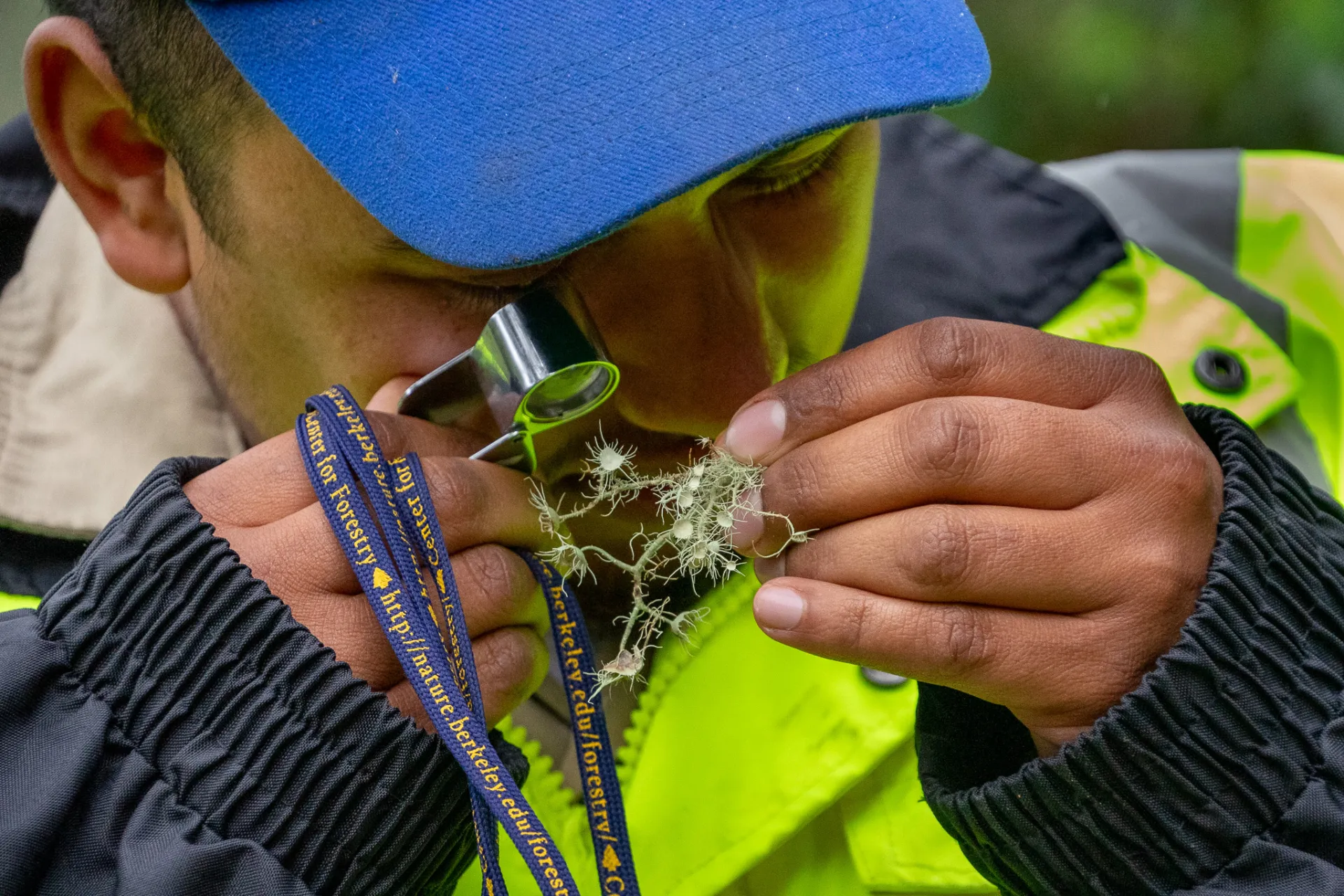
For example, intensive ecological and epidemiological investigations of the Lyme disease bacterium (Borrelia burgdorferi) have been conducted at Hopland REC since the early 1980s by UC Berkeley Professor Bob Lane and colleagues.
These studies unveiled the ecology of the western black-legged tick, the primary human-biting vector of the disease. The research revealed critical habitat for these ticks is in leaf litter and decaying downed trees – all inviting places to take a seat during a woodland walk. This tick research has led to public health guidance for people who work outdoors so they can reduce the risk of tick bites and potential infection.
These researchers also uncovered an unlikely hero in Hopland REC’s woodlands, in the form of the western fence lizard. The blood of this common blue-bellied reptile contains a protein that kills the Lyme disease-causing bacteria in ticks, meaning the lizards in the Hopland oak woodlands help reduce the spread of Lyme disease.
Lane will be at the open house to answer questions and additional information will be available to help local residents stay safe in tick-prone areas.
In addition, Adina Merenlender, professor of Cooperative Extension in conservation science at UC Berkeley, will also be tabling at the event to share her current research project focused on wetland management and efforts to reestablish the California red-legged frog. Merenlender has a long connection to Hopland REC, where she has led numerous research projects focused on biodiversity and conservation over many years.
She also co-founded the UC California Naturalist and Climate Stewards courses, part of the UC Environmental Stewards program, to engage the public in discovery, action and stewardship. Alumni of these courses locally will share the wonders of California’s unique ecology throughout the day.
Learning landscape features flock of sheep, vocational opportunities for young people
Hopland REC also ranches a flock of more than 200 breeding ewes used for research in veterinary medicine and range management. The sheep serve as a demonstration flock for vocational classes such as sheep shearing and a lambing school. Annual public events, including “Barn to Yarn” and the Hopland Sheepdog Trials, have given the surrounding community an opportunity to engage with sheep ranching and the wool fiber process.
In addition to its role as a research facility, Hopland REC serves as an educational center where land managers, technicians, growers and students have the opportunity to interact with this learning landscape.
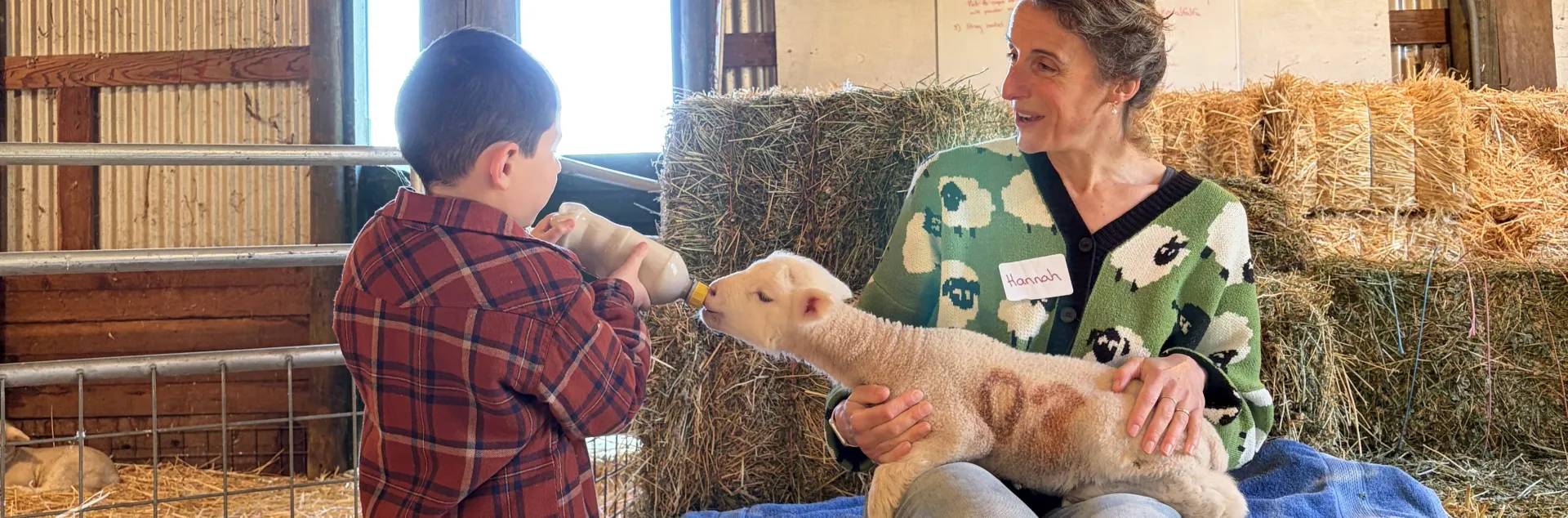
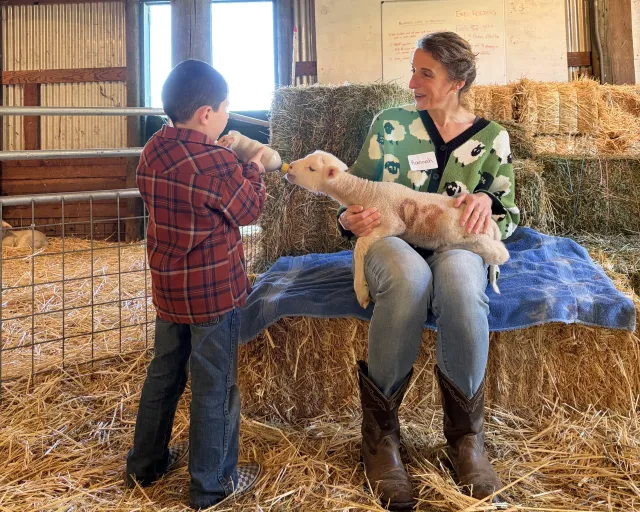
Annual educational programming at the REC includes the UC California Naturalist certification course and guided public hikes. Field trips for grades K to 12 allow students from surrounding schools to observe local birds, meet young lambs and learn about how wildfire interacts with landscapes.
In recent years, Hopland REC also has served as a gateway for young professionals entering into the environmental workforce. Since 2021, the center has been a host site for GrizzlyCorps fellows – an AmeriCorps-sponsored program operated through UC Berkeley’s Center for Law, Energy & the Environment with the goal of sending recent college graduates into rural communities across California to promote regenerative food system and forest resilience projects.
GrizzlyCorps fellows serving at Hopland REC have translated materials for school field trips into Spanish, created an interpretive map, supported an oak restoration volunteer group, mapped invasive grasses and helped deliver education programs to over 2,000 students per year.
In turn, GrizzlyCorps fellows have gained valuable technical skills, professional development opportunities, and meaningful connections within environmental fields and the broader community.
“We here at Hopland REC are dedicated to – and love – working with our local communities to provide the best information possible about how to thrive in our beautiful rural area,” Bailey said. “From youth field trips to vocational training programs, from citizen science to multi-year intensive studies, our local partners have been essential in supporting our efforts.”
Mendocino County Fire Safe Council and other partner organizations will be on site to share fire science education activities, including opportunities for visitors to build and burn their own mini model forest and learn how prescribed burns can help reduce wildfire risk. Throughout 2025 and 2026, Hopland REC and the Fire Safe Council have partnered to share the basics of fire science with middle school students across Mendocino County, helping build critical understanding among young community members.