

Forest management after wildfire is a challenging process, and for many California landowners, it's an overwhelming one. Over the past several years, UC ANR has led multiple post-fire education efforts to help forest managers decipher the best path forward. From developing online learning tools for landowners to hosting hands-on reforestation camps for practitioners, UC ANR forestry academics aim to build community knowledge and understanding for these recovering ecosystems.
Free online course covers fundamentals for managing forestland after wildfire
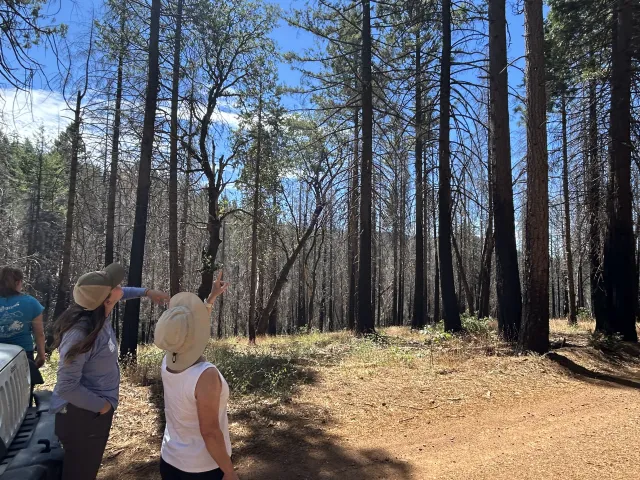
Not all post-fire landscapes are the same. Ask a forestry professional about best practices following a fire, and their response is sure to begin with the phrase ‘it depends’. Post-fire management activities do indeed depend on a wide range of factors: ecosystem type, fire severity, resource availability, and a landowner’s individual goals.
For family forest owners (typically described as small, non-industrial forest landowners), navigating this information landscape following a disaster is daunting. To address this, UC ANR has developed a free, online Post-Fire Resilience course providing landowners practical guidance after fire. The course launched on May 2, 2026 and is free to the public.
UC ANR Post-Fire team members Susie Kocher, Jordan Mesias, and Katie Reidy developed this course for landowners seeking actionable steps for restoring their forestland. The online curriculum is adapted from UC ANR’s Post-Fire Forest Resilience workshop series, a statewide educational program that served nearly 300 Californians between 2022-2025. Reidy, the UC ANR Post-Fire Academic Coordinator, described the workshop as “designed to provide stepping stones and educational tools for landowners…[helping] them think about how to manage their land for the future.”
The Post-Fire workshops utilized a hybrid online and in-person approach, where weekly meetings and field trips significantly increased landowner understanding of salvage logging, erosion control, reforestation opportunities, and other post-fire topics.
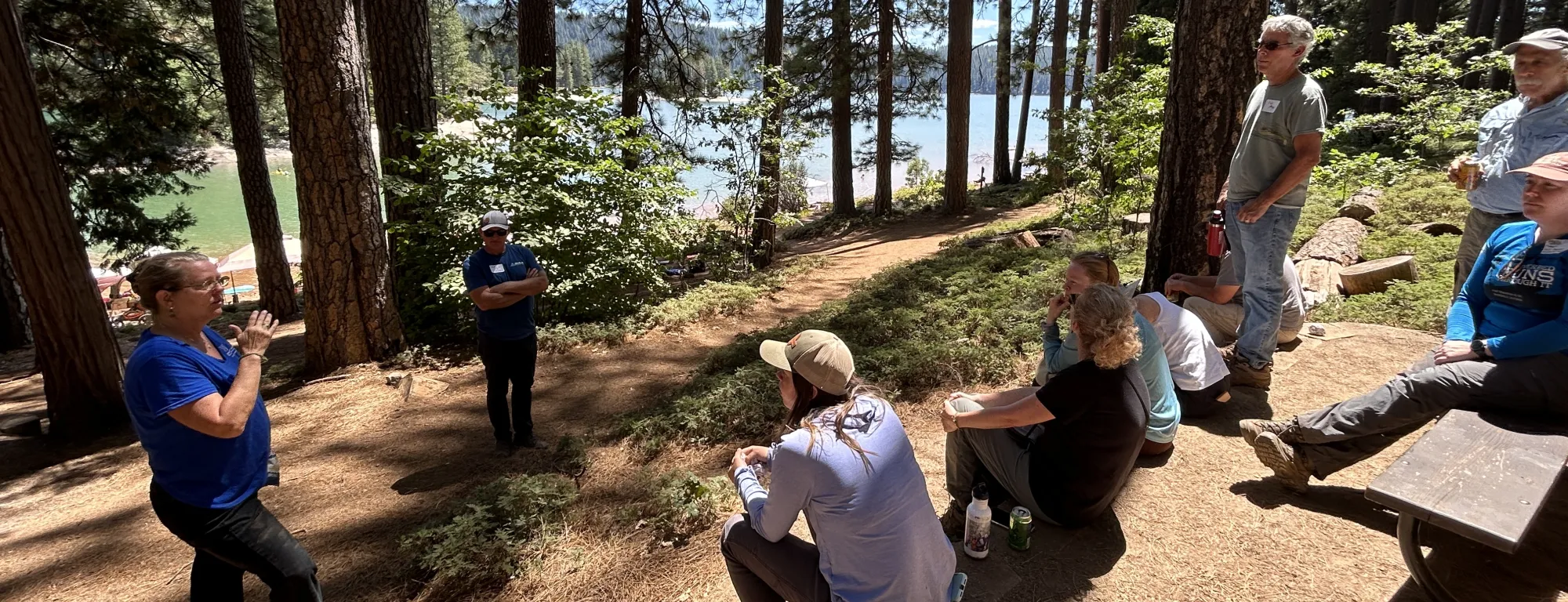
UC ANR Instructional Designer Mesias worked closely with Kocher and Reidy to translate the workshop curriculum to a fully self-paced format. Key learning concepts like forest health, identifying fire severity, and post-fire safety considerations are now taught through modules and videos. By completing the course, landowners will gain confidence in finding post-fire assistance and articulating their goals to a natural resource professional.
Kocher is the UC ANR Forestry and Natural Resources Advisor for the Central Sierra region, and has collaborated with local Resource Conservation Districts, government agencies, and private landowners on post-fire recovery efforts. Across her wide range of clientele, she shares that small, private landowners keep her feeling hopeful for the future of California’s forests: “I do have hope that even after large and destructive wildfires, a component of the landscape has the potential to persist as a forest because of private, non-industrial landowners. I’ve done research projects where I talk to landowners, and they almost uniformly want to replant, but face barriers to getting it done.”
Take the free Post-Fire Resilience Course on the Campus Extension website here. Note that you will need to create a free Campus Extension account to access the course.
Find additional post-fire management resources on the UC ANR website here.
Building reforestation capacity with a new publication and hands-on learning
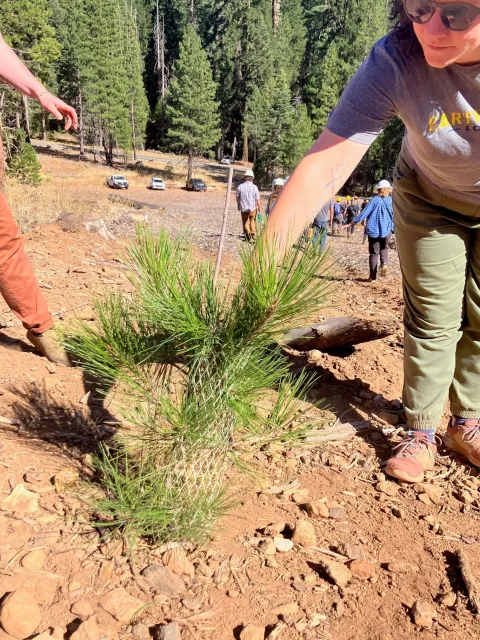
As wildfires burn larger and hotter in California, swathes of forestland may not naturally regenerate new trees. Natural regeneration relies on living seed trees, so when all the trees across a landscape burn, it may be necessary for land managers to intervene and replant the landscape with seedlings. Over 40 years ago, land managers received guidance on the reforestation process when the first comprehensive manual for reforestation in California was published. UC ANR forestry academics took a lead role publishing an updated version of the manual this year to address a heightened, statewide reforestation need.
The 2026 Reforestation Manual for California Conifers brings expertise from UC ANR, UC Davis, UC Berkeley, US Forest Service, CAL FIRE, and industry to the public for free. Land managers can learn best practices for selecting seedlings, preparing landscapes for planting, and management for seedling success. The Reforestation Manual for California Conifers is available to download on the eScholarship website.
For forestry practitioners interested in one-on-one reforestation training, UC ANR is also hosting two sessions of Reforestation Camp this summer. One session will be held in Plumas County at the UC Berkeley Forestry Camp site on May 19-20; the second will be hosted in Mendocino County at UC ANR’s Hopland Research and Extension Center, June 16-17. Reforestation camp participants will receive a ‘crash course’ in different aspects of reforestation planning and implementation, from assessing potential sites to monitoring seedling success post-planting. Learn more and apply to a session here.