
Background
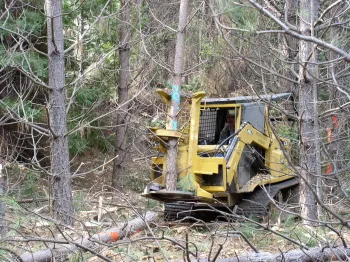
Keeping a healthy forest in line with an owner’s goals requires active management of vegetation. Whether your goals are to maintain or enhance wildlife habitat, improve aesthetics, restore the forest, manage for an economic return from timber harvesting, maintain a certain stand characteristic, or recover from a specific event such as a wildfire, it is important to understand how different vegetation management strategies can help accomplish your goals.
Silviculture
Silviculture is the art and science of managing forest establishment, growth, composition, and health to meet diverse needs and values. Natural disturbances like wildfire and tree-fall that create growing space for new trees are mimicked by various silvicultural systems. Different systems are categorized by the number of age classes left within the stand after harvest and the method used to regenerate the stand. There is no one-size-fits-all system, and different methods should be chosen based on your forest type, site conditions, and management objectives.
Silvicultural Systems
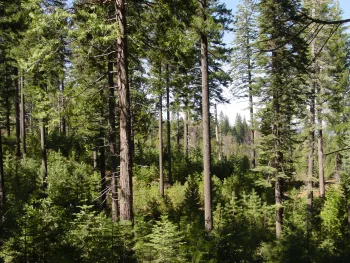
Even-aged systems harvest all or most of the trees in a stand, resulting in a single age class of trees after harvest. Regeneration methods include:
- Clearcutting: Essentially all trees within a stand are removed. Seedlings are planted within 1-2 years after harvest.
- Seed tree: Some trees are retained to provide seeds that naturally regenerate the stand. Seed trees are eventually removed after seedlings are well-established.
- Shelterwood: Some trees are retained to provide shade and shelter to the naturally regenerating seedlings. Shelterwood trees are eventually removed after seedlings are well-established.
Uneven-aged systems harvest individuals or small groups of trees, resulting in multiple age classes of trees after harvest. Regeneration methods include:
- Single tree selection: Individual trees of all sizes are removed more or less uniformly throughout the stand. Remaining trees naturally regenerate the stand over time.
- Group selection: Small groups of trees are removed throughout the stand. Groups can be naturally regenerated or planted with seedlings.
Thinning
Thinning reduces forest stand density to improve growth, enhance forest health, recover potential mortality, or otherwise modify stand structure and composition. Your management goals will determine how you select which trees to keep and remove, and over time your thinning prescription, intensity, and frequency may change. Types of thinning are commonly categorized as either commercial (removing commercially valuable trees) or precommercial (removing trees too small to have commercial value), as well as by which crown classes they target for removal (e.g., crown thinning vs. low thinning).
Fuels Reduction Treatments
Fuels reduction treatments manipulate or remove fuels to reduce likelihood of ignition, moderate fire behavior, and aid fire suppression response. The UC ANR Fire Network provides a comprehensive overview of fuels reduction treatments, including prescribed fire, grazing, manual, and mechanical methods. Visit their site here to learn more.
Resources
- Forest Stewardship Series 6: Forest Vegetation Management provides an in-depth overview of different silvicultural systems, thinning, and more.
- Thinning for Defensible Space: Tree Selection Considerations discusses how to create a thinning prescription for defensible space.
- The Forestland Steward issue on silviculture introduces silvicultural principles and other forest management concepts.
- US Forest Service Forest Operations Equipment Catalog has information on different equipment used to carry out forest operations.
- Our Policy, Regulations & Planning page explains different laws surrounding vegetation management in California.