UC ANR is committed to providing an accessible and inclusive web experience for all users. If you encounter an accessibility barrier or need content in an alternative or remediated accessible format, please contact anraccessibility@ucanr.edu.
Drought summit on April 25 Upcoming events: UC Drought Summit The Center for Watershed Sciences is organizing faculty from all UC campuses and other California universities to present a daylong Drought Science, Policy and Management Summit on April 25, 2014 in Assembly Committee Room 4202 at the sta...
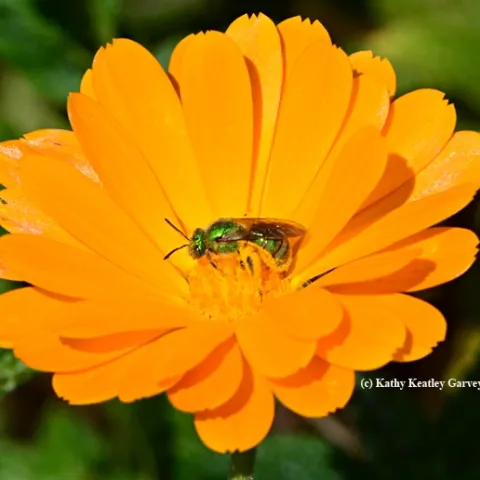
What's that on the Coreopsis? Could it be--a bee? Yes, that's the metallic green sweat bee, also called an ultra green sweat bee, Agapostemon texanus. This one (below) is a female. Males and females are easily distinguishable.
New UC Cooperative Extension Farm Advisor Introduction Insect Activity Foliar Nutrient Sprays Nitrogen Use Efficiency Irrigation Management Nickels Field Day, lunch reservation form and map...
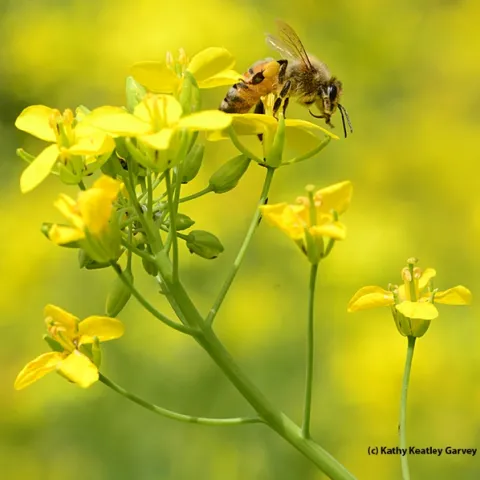
Honey bee population declining? You wouldn't know it if you were to visit the two rapini patches in front of the Harry H. Laidlaw Jr. Honey Bee Research Facility on Bee Biology Road, University of California, Davis.
Weed management research will take center stage at UC Davis on July 10th, when scientists, students, regulators and weed managers gather for the 58th annual Weed Day.
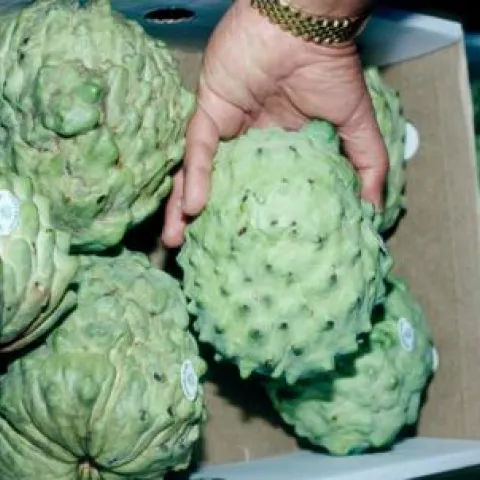
A recent trip to Spain was an opportunity to look at their cherimoya production practices. One of the most interesting is their ability to manage the tree through pruning to produce fruit off-season (in spring) when the prices are the highest.
What an un-bee-lievably generous gift! Debra Jamison, state regent of the California State Society of the Daughters of the American Revolution. loves bees. So when it came time to select a fundraising project, she knew what she wanted to do.
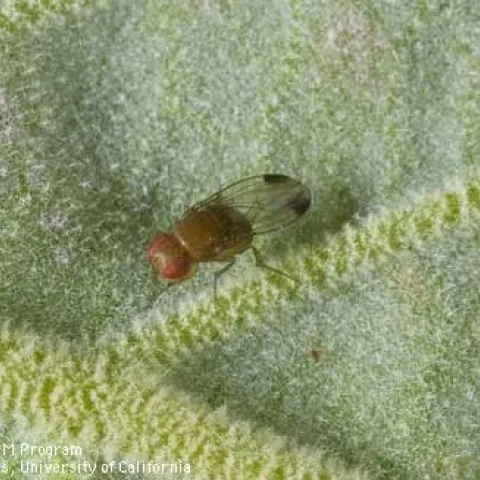
Adult male spotted wing drosophila. Note the dark spot on the tip of its wings. (Photo by Larry L. Strand) It's cherry growing season and a good time to begin looking for spotted wing drosophila (SWD), Drosophila suzukii.
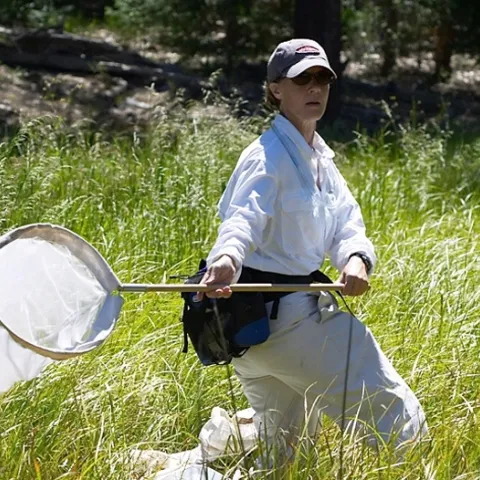
A unique effort to raise funds to collect insects in the biodiversity hotspot of Belizewhich would result in specimens for the Bohart Museum of Entomology at the University of California, Davis, among other goals-- is galloping into the home stretch.