UC ANR is committed to providing an accessible and inclusive web experience for all users. If you encounter an accessibility barrier or need content in an alternative or remediated accessible format, please contact anraccessibility@ucanr.edu.
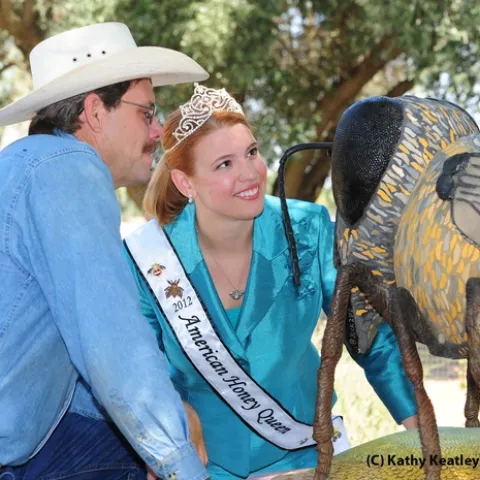
When youngsters meet Alyssa Fine, the first thing they ask is Do you ever get stung? They also ask if the bee population is still declining and if shes a beekeeper. Yes, yes, and yes. Alyssa Fine, 23, of Monongahela, Penn., is accustomed to answering questions.
Today I thought I'd share a recent research report on the the phenomenon of "enhanced" degradation of the herbicide simazine in citrus orchard soils. Click here for a link to the publication in the open-source journal, Air, Soil, and Water Research (Abit et al. 2012.
Today I thought I'd share a recent research report on the the phenomenon of "enhanced" degradation of the herbicide simazine in citrus orchard soils. Click here for a link to the publication in the open-source journal, Air, Soil, and Water Research (Abit et al. 2012.
In conjunction with the USDA Range Management group out of Oregon and many Weed Scientists throughout the western US, a two day field school will focus on improving the management and threat of invasive plants, and especially cheatgrass and medusahead.
A quick repost this morning on the upcoming meeting of the Aquatic Plant Management Society. Invasive aquatic weeds are a huge problem in some river, canal, and lake/pond systems in California and around the world.
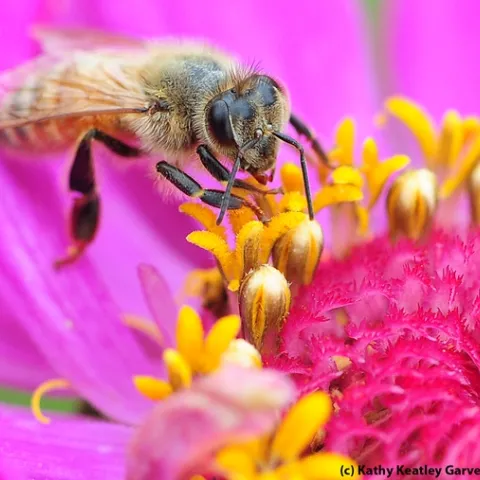
Eye-catching zinnias grace the Hagen-Dazs Honey Bee Haven, the half-acre bee friendly garden planted in the fall of 2009 next to the Harry H. Laidlaw Jr. Honey Bee Research Facility on Bee Biology Road, University of California, Davis.
They can fool you. Just like replica designer bags, shoes and sunglasses meant to look like the real thing (think Louis Vuitton, Jimmy Choo and Prada), those digger bees on Bodega Head, overlooking Bodega Bay, look like bumble bees. Especially the females.
I think there's enough blame to go around on this one. http://www.cnn.com/video/?hpt=hp_c2#/video/us/2012/07/11/pkg-mn-lawn-accidentally-killed.kare 1. Employees should have asked the guy about what he needed to do 2.
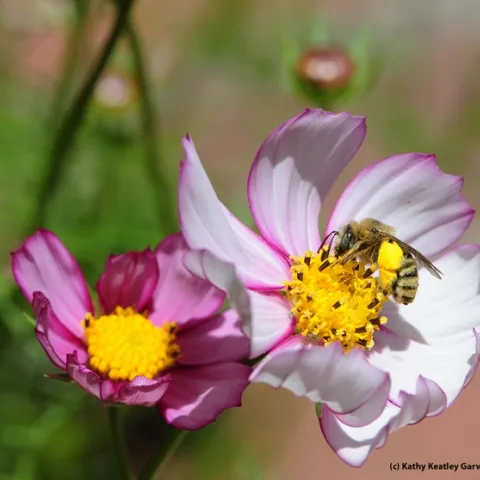
Makes sense that the sunflower bee (Svastra spp.) forages on the genus Cosmos. Cosmos (also the common name) is a member of the sunflower family, Asteraceae. Sunflower bee: sunflower family. A specialist bee.
Summary Winged primrose willow is an invasive weed that was identified in Butte County rice fields in 2011. Most infestations were along borders of fields and canals; however, this weed can thrive in the flooded environment within rice fields.