
Impacts of Land Subsidence Due to Groundwater Withdrawal in the Segura Basin (SE Spain)
Abstract: The Segura Basin covers an area of 18.870 km2 with a population over 1.7 million people. The basin is dominated by the Segura River and its tributaries, as the Guadalentín River. From a geological point of view, the basin mostly develops in the Betic cordillera and is characterized by a complex geology, that leads to the existence of multiple aquifers with a strong tectonic control. The Guadalentín and the Vegas Media and Baja of the Segura River aquifers are placed on the lower reach of the basin and develop over wide depressions filled by Neogene-Quaternary sediments. These aquifers have been strongly exploited, causing the depletion of groundwater levels, leading to land subsidence. Consequently, the lowering of ground surface caused multiple impacts on these aquifer systems. In Murcia city (Vega Media of the Segura River) settlements up to 15 cm were recorded during the period 1994-2007, and near 150 buildings and other infrastructures were damage by uneven subsidence, representing an estimated economic impact of over 30 million Euro and a high social alarm (dozens of news appeared in the newspapers). In the Vega Baja of the Segura River, multiple buildings (including religious cultural heritage buildings) were also affected by land subsidence displacements, which reached up to 17.6 cm between 1993 and 2009. Finally, in the Guadalentín valley, the rate of land subsidence reached 11 cm/year, causing accumulated settlements of 2.50 m between 1992 and 2012, being the greatest recorded in Europe due to groundwater withdrawal, increasing the flooding potential, and developing some earth fissures. The economic impact of the increase in flooding potential caused by land subsidence in the Guadalentín valley between 1992 and 2016 is estimated at more than 70 million Euro, mainly affecting agricultural activities (nearly 90 %). In this presentation, land subsidence affecting these areas and its causes, as well as the main associated impacts are described.
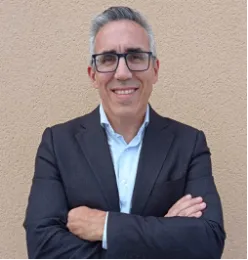
Biography: Dr. Roberto Tomás received the Tech. Eng. (B.S.) degree in Civil Engineering, the M.S. in Civil Engineering, the M.S. in Geological Engineering, and the Ph.D. degrees from the University of Alicante, Spain. Currently, he is a professor in geotechnical engineering at the Department of Civil Engineering in the University of Alicante (UA), Spain. His main research is in the field of application of remote sensing techniques for monitoring and modelling of natural hazards (with emphasis in landslides and land subsidence) and infrastructures, as well as rock mass characterization. He has led or been involved in more than 50 national and international research projects and over 60 research contracts with companies. He is the author of more than 130 scientific articles and 230 proceedings, books, and book chapters. He is Director of the Geotechnical and Structural Engineering research group of the UA, member of the UNESCO Land Subsidence International Initiative and coordinator of the Spanish Working Group on land subsidence.