
Hydropower Plants – Carbon Neutral Electricity Generation
Abstract: Solar radiation maintains the natural water cycle on our planet, with hydroelectric power plants extracting energy and converting it into electricity. The basic physical principle relates to the conversion of potential energy. Other concepts convert the kinetic energy of moving water flow, e.g. in rivers or in certain parts of oceans. Such ocean currents are generated by gravity forces between earth, moon and sun. Solar radiation and gravity forces are truly renewable as they are inexhaustible within the human time horizon. The energy transition towards renewable energies significantly changed the electricity generation mix, leading to a substantial increase of wind and photovoltaic power. Owing to their dependence on weather conditions, their electricity generation may sometimes vary strongly within very short time intervals. Due to their operating principle, hydropower plants are ideally suited to serve as regulation plants in electricity grids with a high percentage of fluctuating renewable energy. These plants stand out due to their short load change capability and operational transition times. They are very efficient because of their high efficiency and they can be operated in an extremely flexible way. Hydropower is renewable and sustainable and ideally suited to serve as regulating plant. However, these wide operating ranges bring challenges for research, such as cavitating two- phase flows and free surface flows, turbulence modelling for complex high Reynolds flows, transient load changes in turbomachines, fluid-structure interaction on turbine components, geometry optimization for wide operating conditions and ocean current simulation with turbine interaction to assess the energy conversion potential.
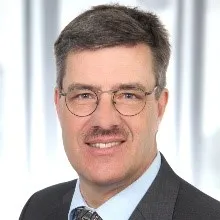
Biography: Prof. Dr.-Ing. Stefan Riedelbauch graduated in Mechanical Engineering at the Technical University of Munich, Germany in 1986. He then worked at the German Aerospace Center (DLR) in Goettingen in the field of Hypersonic Aerodynamics and obtained his PhD from the Technical University of Munich in 1991. Between 1992 and 2010, Stefan worked with Voith Hydro in Heidenheim, Germany and York, PA, USA and was involved in various technical activities and positions with a focus on hydropower. These included numerical flow field simulations, turbine design for new plants and refurbishments including model testing, head of turbine product development and Chief Engineer for turbine and generator engineering. Since 2010, he is full Professor and Director of the Institute of Fluid Mechanics and Hydraulic Machinery at the University of Stuttgart, Germany. The activities of the Institute are primarily dedicated to topics related to all aspects of hydro power technology. Additionally, since 2018, Stefan is Chair of the Technical Committee on Hydraulic Machinery and Systems of the International Association for Hydro-Environment Engineering and Research (IAHR).