
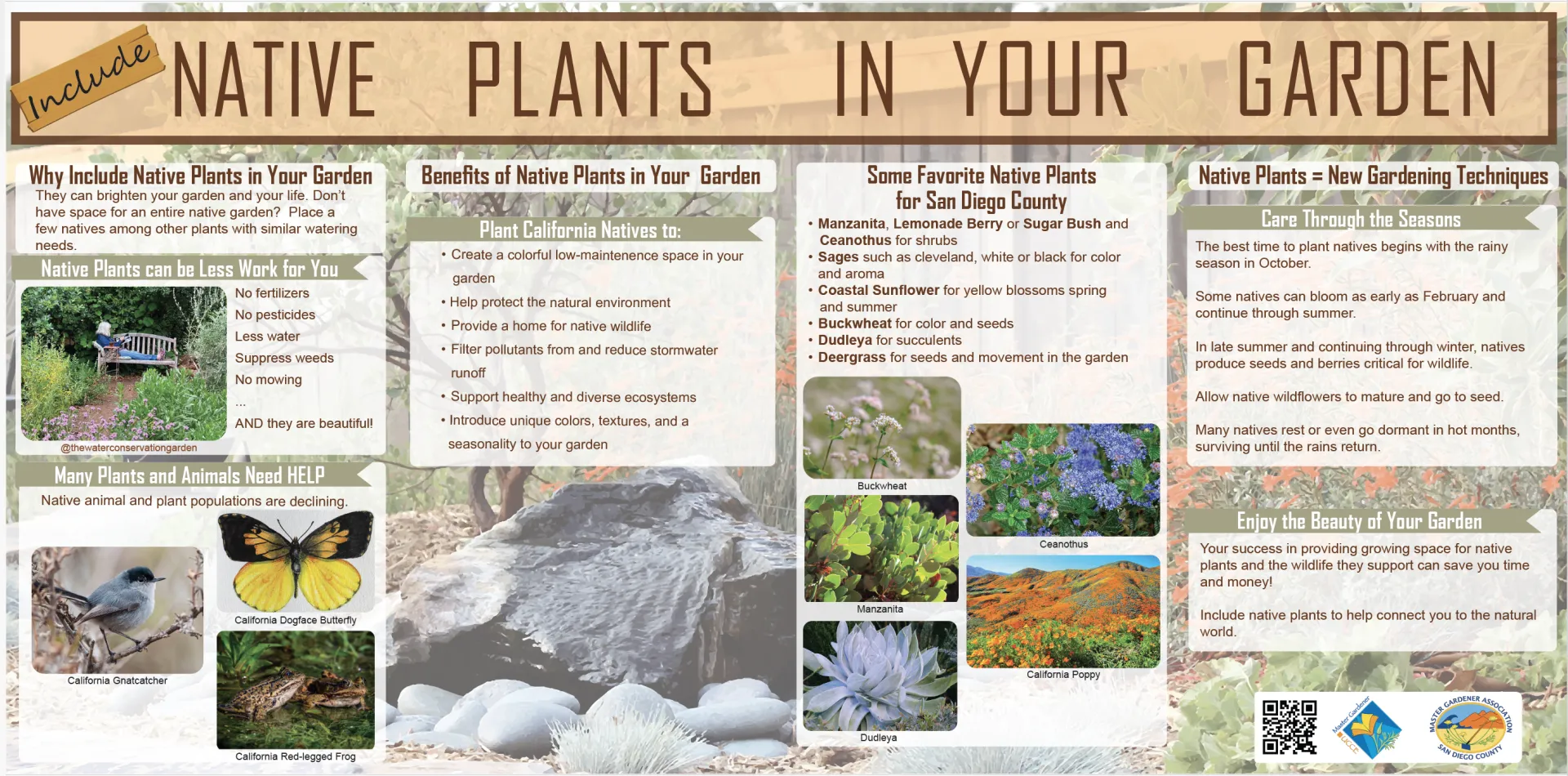
Why Include Native Plants in Your Garden
Native plants are so important to include in your garden. They are less work and use less water, but also they are important to increase the biodiversity (number of species) in your garden. Want more butterflies, birds, other wildlife? Plant some native plants. Native plants and animals evolved together over millennia and so work together to enrich your garden. Your garden can be full of amazing relationships between the plants and animals. For instance, some plants have developed toxins which keep most insects from feeding on them (think milkweed or bladderpod) but then a caterpillar develops the ability to de-toxify it and eat the plant! Plants have bugs IF the bugs recognize the plant as food. If they haven’t evolved together, bugs may not recognize and utilize the plants for food or egg laying. An extensive study in Washington DC of the Carolina Chickadee showed that chickadees only sustain their populations when at least 70% of the plants near the nesting area are native plants. Most landscaping in gardens and public spaces are nonnative species of plants. Nesting birds particularly look for the most protein-packed fatty foods like caterpillars, which fuel the fastest growth of baby birds. You can help bird populations therefore by growing native plants that will provide this vital food for the baby birds (research studies summarized in Audubon Magazine 2018).
San Diego county is one of the most diverse county in the contiguous USA. You can support this richness of types of plants and animals by choosing and growing native plants in your garden.
- Over 1550 documented native plant species grow in San Diego County
- 26 of these are endemic and found nowhere else in the world What are some of the threats to native plants?
- Habitat loss (dues to development but also climate change)
- Habitat degradation from pollution and disturbance
- Competition with invasive plants
- More intense and frequent wildfires
Why are invasive plants a problem for our native plants? Invasive plant take space and nutrients away from native (and other) plants and often provide no food for native insects and birds. So it is good to know which plants can be a problem. Keep them out of your garden or at a minimum, well contained. Many of our native wildlife species (which often depend on our native plants) are also being lost. For example, populations of bumble bee species are declining, because of loss of native plants, loss of habitat and sometimes because of competition with European honey bees (a non-native species introduced to the USA). Bumble bees live interesting lives and have a special pollination method, “buzz pollination”, which not only helps pollinate your native plants but also is helping the agriculture industry with pollinating certain food crops (think tomatoes, cherries, apples, avocadoes, blueberries) which European honey bees are unable to pollinate. So learn which plants help animals that you want to encourage and plant those to bring in more of those birds, bees, insects that you want to have.
Benefits of Native Plants in Your Garden
Seasons are a little different here: Native plants evolved to grow in our climate. We have four seasons but they are not the same as most books/social media talk about. Our rainy season starts about October and ends about April. The summer and fall are dry with little rainfall. So we need to adjust our gardening time table to these seasons. Native plants start to grow when the rains begin. Seeds sprout, plants put on new leaves and blossoms start to form. As the temperature increases, the plants bloom and grow lush. The variety of blooms and colors and forms is amazing. Chinese houses, Collinsia heterophylla; Baby blue eyes Nemophyla menziesii; Bush sunflower, Encelia californica. During the rainy season, the plants only need water when the rainfall is low or we have drought. They are adapted to our scant fall-winter rainfall so be careful of overwatering during this time. After the rainy season, the dry season sets in. Native plants are adapted to our low rain fall in the summer and fall. They have a variety of adaptations which help them survive. Some have deep roots to find deeper water. Some go dormant and may look dead but like the trees on the east coast in winter, these plants are simply dormant until conditions change. Some native plants are evergreen. Some have waxy leaves to preserve moisture. Some have smaller leaves or silvery leaves to reflect the sun. For some, the leaves fold to reduce the area exposed to sun. There are so many ways the plants cope with our dry season. The animals are also adapted to these seasons. Many lay their eggs early in spring, hatch out when the plants are growing leaves, and then die out when the leaves turn brown or are shed. Birds often eat insects/leaves until the dry season and then switch to seed-eating as the plants go to seed.
Planting Natives
The best time to plant is the rainy season when plants are growing and the natural rainfall will help the roots establish. It is important to water if needed to keep the roots watered and growing during the first several months after planting. The plants will have developed a good root system and be ready for the dry season. The later in the year that you plant, the more supplemental water you will need to add to help the plant roots get established. When planting, ensure the soil has lots of moisture for the roots. Dig the hole, fill it with water once or twice to moisten the soil well. It is better to place the plant slightly higher (about 1inch) than the existing soil level. Back fill with native soil; do not add fertilizer. Then mulch to keep the soil moist and prevent as much drying as possible. Mulch will also help suppress weeds. But keep the mulch away from plant stem. Once planted, soak again to ensure the roots have water and to reduce larger air pockets in the soil. Once the plants are established, summer water may not be needed. Learn more about what each plant needs in the summer (Calscape website is helpful for this). Learn about the native habitat of your plants. Some native plants live near streams in their native habitat so they are going to need more water than the coastal sage scrub plants which evolved without much summer/fall water.
Native Plants for Your Garden
If you see native creatures in your garden, you are doing things right! You could even add more native plants because you are such a successful native plant gardener. And the native animals appreciate it! You are helping restore lost habitats with the plants and the wildlife they attract. Depending on where you live in San Diego County, there are a variety of native plants that you can successfully add to and use in your garden. Look at natural areas near you for ideas or at neighborhood native gardens to see what plants grow successfully in your area. Remember that plant selection is important. What are the requirements for sun, water and mature size, etc? Calscape is a great resource to identify what plants do well under what gardening conditions: amount of water, sun, flowering season, etc. Other websites and books on the resources list will also help you as you start growing native plants. One idea is to use native grasses instead of lawn. It will require less water, chemicals and work! Dry stream beds and decomposed granite can enhance plantings of sage, ceanothus and manzanitas. Remember, native plants are beautiful, low-maintenance and support a variety of animals in your garden. Losing native plants in your area means the loss of interdependent native insects, birds, mammals and plants. Your garden can help preserve the natural balance.