Moringa is gaining popularity as a highly nutritious food and is one of the Future 50 Foods listed by the World Wildlife Fund and Unilever/Knorr for potential to provide nutritional quality and reduce environmental impacts in the food supply. Southeast Asian small-scale farmers have originated moringa production in central California, with sales to farmers markets, restaurants, and specialty grocery stores. The UCCE Small Farms and Specialty Crops program in Fresno County is conducting research to support moringa production on small-scale, diversified farms.
Moringa Production Resources
Moringa Production and Marketing Profile (Ted Radovich, University of Hawaii)
The International Moringa Germplasm Collection
Moringa Resources compiled by ECHO
World Agroforestry Database article on moringa
Sources of moringa seeds:
Research Updates:
Frost Protection
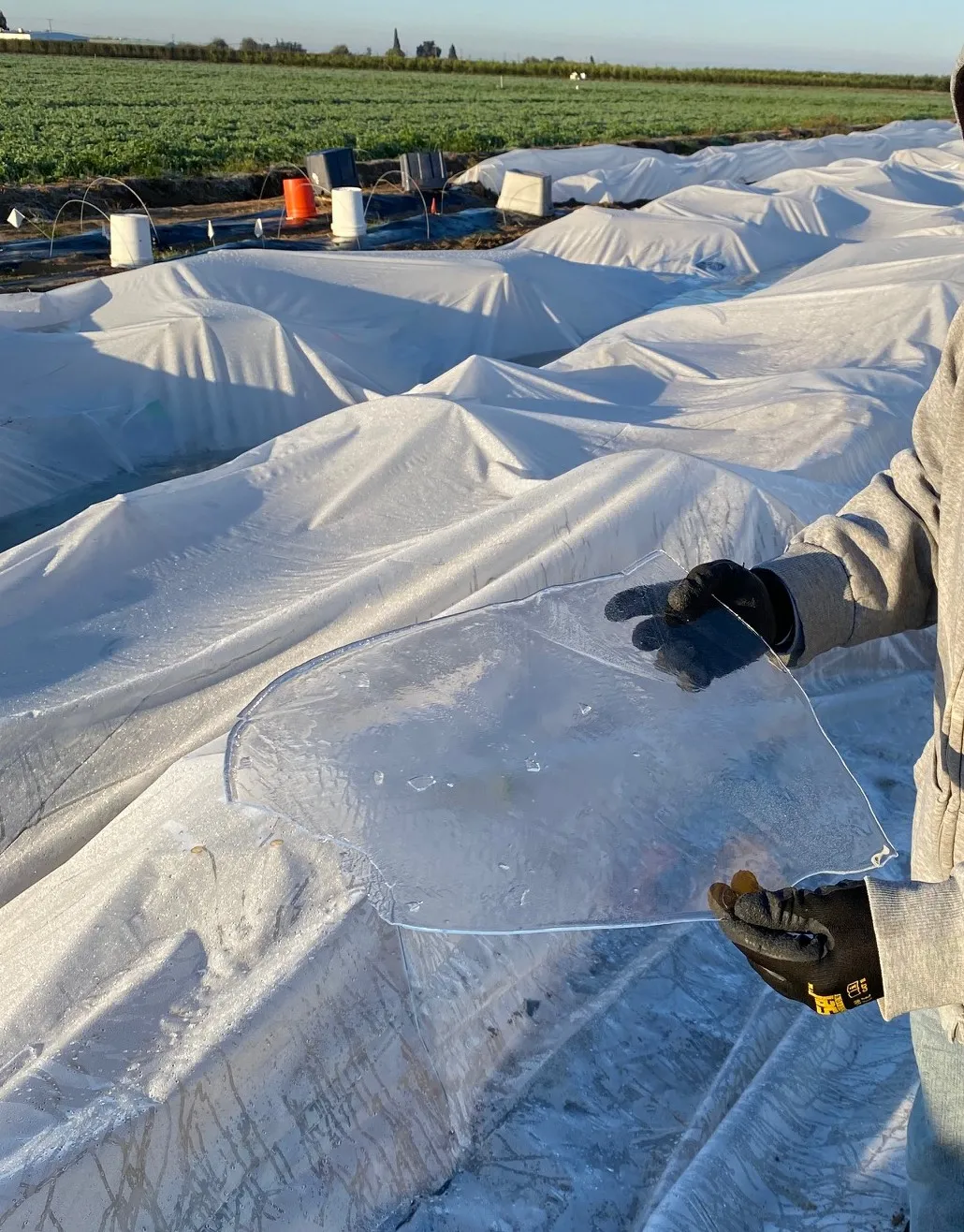
In the Fresno area, moringa plants die in the winter unless protected from cold temperatures. We tested five different materials to cover moringa plants over the winter, including floating row cover fabric in two thicknesses, clear plastic in two thicknesses, and white plastic.
Clear plastic protected moringa best, with the highest survival and growth of moringa plants after the winter. Our research found no difference between 4 mm and 6 mm thick clear plastic, so it is likely that investing in a thicker plastic is not necessary.
Irrigation
Much of the research on moringa production is conducted in tropical areas with high rainfall where moringa is not irrigated. In the San Joaquin Valley, irrigation is required to sustain moringa plants for most of the growing season. Preliminary results of studies on moringa irrigation requirements suggest that moringa can be productive with only 11 acre-inches of irrigation water applied.
Pest Management
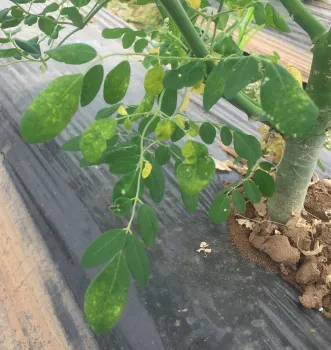
Potential pests on moringa in the Fresno area include thrips, aphids, spider mites, leafhoppers, ants, and grasshoppers. Not all pest insects or mites present on moringa plants are known to be economically important to control.
In studies of lacewing larve released for biological control of thrips on moringa, thrips populations with lacewings were reduced compared to a control with no lacewings. Lacewing larvae, eggs, or adults can be ordered from suppliers such as Rincon-Vitova or Arbico Organics. However, more research is needed to determine what level of thrips damage is economically important and when treatment is cost-effective.
Organic-approved and reduced-risk products such as soaps, oils, and botanical and biological insecticides can be effective in managing small, soft-bodied insects like aphids and thrips on a variety of crops. Fire ants can be managed with baits such as Firefighter (spinosad).
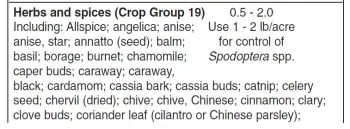
Any commercial pest control product used on moringa must list an EPA Crop Group that includes moringa as an herb: either Group 19 or 19A (on labels before 2021) or Group 25 or 25A (2021 and after). If the label states "including" or "such as" before the list of herbs in the crop group, the product can be used on moringa.
Example: DiPel DF Biological Insecticide