
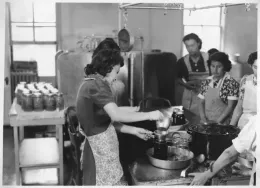
Food preservation has played a crucial role in human history, allowing people to store food for long periods of time, ensuring
they have enough to eat during times of scarcity. The history of food preservation, the methods used throughout the ages, and the evolution of the Master Food Preservers make quite an interesting story!
Naturally, as soon as food is removed from its life source, spoilage starts. After harvesting food, there is a short window to preserve its freshness for consumption. This is where food preservation comes into play. According to the National Center for Home Food Preservation website, the idea of keeping food for more extended periods dates back to 12,000 BC in the Middle East. Here, the natural dehydration of food from the sun was commonplace. Moving forward to the Middle Ages, structures were built where smoke was used to dehydrate fruits, vegetables, meats, and fish. Throughout the centuries, civilizations and cultures have figured out other ways to preserve food. With the help of our ancestors and technology, we have kept food maintained and safe to eat long after its collection.
Preserving food at home is a time-honored tradition practiced for centuries. Today, there are several methods that individuals can use to keep food at home, including canning, freezing, drying, fermenting, and pickling. Each method has advantages and disadvantages; the choice of technique often depends on the type of food to be preserved and personal preference. By preserving food at home, individuals can enjoy the benefits of fresh, nutritious food year-round while reducing food waste and saving money.
Canning is perhaps the most well-known method of food preservation and involves heating food in jars to kill off any bacteria and create an airtight seal, deeming it shelf-stable for up to a year. There are three ways to can food depending on the food's acidity level. Boiling water and atmospheric steam canners are both used for canning high-acid foods like tomatoes, jellies, and jams. The use of a pressure canner is mandatory for low-acid foods such as garden vegetables and meats.
Freezing is another popular approach to preserving food and involves placing food in a freezer to slow down the growth of bacteria and prevent spoilage. Fruits, vegetables, and meats are placed in freezer bags or freezer containers, removing as much air as possible to prevent freezer burn before going into the freezer.
Drying is a method of food preservation that involves removing moisture from food to prevent the growth of bacteria and mold. Drying is commonly used for fruits, vegetables, and meats.
Fermenting is a food preservation system that involves the food's natural beneficial bacteria to break down sugars and create lactic acid, which helps prevent spoilage. Fermenting is frequently used for vegetables, dairy products, and grains.
Pickling involves soaking food in a solution of vinegar, salt, and spices. This method is regularly used for cucumbers, beets, and other vegetables.
In the late 1970s, there was a growing interest in home food preservation, but there were also concerns about food safety. The Master Food Preserver program, recognizing the need for a comprehensive training program to teach individuals how to safely and effectively preserve food at home, was developed and introduced by Washington State University in 1976. The UCCE's program was introduced in Riverside in 1982 and currently serves 28 counties throughout California. The intensive training covers a wide range of preservation methods, including canning, freezing, drying, and fermenting, and provides participants with the skills and knowledge necessary to troubleshoot common problems, prevent spoilage, and ensure food safety. Master Food Preservers (MFP) have completed an intensive training program in food preservation techniques and safety. In exchange for the training they receive, Master Food Preservers commit to volunteering in their communities, teaching and answering questions from the public. Today, the nation's MFP programs are recognized by local authorities in food preservation education as they promote safe and sustainable food practices.
Anyone can learn to preserve food at home with the right tools and knowledge, and the Master Food Preservers are here to help.