
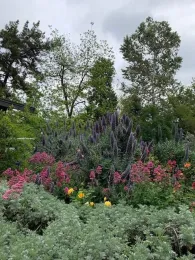
The variety of native plants in California makes them an excellent choice for a drought-tolerant garden. Most of them are less
prone to pest and disease problems and are pollinator-friendly. There are plants for each micro-climate here in our area. Just like us, they have an affinity for a specific location, much like ours, in seeking new real estate.
Research before shopping is wise
Plant shopping is a major temptation for gardeners, and the plants are primped to tease you to buy. Researching the plants that will do well in your site and their requirements will focus your shopping and make for better outcomes in the garden. Native plants are generally drought-tolerant, but some are native to shade, have specific growing conditions, or prefer wet areas. Some native plants are toxic if eaten, a concern with children, pets, and domestic animals.
Nurseries often pot plants in a soil-less mix, which allows water to drain very quickly, and they water their plants regularly. If you take the plant home and set it out in the sun without regular watering, it may fade and die. Ensure a smooth home life by asking how the plants at the nursery are packaged for sale and how they have been watered.
When to plant your new friends in the garden
As a general rule, fall or early spring is the best time to plant shrubs, small plants, or trees. Seeds and bulbs may require special handling or timing to achieve the best results. It is again best to research your plants' usual situation and how to mimic it for the best success.
The first season after planting does require some attention
Even plants that will triple in width by the end of the season take time to get established. A garden area of native plants will need to be weeded regularly, especially in the first spring. Depending on the amount of winter rain, newly planted natives will need regular watering their first year. Check the soil moisture near the plant with a moisture meter a couple of times a week initially. Watering deeply but infrequently encourages a strong, deep root system, which will let the plant survive our hot summers with less water overall. Allow the soil to dry between watering--consistently wet soil will often cause the plant to die outright. There are some exceptions, such as bladderpod (Isomeris arborea), which requires no attention after planting. It can survive on winter rain alone and just needs intruding weeds kept under control.
Concerns with the use of native plants
In some seasons, native plants might not look like a well-tended garden. It is wise to research the bloom and growing season for each native plant. The wide variety of plants means you can plan for flowering plants from spring to fall, and interplant with evergreens or non-native drought-tolerant annuals, which is optimal for pollinators who need a continuous food source.
Plants may be native to California or a Mediterranean climate, but they are opinionated about location in your garden. Grouping native plants according to their water, soil, and sun/shade needs is key. Overwatering is the primary culprit in native plant death in gardens. Some native plants can be mixed in with more moderate water-use plants or used near lawn areas, but research on the native plants' requirements is essential for growing success with natives. Native plants often become established with a major tap root, so it is wise to plan their location carefully and not attempt to move them once established. The tap root causes them to generally require less water, and is very helpful in reducing soil erosion on a slope.
Native plants are more expensive, and buying access is limited; they are not usually mass produced by growers and require special handling to become a sellable size. This can make them a little more expensive initially. In a perennial garden setting, they can be much more cost-effective, as they are long-lived and many spread substantially from their original size. I found a native, a butterfly bush, at a large garden center. This plant was a sorry-looking specimen (going dormant) on the cheap plants rack. It became ultimately so large that it had to be pruned to fit the space in the garden and attracted butterflies to its flowers. Lucky us!
Determining the source of failure to thrive in native plants
Even though you researched the plant's favorite location, drought tolerance, and climate of origin, it did not survive. What's next? Did anything change in your garden--a tree taken down, a new fence creating shade, a new pet sampling, or being indiscreet in the vicinity? Particularly with native plants, a hidden problem, such as a broken underground irrigation line, may be soaking the root system. If a plant dies, it is smart to dig it up to check the development of the root system. Did the roots spread at all after planting? Also, check the planting hole; is it dry or wet and foul-smelling? An overly saturated soil will prevent the roots from being able to exchange oxygen, and the plant will die.
Are native plants worth some extra effort? Absolutely!
Native plants have character, with various bloom times, textures, and colors. Once established, their water use and care are significantly less than those of other types of plant material. Beneficial insects and pollinators will be delighted to visit your garden. Most native plants are less prone to pest damage, and by inviting in beneficial insects, you will find little need for pest control other than a spray of water over the leaves to disrupt any invaders. Sustainable Central Valley style gardening at its best.
Sources for native plant information
Lucky for us, there are many online sources and books on native plants and their care, in addition to gardens to view established plants. Starting with a website or book with pictures of the plants in bloom or fully leafed out is the most fun way to get started. Native plants come in an array of colors, textures, shapes, and sizes. Size can be an important aspect to consider; many native plants have a considerable spread in width, with a 6-8 foot spread not being unusual.
Online:
UC Davis Arboretum (UC Davis Arboretum and Public Garden website)
Las Pilitas Nursery (Las Pilitas Nursery website)
Master Gardener site- https://ucanr.edu/site/tulare-kings-master-gardeners/design-gardening-central-valley-style
California Native Plant Society(California Native Plant Society website)
Books:
Bornstein, Carol (2005). California Native Plants for the Garden. Los Olivos, CA: Cachuma Press
Ellas, Peyton (2018). Gardening with California Native Plants. Morgan Hill, CA: Bookstand Publishing
Rowntree, Lester (2006). Hardy Californians: A Woman's Life with Native Plants. Berkeley, CA: University of California Press;
Schmidt, Marjorie G. & Greenberg, Katherine L (2012) Growing California Native Plants. Berkeley, CA: University of California Press
Gardens:
Clovis Botanical Garden; Theodore Payne Native Plant Garden; Santa Barbara Botanic Garden; Veterans Memorial Building Garden, Three Rivers; Mary Wattis Brown Native Garden at UC Davis Arboretum