
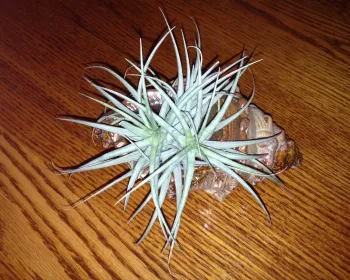
Have you noticed some curly, spikey, gray-green alien-like plants resting in a shell, hanging from a ceiling, perched on windowsills, clustered on coffee tables…no soil or water in sight?
Meet tillandsias, also known as air plants, a wondrous family of plants that literally thrive on air! They are low-maintenance, quirky, and fun for your home or patio. And…they’re non-toxic to your furry family members!
Tillandsias, members of the Bromeliad family, grow naturally in South and Central America and parts of the southern United States. More than 660 species grow on trees, rocks, and cliffs, anchored by their wire-like roots. One of the best-known tillandsias is Spanish moss that drapes from trees in the southwest US - and is neither moss nor from Spain.
Thin green leaf varieties grow in areas with more rain, and thick gray leaf varieties in areas more subject to drought. All water and nutrients are absorbed through the leaves.
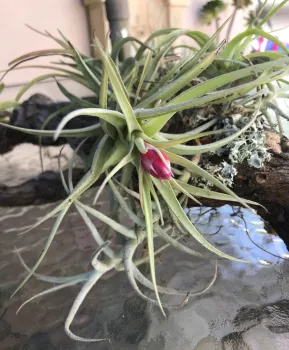
These easy-to-grow plants have three basic needs: bright light, good air circulation, and water.
Light requirements: Bright, indirect light, fluorescent office lighting, or a frost-protected shaded patio is best. An east window is ideal. Air plants thrive in outdoor environments with early morning or late afternoon sun. If you enjoy having your air plants indoors, consider rotating them periodically with plants in outdoor locations to encourage color and flowering.
Ventilation: Tillandsias thrive on fresh moving air. Locate them in well-ventilated areas. The air movement helps plants dry between waterings and avoid over-watering diseases.
Water: Tillandsias need water, but do not like to stay wet. Various watering methods will keep your plants healthy. What has worked for me and kept my collection thriving for years is soaking for an hour, once a week, in room temperature water. Shake off excess water, turn upside down to drain, and air dry before returning to your chosen location. Alternatively, spray each plant heavily, underneath as well as on top, and allow to air dry. In extremely warm or dry conditions or if leaf edges begin to curl in, an overnight soak will help rehydrate.
Fertilizer: Although not necessary, fertilizer can increase the growth and vigor of your plants and their blooms. Search for a fertilizer specifically formulated for tillandsias to be absorbed directly into the plant via the leaves, and use a dilute solution once a month.
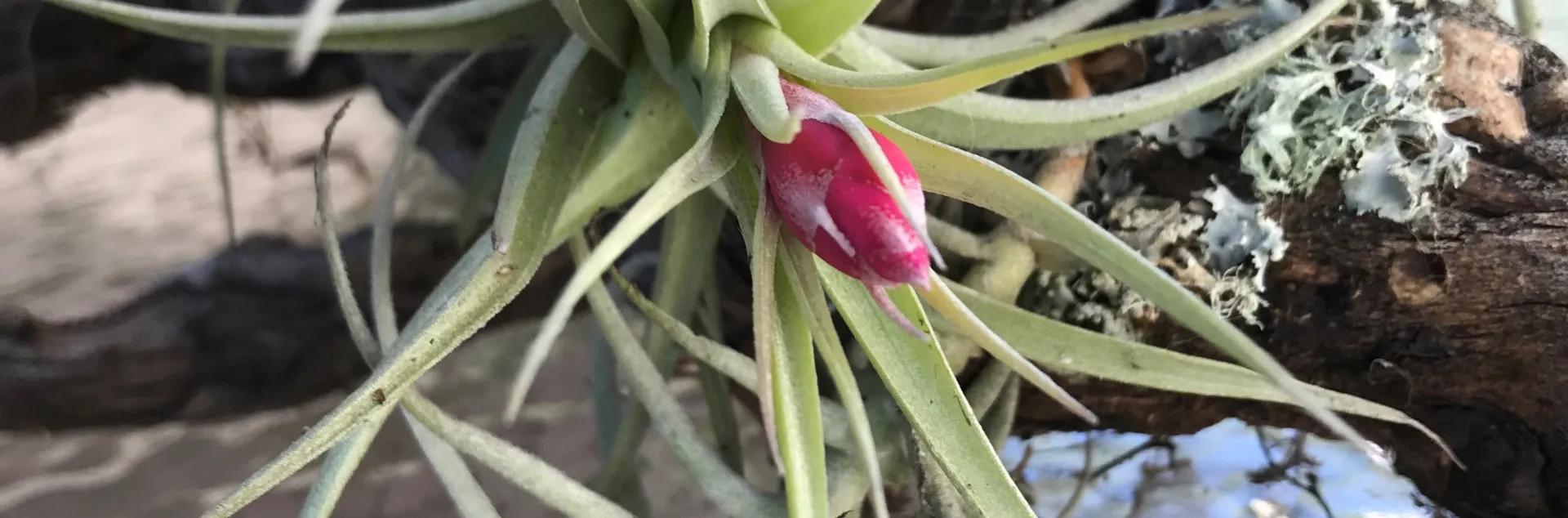
Flowering: Air plants provide stunning leaves, and blooms add to their appeal. Appropriate lighting is essential for flowering. Not too much, not too little, just right bright light, but no direct sun. Experiment with various locations in your home or outside. Once you are rewarded with blooms, be careful not to allow the bloom to soak or be sprayed – keep the flower dry.

Mounting and other display ideas: Here’s where the fun starts! How and where do you want to display your plants? A single air plant, sitting primly on your office desk, can make a statement and spark a lively conversation. Creating a mounted arrangement of a variety of tillandsias on driftwood or grapewood branches can be spectacular and unique! Whatever media you choose for mounting your plants, make sure it doesn’t have holes that trap water. Ocean driftwood should be soaked in fresh water for several days before use as accumulated salts could burn the plant’s leaves.
Hot glue and a variety of non-toxic, waterproof liquid glues can be used to secure your plant to the chosen media. It’s best to avoid superglue. Use a small amount of glue on the bottom of the plant, avoiding the area where the roots form.
Where to shop for your new favorite plant: Many local garden centers and gift shops carry a variety of air plants. For a larger selection, search online for tillandsias. The array of sizes, shapes, and colors is staggering. You might want to plan a budget before you start shopping – it’s easy to get carried away by these engaging creations!
By Jane Scurich, December 27, 2025