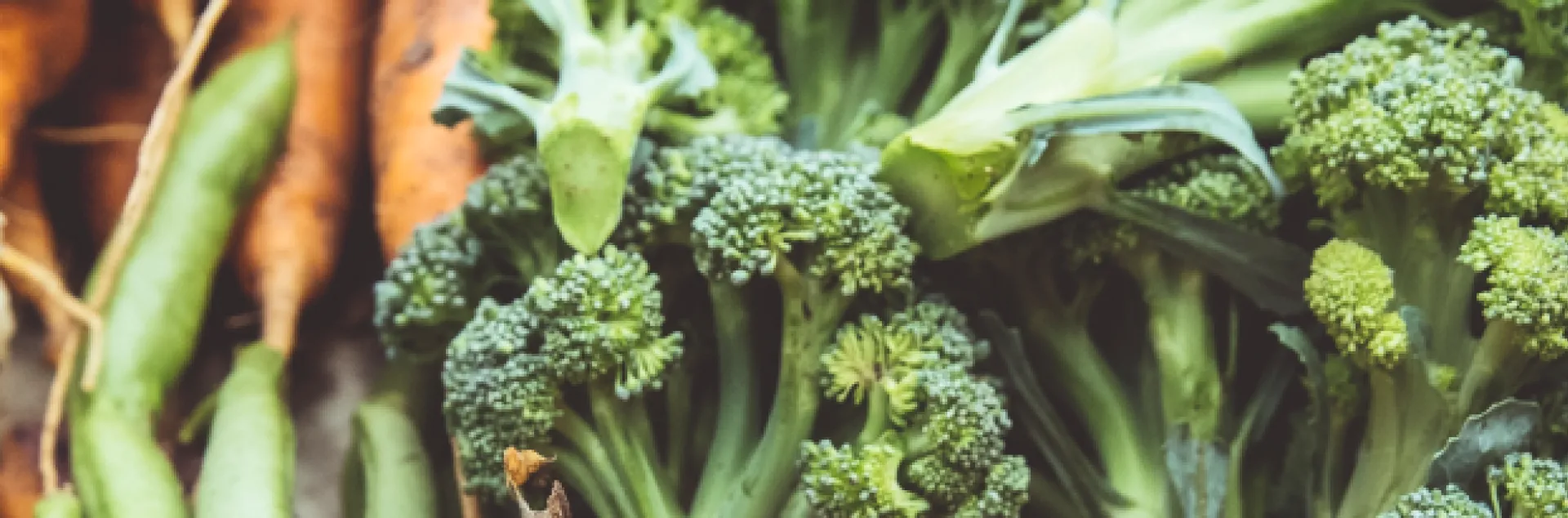
Garden Grown Vegetables
UC Marin Master Gardeners

What Edible Gardens Need

What Does an Edible Garden Need? 

Growing a successful edible garden takes planning, correct timing, and a little know-how. But once you have it down it is such a pleasure to eat homegrown produce fresh from the garden. Here's what you need to get started.

Priscilla du Preez, Unsplash

Plenty of sun

Choose a site with a minimum of six hours of full sun -- eight to ten hours is even better. Southern exposure is ideal. Most edible plants prefer full sun; however, root and leafy crops can tolerate light shade. 
 

Climate that's a good fit for what you're growing

Know your ->climate zone 
Assess your ->microclimate
Be aware of frost dates

Most edibles prefer to be grown during frost-free periods, which vary within Marin’s many microclimates. For a rule of thumb, begin watching for frost around Thanksgiving and consider planting frost sensitive edibles after St. Patrick’s Day. (These dates are derived from 30 years of historical data from the National Oceanic Atmospheric Administration). Many cool season crops may be planted before the end of winter frost, including beets, broccoli, cabbage, carrots, chard and kale. Check seed packets for instructions. 

Rich soil 

Rich soil is a necessity in a vegetable garden. Photo: Gael Perrin

Edible crops prefer fertile, loamy soil that drains well and holds water on hot days. 

A layer of mulch  

Use mulch to protect against moisture loss, suppress weeds, and keep plant roots cool in hot weather. Learn more.
 

Easy access to water 

Be sure there is an easily accessible faucet and hose near the edible garden. Photo: pxhere

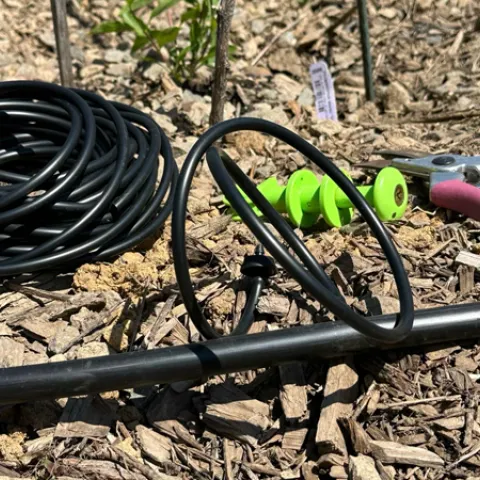
Be sure a nearby faucet and hose is easily accessible. Use a ->drip irrigation system if possible. 


Ample air flow but not too windy  

Choose a site that has air movement but not high winds.
 

Level topography 

A level garden is the easiest to prepare, plant, irrigate, maintain and harvest. On slopes, consider constructing level terraces or raised beds so that water does not pool or run off. Many edibles can be grown successfully in containers. 
 

Adequate drainage  

Avoid low areas where water may pool or where ground water stands. Poorly drained soils may create anaerobic soil conditions with inadequate air (evidence: stinky soil). Look for moving surface water and correct if possible (evidence: erosion, exposed tree roots, channels in soil). Redirect drainage as necessary. 

Easy access 

A conveniently located edible garden encourages frequent visits for care and enjoyment.  

A well thought out location

Mitigate any potential problems before you plant. Raised beds solve many problems.
Identify limitations above ground: wires, structures, street lamps, trees and structures  that cast shade, eaves, setbacks, and easements.
• Identify limitations below ground: utilities, plumbing, roots, bedrock, groundwater, etc. 
 

Crops growing at the correct time

A planting calendar is a vegetable gardener's best friend. 
 

Safe food growing and handling

Use best practices to ensure your crops are as safe as they are delicious.  


> Visit our Edible Demonstration Garden at IVC Organic Farm & Garden in Novato!
Primary Image
A harvest of crisp, bright green lettuce is satisfying anytime of the year
UC Marin Master Gardeners: Article

Growing Lettuce Year-Round

December 3, 2025
Lettuce is generally considered to be a cool-season annual, but with a little advanced planning and some judicious plant selection, Marin gardeners can enjoy home-grown lettuce throughout the year. Our temperate climate makes it possible to modify the growing conditions for lettuce and enable the plants to…
View Article
Primary Image
Bank vole
UC Marin Master Gardeners: Article

July 2025: Vole Invasion

July 16, 2025
July 2025: Vole Invasion Protecting the growing plants from hungry critters is an ongoing challenge in the Edible Demo Garden. Wire mesh is used extensively under planting beds and around the straw bales to discourage gophers. Yards of protective netting keep the birds and rabbits from eating young…
View Article
Primary Image
Patio gardening
UC Marin Master Gardeners: Article

June 2025: Patio Gardening

May 26, 2025
By Melissa McLean
 This past month EDG volunteers created a small “patio” in the garden to demonstrate how edibles can be successfully grown in limited space. Too often gardeners are discouraged from growing edibles, believing that it takes a large back yard with room for long rows of plants. However, with the…
View Article
Primary Image
Plastic tubbing of drip irrigation system
UC Marin Master Gardeners: Article

May 2025: Drip Irrigation Troubleshooting

April 29, 2025
By Melissa McLean
 When the winter rains end, it’s time for gardeners to focus on providing spring and summer edibles with the water they need to grow and produce. While hand watering may be the simplest way to adjust watering to the needs of individual plants, it’s not the most efficient means for getting the right…
View Article
Primary Image
Seed packets
UC Marin Master Gardeners: Article

April 2025: The Joys of Selecting and Planting Seeds

March 24, 2025
By Melissa McLean
 It’s hard to find a gardener who doesn’t love checking out new seed varieties and anticipating the abundant and tasty harvest they promise. The photos and descriptions are tantalizing and the names intriguing. Who wouldn’t be curious about a pumpkin variety called ‘Abominable’, a pepper named ‘Frodo’,…
View Article

February 2025: Choosing the Right Garden Tools

Primary Image
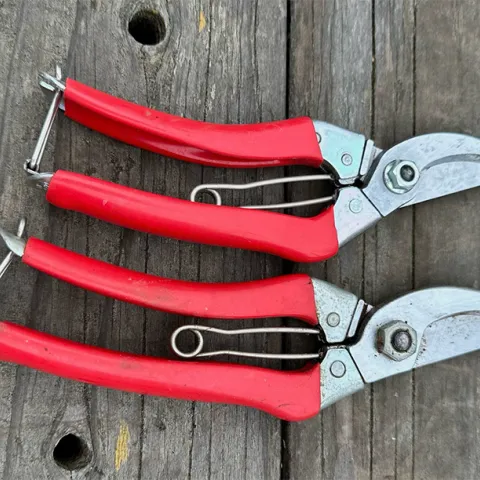
There are many choices in by-pass pruners with models that fit different hand sizes.
Body

In January, the 2025 Marin Master Gardener training class was welcomed into the Edible Demonstration Garden for a discussion and demonstration on the use and care of garden tools. The right tools make the difference between gardening that is pleasurable and gardening that is a struggle. Your first experience with a garden tool might have been that pointed stick you used when digging in the dirt as a child. Now as a gardener, you are presented with an array of better tool choices, some essential for basic garden work and some designed for specific tasks. There are tools for pruning, tools for digging, tools for raking, and tools to make gardening easier. Here are some of the more popular tools in those categories.


Pruning Tools
  • Tools 1

    Hand pruners are the favorite tool for most home gardeners. They are the tools used most often for cutting and thinning small branches to maintain plant health and appearance. They are also used for cutting flowers and harvesting vegetables. By-pass pruners, which work like scissors, are best for making clean cuts on living plants. Anvil pruners crush branch tissue and are good for removing and cutting up dead branches.

  • Pruning saws are used to remove branches larger than what hand pruners can remove. They can have a fixed or folding blade.
  • Loppers are long-handled by-pass pruners that can help access higher and hard to reach branches. The long handles also provide leverage to enable pruning thicker branches.


Digging Tools
  • Tools 2

    Trowels are essential for digging, planting, potting, and weeding. A trowel is a spade-shaped hand tool with a slightly scooped blade.

  • Garden knives are a type of trowel with a sharp narrow blade and a pointed end. One blade edge is usually serrated. Hori-Hori garden knives are a Japanese design that has proven to be so useful for digging and weeding that the name is often applied to any type of garden knife.
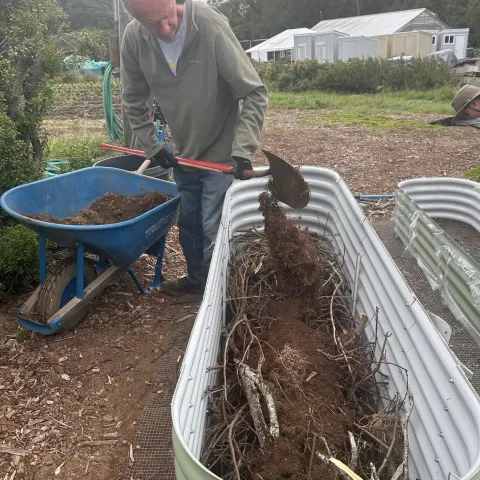
  • Shovels and spades are long-handled digging and soil lifting tools with the shape of blade and the length of the handle determining their particular uses.


Raking Tools
  • Rakes are useful for cleaning up leaves, removing debris, and spreading out soil amendments like compost and mulch. Hand rakes are great for getting into small spaces. Rakes with flexible, fan-shaped tines work well for cleaning up lighter debris and are sometimes called leaf rakes. Garden rakes have larger stiff metal tines and are intended for heavier use in soil or larger debris.
  • Forks are used for raking out stones and weeds. Like a dinner fork, a garden fork has four strong tines which can push easily into the ground and enable it to double as a digging tool for loosening and turning over the soil.


Gardening Comfort Tools
  • Tools 3

    Gloves provide the hand protection every gardener needs. They are a barrier against pricks, cuts, abrasions, blisters, insect bites, and other skin irritations. While most gardeners don’t mind getting their hands dirty, getting jabbed with a nasty thorn is not only painful, but it can also lead to serious infections. There are many types of gloves to choose from depending on the type of protection required. Most important is that they fit well and are comfortable to wear.

  • Kneelers cushions protect the knees when planting, weeding, and performing other low to ground garden tasks. Kneelers made of rectangular shaped heavy foam are the simplest type. However, kneelers with handles that are lightweight and easy to fold up can make the up and down movements around the garden easier. Some even flip over to form a bench.
  • Ergonomically modified tools can help gardeners get more done with less effort by enabling good body alignment and reducing joint strain. Grips should be comfortable to hold and keep hands and wrists in natural positions. Handles should be the right length to enable good posture without excessive bending and twisting.


Tool Care

Tools need to be kept clean, sharpened, in good repair, and organized to keep them working well. Surface dirt and dried sap should be brushed or washed off after each use. Periodically applying a light layer of oil will reduce rust. Pruners need regular sharpening and should be sanitized with a 10% bleach solution following contact with diseased plant material. Storing tools in dry place where they can be easily accessed will ensure they are ready for work when you are.


Click here to learn more about choosing and caring for garden tools.

UC Marin Master Gardeners
Primary Image
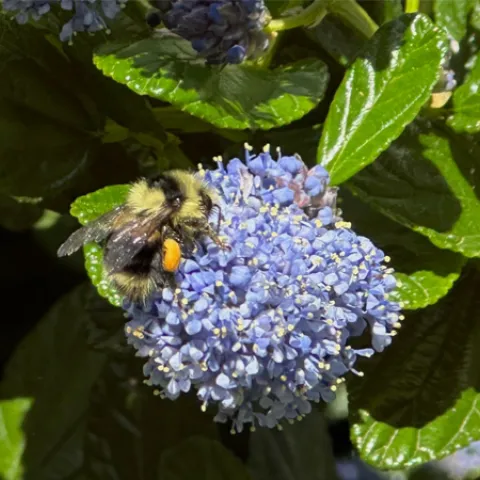
Ceanothus blossoms attract native California bumble bees.
UC Marin Master Gardeners: Article

January 2025: Natives in the Edible Garden

December 19, 2024
Natives are welcome in the Edible Demo Garden. As a joint project with the Native Plant Guild in October 2021, garden volunteers planted a variety of sun-loving, drought-tolerant California natives in a corner of the garden area...
View Article

December 2024: Giving the Garden a Rest

Primary Image
Fava beans are an attractive and popular cover crop due to their nitrogen-fixing effects in the soil. Photo: Flickr
Body

Covercrop 1
After an especially busy summer and fall harvest season, it was time to consider what to plant next in the Edible Demo Garden. In Marin it’s possible to grow vegetables year-round and there are plenty of winter crops such as cabbage, cauliflower, and onions to select. However, another option is to not plant anything during the winter months and give the garden beds some time to rest and rejuvenate. This puts the focus on caring for the soil so that when it comes time for spring planting, the garden will be ready. With this plan in mind, the recent off-season activities for the Edible Demo Garden volunteers have concentrated on methods for giving the garden time to rest. The primary options for resting the garden are planting cover crops and allowing some beds to be fallow for a season.


Planting cover crops

There are many advantages to planting cover crops. Cover crops, sometimes referred to as “green manure”, are an excellent way to protect and improve soil. They increase organic matter, suppress weeds, prevent damage from wind and water erosion, and support beneficial insects and earthworms. Plus, they can look attractive while nurturing the garden.

Covercrop 2
Cover crops are divided into two main categories: legumes, such as clover and fava beans, and non-legumes, like rye and buckwheat. Legumes have the added benefit of fixing nitrogen by taking it from the air and converting it into a form to be used by plants. Cover crops are turned over when they start to flower and allowed to decompose prior to spring planting.

Two different cover crops were chosen for the Edible Demo Garden. Fava beans were planted in several of the garden beds and in the straw bales used for the summer crops. The latter is an experiment to determine if there is sufficient residual fertility in the straw bales to support another crop. In order to aid in germination and enhance their nitrogen fixing effects, the fava bean seeds were soaked in an inoculant containing rhizobacteria prior to planting. As an alternative cover crop, a green manure mix of bell beans, field peas, and purple/hairy vetch was planted in some of the raised beds. Past experience with crows eating the sprouting seeds necessitated the use of compost, straw, and protective netting to give the cover crop seedlings a fighting chance. The effectiveness of the different cover crops will be tested in spring when it is time to plant again.


Allowing beds to remain fallow

Covercrop 3
Taking a garden plot out of the crop rotation for a season can give the soil time to naturally replenish nutrients. It can also be a way to discourage pests, prompting them to move on once their food source is gone. However, fallow garden beds can also invite weeds and leave the soil exposed to the elements. In the Edible Demo Garden, layers of compost and straw were added to suppress weeds and protect the soil in the beds designated to be fallow. The winter rains will keep the soil moist and provide a habitat for earthworms and beneficial microbes.

Click here for more information on cover crops and soil enhancement in the off-season.


UC Marin Master Gardeners
Primary Image
Italian parsley is a popular biennial herb that grows well in sunny, moist garden conditions.
UC Marin Master Gardeners: Article

October 2024: Herbs Among the Edibles

September 25, 2024
Herbs may not be the stars in the Edible Demonstration Garden, but they are notable members of the supporting cast. Its hard to imagine a flourishing vegetable garden without a few culinary herbs as companions.
View Article