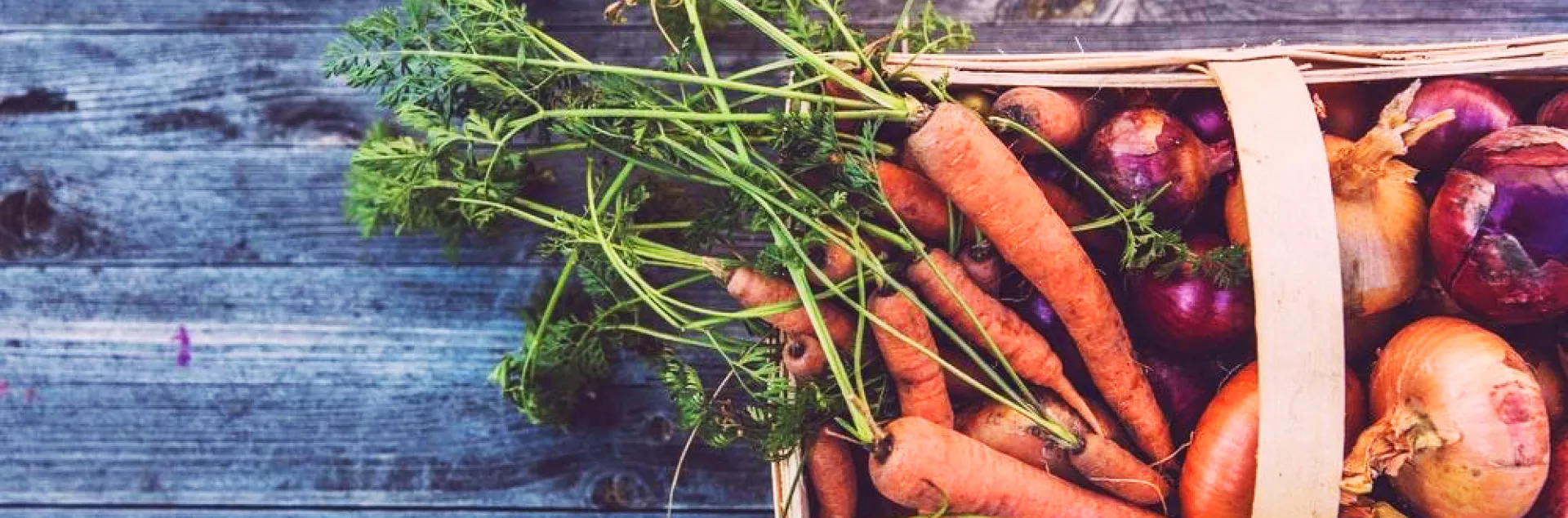
carrots
UC Marin Master Gardeners

Tips & Techniques

Tips and Techniques

Image
vegetables
Leigh Skomal, Unsplash

Edible gardens are a world unto themselves in the landscape. There are many strategies unique to vegetable gardens that extend growing times, keep the garden healthy, and maximize crop yields. Here's a cheat sheet of common edible garden lingo and strategies. 

Succession garden

Think of a succession garden as a master plan for the garden from season to season. For instance, in June, you can plan to clear some spring vegetables and plant summer crops. Or you can sow and transplant alongside waning spring vegetables with a view to next season's produce. 

Succession planting

The primary purpose of succession planting is to provide continuous crop output within the season by sowing seed of a given crop at 1 to 2 week intervals. For instance, you can stagger corn production by making a subsequent planting when the first is 1 to 2 inches tall. Beans, turnips, seasonal lettuce, and beets are well-suited to this practice. 

Companion planting

Mix flowering plants into your vegetable garden to invite pollinators and other beneficial insects. Creative Commons

Companion plants like aromatic herbs or flowers are purported to repel pests in the vegetable garden. Although there is a lack of science behind companion planting, growing a wide variety of pollinator-friendly herbs alongside edible crops does help attract beneficial insects and natural enemies. 

Intercropping 

This involves planting early maturing crops between rows of late maturing crops to increase production in a small area. For example, beans, radishes, green onions, or seasonal leaf lettuce may be planted between rows of tomatoes, peppers or corn.  The quicker-maturing plants will be harvested before the others become large. 

Crop rotation

Crop rotation is the practice of changing the location of edible crops from year to year. Rotating crops in the garden enhances soil fertility and lowers risk of pests and diseases. Backyard gardeners with limited space should at least avoid planting exactly the same crop or crops from the same plant family year after year in the same part of the garden. For example, do not follow melons with cucumbers or squash, and do not plant peppers, eggplant, or potatoes where tomatoes grew the year before.

Cold frames

A cold frame provides protected space for spring seedlings. Sandy Metzger

Like mini-greenhouses, cold frames are structures that create a stable environment for frost-tender seedlings by protecting them from big temperature swings. Keeping delicate seedlings in cold frames helps them thrive until winter temperatures stabilize. Cold frames also work to protect seedlings from pests, including birds, cutworms, earwigs, slugs, and snails. Cold frames are easy to assemble and can be made from inexpensive or recycled materials. Because they are better acclimated from the outset, plants that start life in cold frames often do not experience the transplant shock that many plants face. Among the most transplant-vulnerable seedlings are basil, beans, cabbage-family plants, lettuce and peas. 

To make a standalone cold frame: 
• Place an old window pane or a rigid sheet of plastic on top of a four-sided box filled with soil. 
• Be sure that the box receives plenty of sunlight. 
• The box can be made out of any material that holds the soil in place, including wood, straw bales, metal, cinder block, or brick. 
• If you want to reuse your cold frame every winter, consider adding a hinge to one side so you can easily open and close it.
 

Floating row covers

Floating row cover. Courtesy UC Regents

Floating row cover is a white, lightweight, synthetic fabric with a gauze-like appearance. Air, sunlight, and water can penetrate the material. Vegetable gardeners drape it over and enclose individual plants or groups of plants and secure it to the ground with pins, bricks, rocks, soil, etc. The cover “floats” directly on top of the growing crop. Some gardeners install simple frames to support floating row covers, creating a dome effect. Row covers are often used in the winter to protect plants from frost, and in summer to provide some shade. 

Floating row covers provide many benefits:
• Provides frost protection in early spring and late fall/early winter
• Encourages faster plant growth due to increased temperature and humidity under the cover
• Prevents insects, deer, birds, and other pests from eating your plants
• Inexpensive
• Reusable: can be re-used for two to three years


BACK TO EDIBLES
> What Edible Gardens Need
> Best Choices for Marin
> How to Prepare
> How to Plant
> Edibles in Containers
> Planting Calendar
> Grow & Care Sheets for Vegetables, Herbs & Fruits
> Tips & Techniques
> How to Maintain
> Fruit Trees
> Top 20 Edible Garden Problems
> Cover Crops & Soil Enhancements in the Off-season
> Conserving Water

•••••••••

Visit our EDIBLE DEMO GARDEN at IVC Organic Farm & Garden
 

Primary Image
A harvest of crisp, bright green lettuce is satisfying anytime of the year
UC Marin Master Gardeners: Article

Growing Lettuce Year-Round

December 3, 2025
Lettuce is generally considered to be a cool-season annual, but with a little advanced planning and some judicious plant selection, Marin gardeners can enjoy home-grown lettuce throughout the year. Our temperate climate makes it possible to modify the growing conditions for lettuce and enable the plants to…
View Article
Primary Image
Bank vole
UC Marin Master Gardeners: Article

July 2025: Vole Invasion

July 16, 2025
July 2025: Vole Invasion Protecting the growing plants from hungry critters is an ongoing challenge in the Edible Demo Garden. Wire mesh is used extensively under planting beds and around the straw bales to discourage gophers. Yards of protective netting keep the birds and rabbits from eating young…
View Article
Primary Image
Patio gardening
UC Marin Master Gardeners: Article

June 2025: Patio Gardening

May 26, 2025
By Melissa McLean
 This past month EDG volunteers created a small “patio” in the garden to demonstrate how edibles can be successfully grown in limited space. Too often gardeners are discouraged from growing edibles, believing that it takes a large back yard with room for long rows of plants. However, with the…
View Article
Primary Image
Plastic tubbing of drip irrigation system
UC Marin Master Gardeners: Article

May 2025: Drip Irrigation Troubleshooting

April 29, 2025
By Melissa McLean
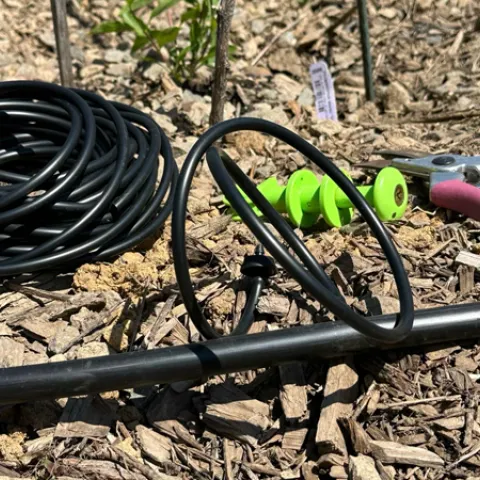
 When the winter rains end, it’s time for gardeners to focus on providing spring and summer edibles with the water they need to grow and produce. While hand watering may be the simplest way to adjust watering to the needs of individual plants, it’s not the most efficient means for getting the right…
View Article
Primary Image
Seed packets
UC Marin Master Gardeners: Article

April 2025: The Joys of Selecting and Planting Seeds

March 24, 2025
By Melissa McLean
 It’s hard to find a gardener who doesn’t love checking out new seed varieties and anticipating the abundant and tasty harvest they promise. The photos and descriptions are tantalizing and the names intriguing. Who wouldn’t be curious about a pumpkin variety called ‘Abominable’, a pepper named ‘Frodo’,…
View Article
Primary Image
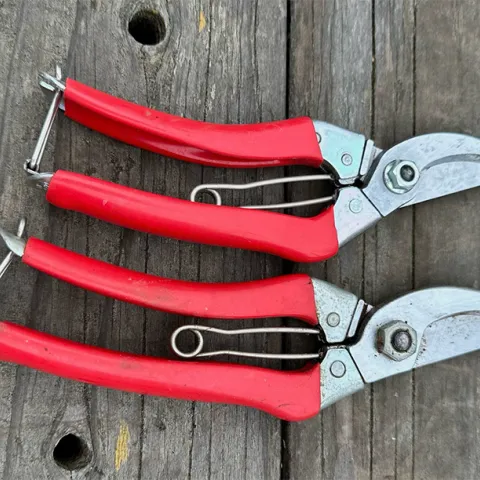
There are many choices in by-pass pruners with models that fit different hand sizes.
UC Marin Master Gardeners: Article

February 2025: Choosing the Right Garden Tools

January 25, 2025
In January, the 2025 Marin Master Gardener training class was welcomed into the Edible Demonstration Garden for a discussion and demonstration on the use and care of garden tools. The right tools make the difference between gardening that is pleasurable and gardening that is a struggle.
View Article
Primary Image
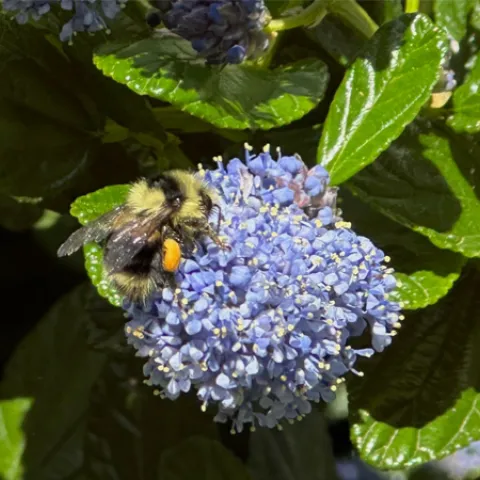
Ceanothus blossoms attract native California bumble bees.
UC Marin Master Gardeners: Article

January 2025: Natives in the Edible Garden

December 19, 2024
Natives are welcome in the Edible Demo Garden. As a joint project with the Native Plant Guild in October 2021, garden volunteers planted a variety of sun-loving, drought-tolerant California natives in a corner of the garden area...
View Article

December 2024: Giving the Garden a Rest

Primary Image
Fava beans are an attractive and popular cover crop due to their nitrogen-fixing effects in the soil. Photo: Flickr
Body

Covercrop 1
After an especially busy summer and fall harvest season, it was time to consider what to plant next in the Edible Demo Garden. In Marin it’s possible to grow vegetables year-round and there are plenty of winter crops such as cabbage, cauliflower, and onions to select. However, another option is to not plant anything during the winter months and give the garden beds some time to rest and rejuvenate. This puts the focus on caring for the soil so that when it comes time for spring planting, the garden will be ready. With this plan in mind, the recent off-season activities for the Edible Demo Garden volunteers have concentrated on methods for giving the garden time to rest. The primary options for resting the garden are planting cover crops and allowing some beds to be fallow for a season.


Planting cover crops

There are many advantages to planting cover crops. Cover crops, sometimes referred to as “green manure”, are an excellent way to protect and improve soil. They increase organic matter, suppress weeds, prevent damage from wind and water erosion, and support beneficial insects and earthworms. Plus, they can look attractive while nurturing the garden.

Covercrop 2
Cover crops are divided into two main categories: legumes, such as clover and fava beans, and non-legumes, like rye and buckwheat. Legumes have the added benefit of fixing nitrogen by taking it from the air and converting it into a form to be used by plants. Cover crops are turned over when they start to flower and allowed to decompose prior to spring planting.

Two different cover crops were chosen for the Edible Demo Garden. Fava beans were planted in several of the garden beds and in the straw bales used for the summer crops. The latter is an experiment to determine if there is sufficient residual fertility in the straw bales to support another crop. In order to aid in germination and enhance their nitrogen fixing effects, the fava bean seeds were soaked in an inoculant containing rhizobacteria prior to planting. As an alternative cover crop, a green manure mix of bell beans, field peas, and purple/hairy vetch was planted in some of the raised beds. Past experience with crows eating the sprouting seeds necessitated the use of compost, straw, and protective netting to give the cover crop seedlings a fighting chance. The effectiveness of the different cover crops will be tested in spring when it is time to plant again.


Allowing beds to remain fallow

Covercrop 3
Taking a garden plot out of the crop rotation for a season can give the soil time to naturally replenish nutrients. It can also be a way to discourage pests, prompting them to move on once their food source is gone. However, fallow garden beds can also invite weeds and leave the soil exposed to the elements. In the Edible Demo Garden, layers of compost and straw were added to suppress weeds and protect the soil in the beds designated to be fallow. The winter rains will keep the soil moist and provide a habitat for earthworms and beneficial microbes.

Click here for more information on cover crops and soil enhancement in the off-season.


UC Marin Master Gardeners
Primary Image
Italian parsley is a popular biennial herb that grows well in sunny, moist garden conditions.
UC Marin Master Gardeners: Article

October 2024: Herbs Among the Edibles

September 25, 2024
Herbs may not be the stars in the Edible Demonstration Garden, but they are notable members of the supporting cast. Its hard to imagine a flourishing vegetable garden without a few culinary herbs as companions.
View Article