
What is soil solarization?
Soil solarization is a nonchemical method for controlling soil-borne pests using high temperatures effected by capturing radiant energy from the sun.
Why do it?
- It kills many disease-causing organisms (pathogens), nematodes, and weed seeds and seedlings.
- It controls many important soil-borne fungi.
- It increases beneficial soil organisms.
When to do it?
- Solarization is most effective when done during the hottest weeks of the year.
- The ideal time is June through August in inland California.
- Allow a 4 to 8-week timespan.
How to do it?
Image
Image
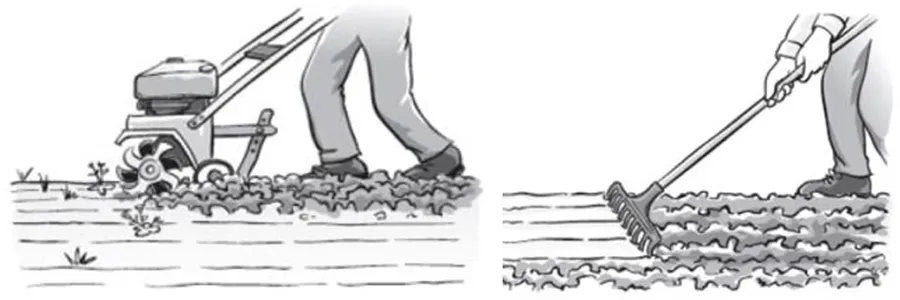
- Step 1: Remove all plant matter by tilling or, preferably, by pulling weeds.
- Step 2: Level and smooth the soil.
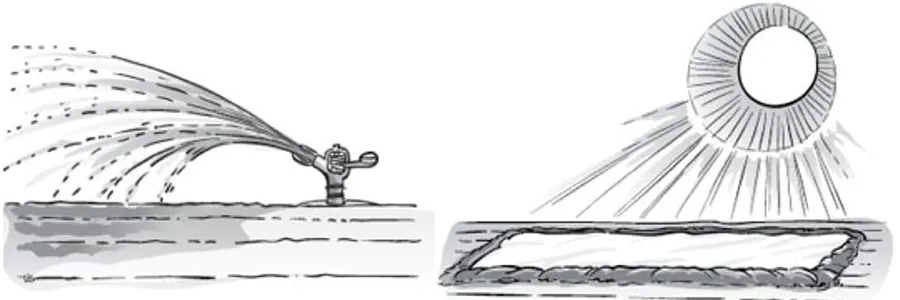
- Step 3: Irrigate.
- Step 4: Lay a clear or transparent plastic tarp:
- Lay as flat and tight as possible.
- 1 mil thickness is best for heat buildup.
- 1.5 to 2 mil thickness is better for windy areas.
- Keep on for 4 to 8 weeks
- Remove plastic.
- DO NOT till or re-dig the soil.
Visit UC-IPM for more information on Soil Solarization
This handout and pictures are based on UC ANR Publication 74145, Soil Solarization for Gardens & Landscapes Management.
From PDF article dated 2020-03-04
UC Master Gardener Program of Contra Costa County
2380 Bisso Lane, Concord, CA 94520
Website: https://ucanr.edu/site/uc-master-gardener-program-contra-costa-county