
Image
UC Citrus Information
UC IPM (Integrated Pest Managment): https://ipm.ucanr.edu/pmg/garden/fruit/citrus.html
UC Riverside: https://citrusvariety.ucr.edu/citrus-varieties
Citrus Resources
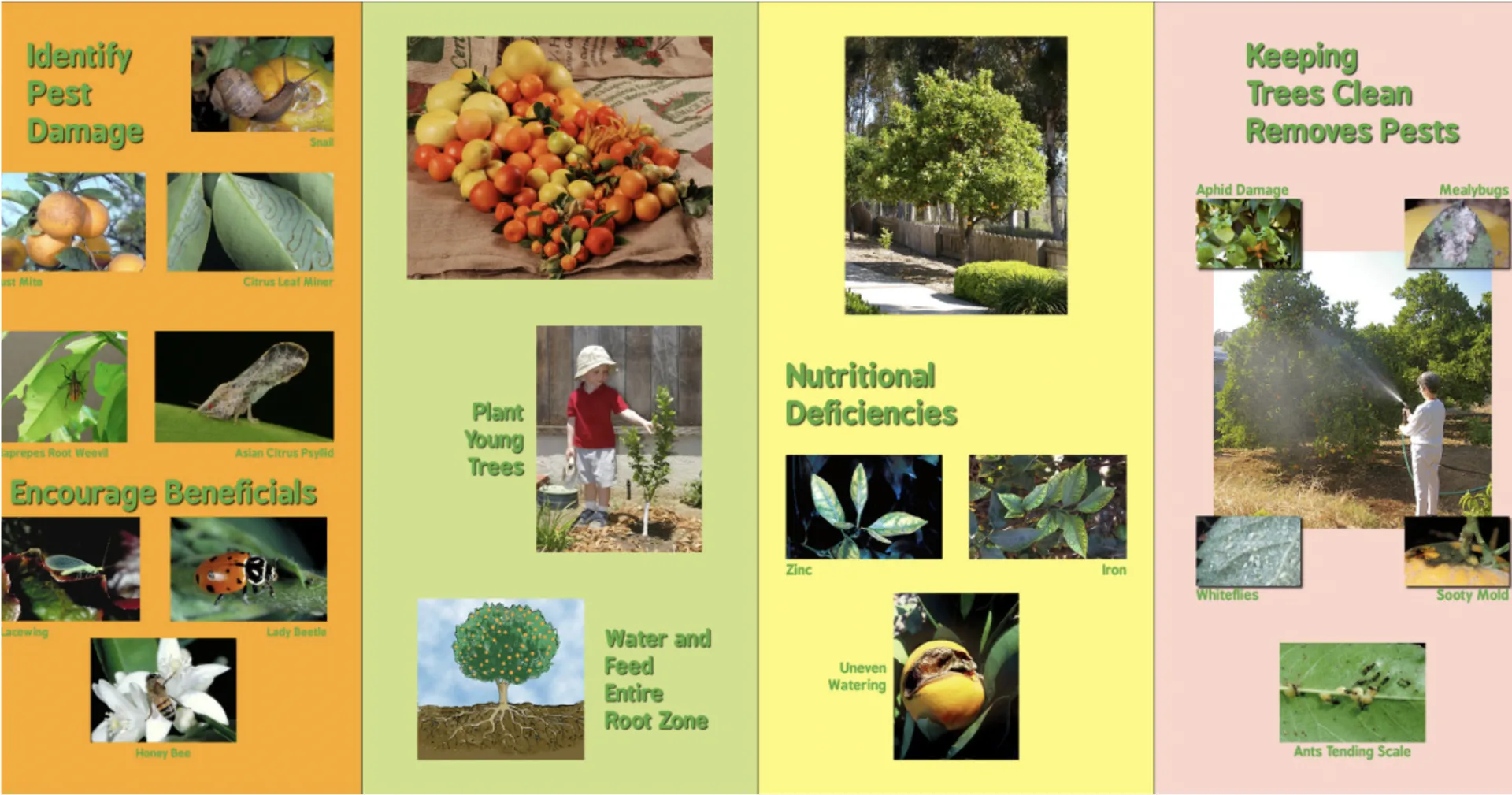
Identify Pest Damage
Citrus trees have relatively few pest problems if they receive good care.
- Common pests: Pests that attack citrus include insects, mites, snails and rodents
- Prevention: Check trees regularly to detect pests before serious injury occurs
- Snails: Most active at night, use hand cultivation method, removing snails daily
- Rust mites: No natural enemies, check UC pest management guidelines for citrus
- Citrus leafminer: Healthy, mature trees are capable of combatting infestation.
- Diaprepes Root Weevil: Poses a great threat to citrus & other crops; each life stage should be treated with appropriate pesticide. Refer to UC IPM for specifics.
- Asian Citrus Psyllid: Pest that acts as carrier for spreading ‘huanglongbing’ (HLB) a devastating disease of citrus trees; contact San Diego County Agriculture Department (Pest Detection) if suspected at (858) 614-7770
Planting Citrus Trees
Choose healthy young trees and follow planting guidelines for best results.
- Purchase healthy looking plants from reputable nursery
- Consider climate in your area to determine when to plant
- Wind free location with full sun is desirable
- Citrus can be planted in containers or directly in the ground
- Allow enough space for tree to grow to mature size
- Dig a hole wider than the root ball of the tree
- No soil amendments are needed at planting time for most areas
- Upper surface of tree ball should be about 1 inch above surrounding ground.
- Gently tap loose soil around the root ball immediately, then fill in the rest of the hole with loose soil
- Water the tree immediately after planting and keep the root ball moist until roots grow out into the surrounding soil
- Timely irrigation is essential for proper tree growth, development and fruiting
- As a rule of thumb, water when the top few inches of soil are dry, but the rest of the root zone is still moist
Nutritional Deficiencies
Successful fruit production requires an adequate supply of essential nutrients to trees
- Primary nutrient is nitrogen; (N) phosphorus and potassium are not needed as often
- In some areas other nutrients may be required
- Young citrus trees (2 – 3 years old) should be fertilized adequately to encourage maximum early growth
- A tablespoon of nitrogenTbearing fertilizer may be sprinkled every 3 or 4 weeks over root area of nonbearing trees.
- As trees mature, more fertilizer is required to support healthy growth
- For more specific information see: https://ucanr.edu/site/uc-master-gardeners-santa-clara-county/growing-great-citrus
- Visible sign of nitrogen deficiency – leaves turn pale green to yellow, especially in winter and spring with no evidence of mites present
Keeping Trees Clean and Healthy
Prevention is the most economical method of controlling citrus disease
- Whenever possible, use mechanical control methods to combat pests
- Remove diseased limbs and clean up any debris which may encourage pests
- Dislodge pests with strong blasts of water or with soap or oil sprays
- Strong blasts of water usually dislodge aphids
- Soaps and oil sprays are effective against softTbodied insects and mites
- Biological control methods may also be used; release natural enemies to combat pests
- Chemicals should be used as a last resort